A desk on carpet rocks for a reason that has nothing to do with the desk: carpet is compressible, so each leg is standing on a small spring, and the four springs do not have the same rate. The fix in order of effect is spread the load under each leg, then get weight off the desk top (a monitor on an arm instead of on the surface removes the mass that amplifies every movement), then deal with the chair, which on pile needs a bigger wheel rather than a softer one. If you are renting, there is a fourth job: the dents.
This matters more than it sounds in an apartment, because most rentals are carpeted and most desk advice silently assumes a hard floor. Our chair wheels guide is written for the opposite problem and says plainly that soft wheels are worse on deep pile. Our wobble guide ranks causes by likelihood and never names the floor. This page is the carpet version of both.
What decides it, in order
One: contact area, not leg length.On a hard floor a desk with four half-inch-square feet is stable because the floor does not move. On carpet those four small feet sink until the pile under them is compressed enough to push back, and because the pile is not perfectly uniform — near a seam, over an underlay join, where a previous piece of furniture stood — they sink by different amounts. Widen each contact patch and the desk settles on a bigger average: a two-inch square of hardboard, a furniture coaster or a plywood offcut under each foot does more for a rocking desk on carpet than any amount of tightening.
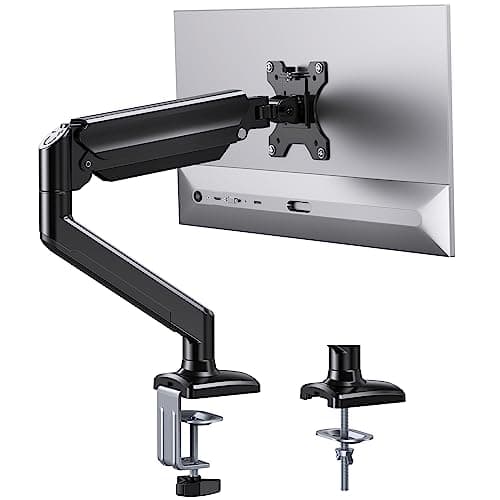
Two: where the weight sits.Mass high and far back on a desk top turns a small amount of leg movement into a visible screen shake, which is what people actually notice when they say the desk wobbles when they type. A 15-pound monitor on its own base at the back edge of a desk standing on springs is the worst case. Move it onto a clamped arm and the mass transfers to the desk’s structure rather than loading one corner of the top — and you get the depth back too.
Three: whether the desk is on the carpet or on the edge of it. A desk with two legs on a rug and two on the floor beneath it will never level, and no shim fixes it permanently because the rug compresses and the floor does not. Either all four legs are on the carpet or none are. The same rule applies to a desk half on a transition strip at a doorway.
Four: tighten before you shim. Carpet gets blamed for a lot of movement that is a loose flat-pack frame. Put the desk on its side, tighten every bolt in a cross pattern rather than one side at a time, and check the cross-brace if it has one. Then re-test. Carpet makes a loose desk feel much worse than the same desk on tile, so both problems usually need solving and only one of them costs money.
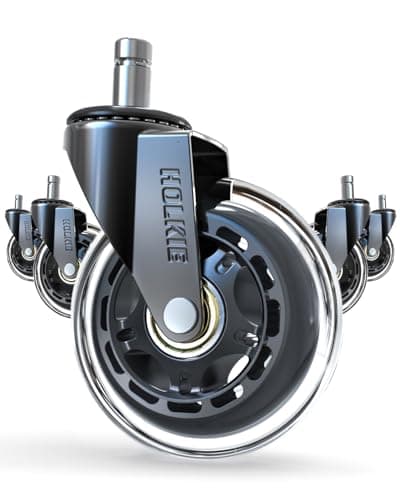
Five: the chair, which is a separate problem.Standard chair casters are hard nylon designed for commercial carpet tile, and on low-pile carpet they work fine. On thick domestic pile they do not, and the instinct to buy “soft” roller-blade wheels makes it worse: a soft tread deforms into the pile instead of riding over it, so the chair feels heavier. On carpet the spec that helps is wheel diameter— a three-inch wheel rolls over pile a two-inch wheel ploughs through.
Six: the dents, if you rent.Furniture standing on carpet for a year leaves compression marks, and a desk with small hard feet leaves the worst ones. Wide coasters that spread the load reduce them; moving the desk a few inches twice a year lets the pile recover; and crucially, do not run a power cord under the carpet or a rug to hide it — the Electrical Safety Foundation lists cords under rugs and carpets among its cord hazards, because a cord that cannot shed heat and gets walked on is a fire risk. Route it around the edge or over the top inside a cover, as in our floating desk guide.
Standing desks on carpet
A sit-stand frame on carpet is the hardest version of this, for two reasons. The frame’s feet are usually narrow steel plates with adjustable levelling screws, and those screws are designed to take out a few millimeters of floor unevenness, not a quarter-inch of pile compression that changes as you lean. And at full standing height the leverage on the base is at its greatest, so the same leg movement produces far more sway than it does seated. Level the frame at standingheight rather than seated, put something firm and wide under each foot, and keep the desk shallow — a deep top in open carpet is the worst combination. Our shallow standing desk picks are the right shape for it, and standing desk in a small room covers the clearance.
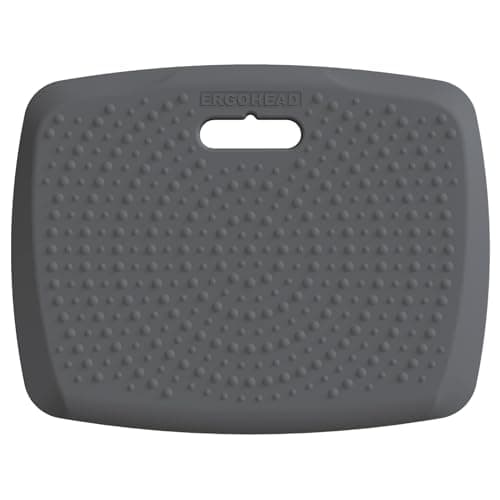
Standing on carpet is also not as comfortable as it sounds. Pile is soft but uneven, so your feet keep making small corrections, and the thing that actually helps is a firm level surface rather than a softer one. That is counter-intuitive and it is why a thin, firm anti-fatigue mat earns its place on a carpeted floor, not just a hard one.
The order to do it in
| Step | Why | Cost |
|---|
| Tighten every bolt, on its side, in a cross pattern | Carpet exaggerates a loose frame; this is free and often enough | Nothing |
| Widen each foot with a hard pad or coaster | Spreads the load so the four legs settle on an average, not on four different springs | A few dollars |
| Get the monitor onto an arm | Removes the mass that turns leg movement into visible screen shake | The price of an arm |
| Fix the chair separately | Diameter beats softness on pile; a hard surface beats both | A caster set, or a board |
| Re-level at standing height, if it is a sit-stand desk | Sway is worst where leverage is greatest | Nothing |
What not to do
Do not shim with folded card or paper. On a hard floor a shim works because the gap is constant. On carpet the gap changes every time you lean on the desk, so a shim either falls out or creates a new rocking point. Spread the load instead.
Do not buy soft roller-blade wheels for deep pile.This is the most common mistake, and our own hardwood page is explicit about it: a soft tread deforms into the pile rather than riding over it, so the chair gets heavier to move, not lighter. The polyurethane sets that are excellent on laminate — STEALTHO’s among them — make no carpet claim for exactly this reason, which is why they are not ranked on this page.
Do not run the power cord under the carpet or under a rug. It is the one genuinely unsafe shortcut in a home office. A buried cord cannot dissipate heat and gets walked on until the insulation wears.
Do not fix anything to the floor. Adhesive raceway, carpet tacks and screwed-down guards are all deposit problems. Everything in this guide lifts out, which is the standing position across our renter-friendly setup guide.
If the desk still rocks
Two structural causes survive everything above, and both are about the desk rather than the floor. A desk with no cross-brace or back panel relies on its top to resist racking, and a thin top cannot; adding a brace or a back panel is the real fix and our wobble guidecovers it. And a desk with a long unsupported span — a 47-inch top on two end frames — flexes in the middle regardless of what is under the legs. On carpet that flex is what you feel.
If you are still choosing the desk, two specs predict how it will behave on carpet: a wide foot or a flat plate rather than a point, and a published load rating, which tells you the maker measured something. Four-legged desks on carpet beat pedestal desks; a desk on locking castors is the worst of all, because a caster on pile is a point load that sinks. Rolling desks are a hard-floor category and the page says so.
Protecting a carpet you do not own
Compression marks are not damage in most tenancies, but deep dents from small hard feet can be. Three habits cover it: spread each foot over at least two square inches, move the desk a few inches at least twice a year so the pile can recover, and lift rather than drag when you rearrange — dragging a loaded desk is what tears pile and pulls seams. Everything in moving-friendly desk gear is chosen to come apart for exactly this kind of handling.