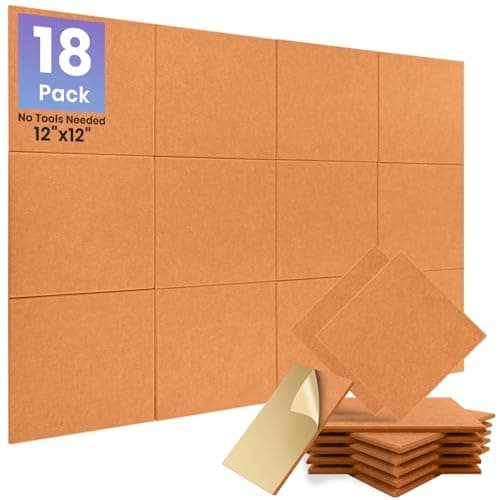
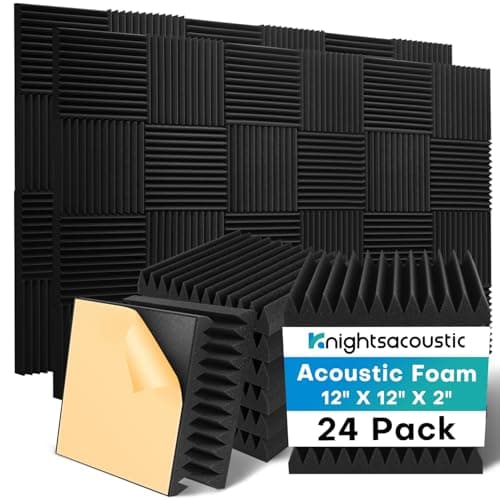
The pick: the Knightsacoustic 24-pack.Two inches thick and 24 square feet of coverage — thickness is what makes an absorber work, and this is the most of it per dollar here. Mount it on removable strips rather than its own adhesive and it comes off a rental wall cleanly.
Before the ranking, the honest part: acoustic panels reduce reflections inside your room. They do not stop sound passing through a wall. They make you sound better on calls and make the room less echoey. They will not stop your neighbor hearing your meeting, and nothing you can buy for this money will.
Absorption is not soundproofing, and the difference matters
Absorption soaks up sound reflecting around inside a room. It reduces echo, makes speech clearer on a microphone, and makes a hard-surfaced apartment less tiring to sit in. Every product on this page does absorption.
Isolation— soundproofing — stops sound getting from one space to another. It requires mass, sealed air gaps and structural decoupling: heavy layers, resilient channels, door seals. No panel you stick to a wall does any of it, and a rental rules out the construction that would. If your problem is hearing your neighbor, or your neighbor hearing you, panels are not the answer and any listing that says otherwise is selling you the wrong idea.
| Your problem | Panels help? | What actually helps |
|---|
| You sound echoey on calls | Yes — the main use | Panels at first reflection points, or a desk divider |
| The room is harsh and tiring | Yes | Panels, plus rugs, curtains and a full bookshelf |
| Your partner’s call bleeds into yours | Barely | Headsets, staggered schedules, separate rooms |
| Neighbour noise through a wall | No | Mass and sealing — not available to renters |
| Footfall from upstairs | No | Nothing you can install from below |
Where to put them: four panels beat twenty, badly placed
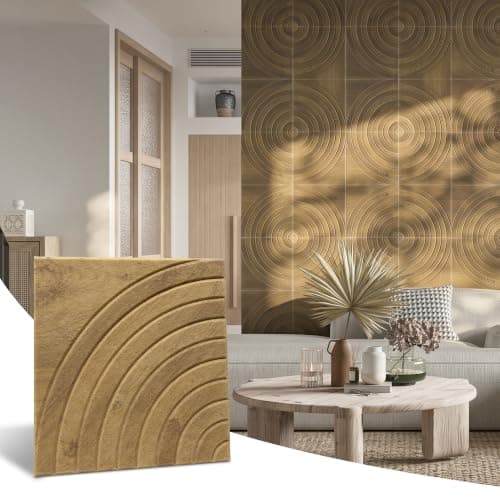
Absorption works hardest at first reflection points— the spots on the walls where sound from your mouth bounces once before reaching your microphone. For a desk against a wall, that is the wall directly in front of you, the two side walls level with your head, and the ceiling above the desk if you can reach it. Treat those and you get most of the available benefit from a fraction of the panels. Covering an entire wall behind you, which is what most photographs show, does far less.
Mounting without losing your deposit
Every wall panel here ships with adhesive, and that adhesive is the part to ignore in a rental. Three safer routes:
- Removable mounting strips.Rated properly for the panel weight — foam and felt squares are light, so this works well. Published limits are in what damage-free mounting can hold.
- Mount to a board, lean the board. Stick panels to a sheet of foam board or thin plywood and lean it against the wall behind the desk. Zero contact, full reversibility, and it moves with you.
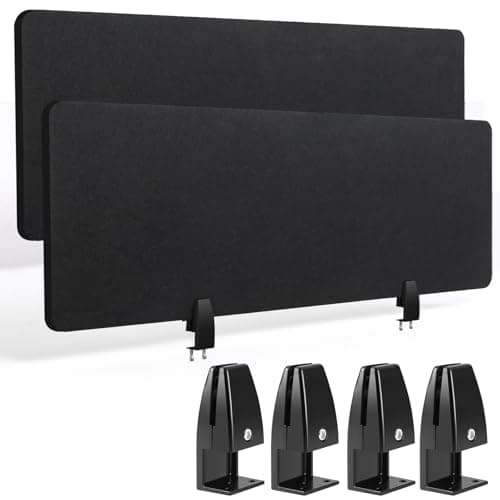
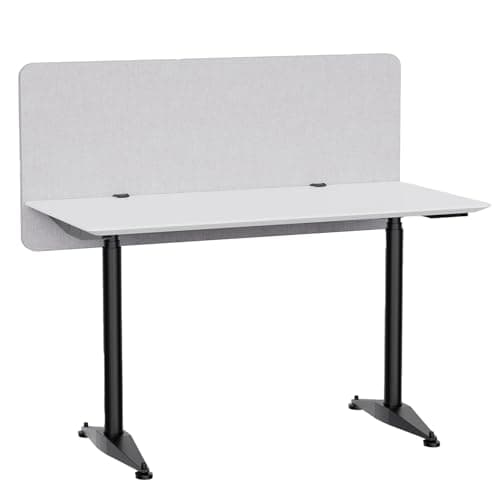
- Skip the wall entirely. A desk divider does the same job from the desk, which is why two of the five picks here are dividers rather than panels.
The free things that work first
Before buying anything: a rug on a hard floor, curtains over a bare window, a full bookshelf, and a soft chair all absorb meaningfully across a wide range of frequencies. Most small apartments that sound bad on calls sound bad because they are hard, bare and small — and soft furnishings you were going to own anyway do more than a dozen thin squares. Then add panels at the reflection points, and a headset, which remains the single most effective purchase for call quality at any price.
If the problem is two people in one room
Panels are a small part of that answer. Layout, schedules and headsets are the large part — the whole approach is in two people working from home in one small apartment.