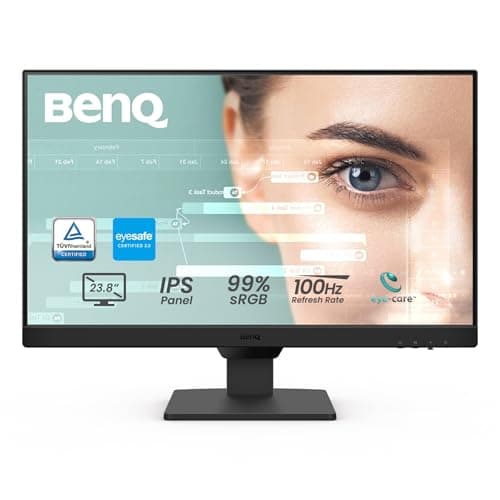
Monitor advice almost always says buy the biggest screen you can afford. On a small desk that is wrong, and the reason is depth rather than width. A screen has a comfortable viewing distance, and if your desk is 20 inches deep the screen ends up closer than that distance whether you like it or not — so you spend the day with your eyes tracking across a panel that fills too much of your field of view.
The rule of thumb that survives contact with reality is roughly an arm's lengthfrom your eyes to the panel, adjusted so the whole screen sits inside a comfortable field of view. On a 24-inch-deep desk that is achievable with a 24-inch screen once the monitor is pushed to the back. On a 20-inch desk it is not, unless the screen goes on an arm and overhangs the back edge — which is exactly what a monitor arm is for. Our size and distance guide has the full table.
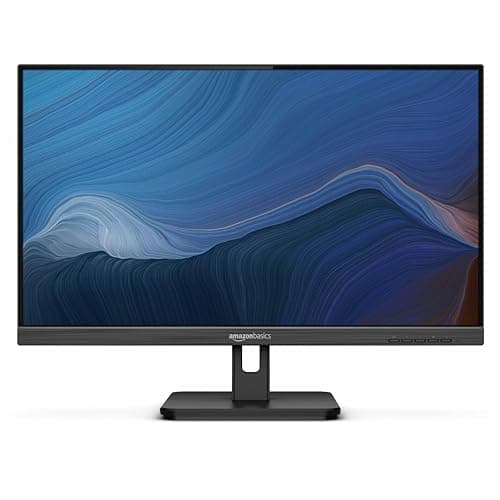
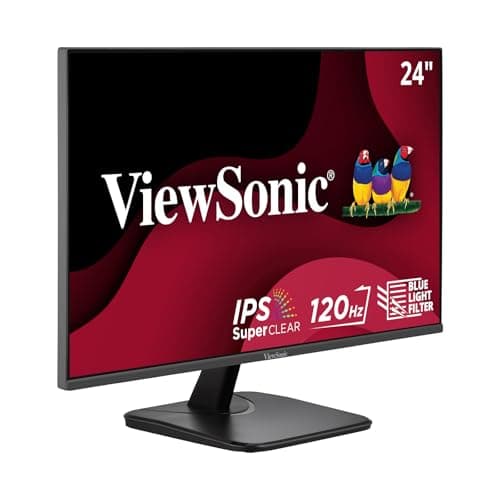
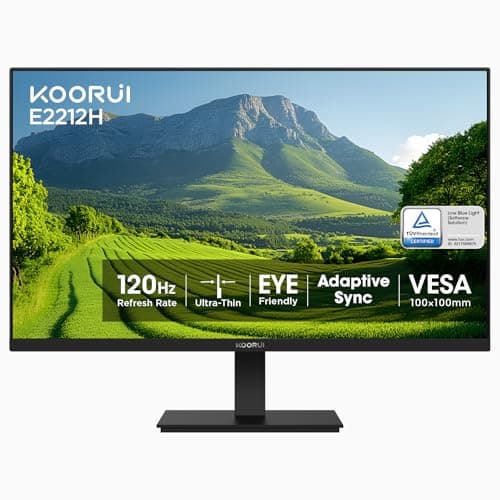
The other specification a small-desk buyer should read first is VESA. A panel without VESA holes can never go on an arm or a wall mount, which forecloses the single most effective small-desk upgrade there is. Every pick below states its VESA support where the listing publishes it. Live prices are shown against each; the methodology explains the scoring.
Depth decides the screen size
| Desk depth | On the factory stand | On a monitor arm |
|---|
| 18–20 in | 22 in | 24 in |
| 22–24 in | 24 in | 27 in |
| 28 in and up | 27 in | 27 in or an ultrawide |
The arm column is a full size larger throughout, and the reason is simple: an arm lets the panel sit behind the back edge of the desk rather than on it, which buys back the several inches a stand base occupies plus a little more. That is the mechanism by which a monitor arm makes a bigger screen usable on the same desk, and it is why we rank VESA support so highly above. The detail is in monitor size and distance.
The stand base is a specification nobody publishes
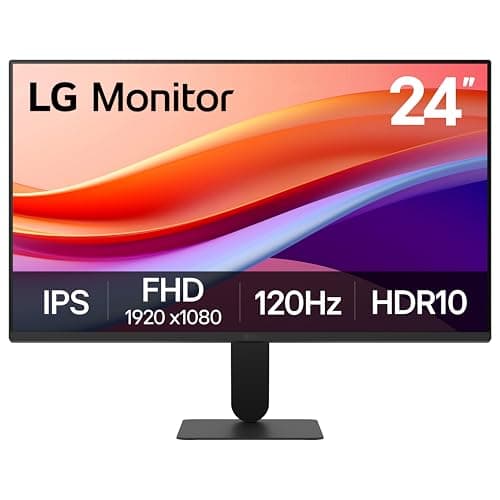
A monitor stand base is typically 8 to 10 inches deep, and on a 20-inch desk that is half your depth gone before anything else lands on it. Very few listings give the base dimensions, which is why we score it from what is stated: LG explicitly describes a slim stand base, so it scores highest there, and the adjustable stands score lower because height mechanisms need a broader foot. If a listing publishes nothing, assume a conventional base and plan for an arm or a riser instead.
Two 24s or one 27?
On a small desk, two 24-inch screens need roughly 44 to 48 inches of width to sit side by side without overhanging, which most apartment desks do not have. A single 27, or a single 24 plus the laptop screen on a stand, is usually the better answer under 44 inches. Our two monitors on a small desk guide works the widths through, and desks for dual monitors covers the tops that genuinely take two.
What you can safely ignore at this size
Resolution above 1080p at 24 inches. The pixel density gain is real but modest, and scaling on Windows at intermediate resolutions still causes more trouble than it solves for most people. Refresh rates above 120Hz for office work: 100 to 120Hz makes scrolling text noticeably cleaner and everything past that is a gaming specification. Curvatureat 24 inches, which is marketing rather than geometry at that width. What you should not ignore is panel type — IPS has wider viewing angles than VA, and on a small desk you are often looking at the screen slightly off-axis because the desk is against a wall at an angle.
USB-C, and why none of these has it
Monitors with USB-C video input — one cable for picture, data and laptop charging — are excellent for a small desk and start well above the prices here. The cheaper route to the same result is a screen with HDMI plus a USB-C docking station, which gets you one cable to the laptop for a fraction of the price difference and works with any monitor you buy later. That is the combination we would build on a budget. And if the second screen needs to pack away rather than stay, best portable monitors ranks the panels that leave the desk again.
If the second screen might need to pack away, compare these with the travel panels in best portable monitors — and read portable monitor vs a second monitor, which decides between the two classes on desk depth rather than on panel quality.