Skip to content
Desk & Dowel

HUB 01 · Compact Desks

The Best Standing Desks for Short People

The spec that decides this is the MINIMUM height, not the maximum. Four desks with published low ranges, and the honest workaround when a desk bottoms out too tall.

By Stephen V.Updated How we pick
#ad

We earn a commission when you buy through our Amazon links, at no extra cost to you. It never affects our rankings, and we say so when the cheaper product is the better buy. How this works.

Almost every standing-desk roundup ranks on maximum height, because that is the number that sells the concept. If you are short, the number that decides whether the desk works is the other one. A frame that lifts to 48 inches is useless if it bottoms out at 29 — you will spend the sitting two-thirds of your day at a desk three or four inches too tall, shoulders shrugged and wrists angled up, which is precisely the posture the desk was supposed to fix.

Our desk height guideworks the arithmetic through in full, but the short version is this: seated desk height should put your forearms roughly parallel to the floor with your elbows at about 90 degrees. For a 5'0" user that lands near 24 inches. For 5'2" it is about 25, and for 5'4" about 26. The overwhelming majority of two-stage sit/stand frames start at 28 to 29 inches. That is a fixed-desk problem wearing an adjustable-desk badge.

What the numbers actually look like

Your heightSeated desk heightStanding desk heightRange you need
5'0"~24 in~36 in24–36 in
5'2"~25 in~37.5 in25–38 in
5'4"~26 in~39 in26–39 in
5'6"~27 in~40.5 in27–41 in

Read the right-hand column against any desk you are considering and two things fall out immediately. First, a 28-inch minimum excludes everyone under about 5'8" from sitting comfortably. Second, short users need a widerrange than tall users, not a narrower one, because the gap between a 24-inch seated height and a 36-inch standing height is 12 inches — more travel than most single-motor frames publish.

The picks below are ordered by how honestly they solve that. Every height figure is the manufacturer's published range from the product listing; where a listing does not publish a number we say so rather than estimating one.

The short answer

Quick picks

#ProductBest forScorePrice
01
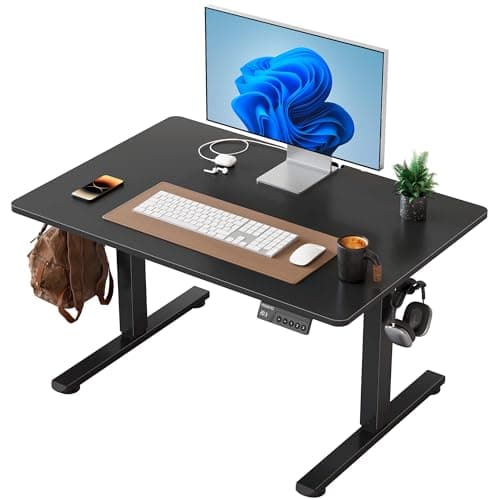
YIHAYO YIHAYO Low Height Adjustable Desk (48 × 24in)
YIHAYO Low Height Adjustable Desk (48 × 24in)

The only desk here that publishes a minimum low enough for a 5-foot user to sit at properly: 18.1 inches at the bottom, with a 48 × 24in top that still fits an apartment wall.

Best seated height for a short user
7.3
$139.99Amazon
02
Low Height Adjustable Desk Low Height Adjustable Small Desk (18.9–29.5in)
Low Height Adjustable Small Desk (18.9–29.5in)

A slightly taller ceiling than the YIHAYO at 29.5 inches with the same very low floor, which makes it the more flexible of the two low-range desks if the desk gets shared.

Best shared low desk
7.4
$125.99Amazon
03
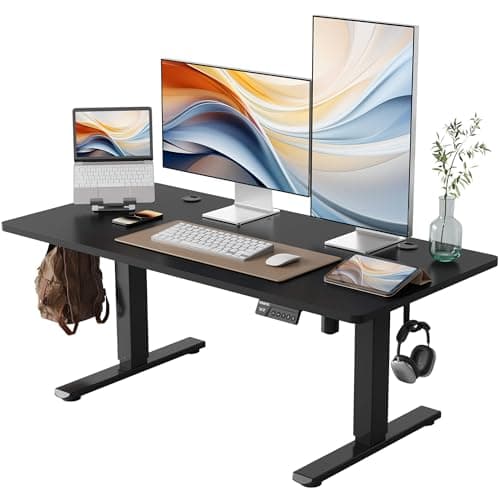
FEZIBO FEZIBO 40 × 24in Electric Standing Desk
FEZIBO 40 × 24in Electric Standing Desk

The compromise pick: a real sit/stand range of 28.3 to 46.5 inches in a 40 × 24in footprint, which stands properly for anyone and sits properly for anyone over about 5'6".

Best if you want to actually stand
8.0
$109.99Amazon
04
YIHAYO YIHAYO 32 × 24in One-Piece Low Desk
YIHAYO 32 × 24in One-Piece Low Desk

The smallest low-range desk here: a one-piece 32 × 24in top with no seam, for a corner where 48 inches of wall simply does not exist.

Best for the tightest wall
7.5
Check price →

#ad · Live prices from the Amazon Product API, as of Sep 7, 2026. Where we have no verified live price we show none — we would rather leave a gap than print a number that has rotted.

In detail

The picks, in full

01
YIHAYO YIHAYO Low Height Adjustable Desk (48 × 24in)

Best seated height for a short user

YIHAYO Low Height Adjustable Desk (48 × 24in)

Height range
18.1–28.3 in
Top
48 × 24 in
Drive
Electric
Top construction
Splice board
Footprint
8.0 sq ft
7.3/10

The only desk here that publishes a minimum low enough for a 5-foot user to sit at properly: 18.1 inches at the bottom, with a 48 × 24in top that still fits an apartment wall.

Low-end reach
9.8
Standing reach
3
Footprint
7.6
Stability
7.8
Value
8.4

Pros

  • 18.1in minimum clears every adult seated height from 5 feet upward with room to spare
  • 24in depth suits a shallow apartment wall, not just a spare room
  • Electric adjustment, so the height actually gets changed rather than admired
  • Wide enough at 48in for a monitor plus a laptop off to one side

Cons

  • 28.3in maximum is a seated range, not a standing one — you cannot stand at this desk
  • Splice-board top rather than one piece, so there is a seam across the surface

Skip this if…

you actually want to stand. This is the pick for a short user who has never had a desk low enough to sit at; if standing is the point, take the FEZIBO and fix the seated height with a keyboard tray.

$139.99View on Amazon

$159.9913% off

Price as of Sep 7, 2026. Prices change — Amazon's is the one that counts.

#ad · we may earn a commission from this link to YIHAYO Low Height Adjustable Desk (48 × 24in)

02
Low Height Adjustable Desk Low Height Adjustable Small Desk (18.9–29.5in)

Best shared low desk

Low Height Adjustable Small Desk (18.9–29.5in)

Height range
18.9–29.5 in
Travel
10.6 in
Drive
Electric
Class
Small standing desk
Lowest point
18.9 in
7.4/10

A slightly taller ceiling than the YIHAYO at 29.5 inches with the same very low floor, which makes it the more flexible of the two low-range desks if the desk gets shared.

Low-end reach
9.6
Standing reach
3.4
Footprint
8.2
Stability
7.4
Value
8.2

Pros

  • 29.5in top end covers a taller housemate sitting at a conventional height
  • 18.9in floor is well under any adult seated requirement
  • 10.6in of travel is generous for a low-range frame
  • Sized for a home rather than an office fit-out

Cons

  • Still a sit-only range — 29.5in is nobody's standing height
  • Listed stock has been running thin, so availability is less dependable

Skip this if…

you need one desk to serve both a short and a tall user standing. No low-range frame does that; two-stage frames trade the bottom of the range for the top.

$125.99View on Amazon

Price as of Sep 7, 2026. Prices change — Amazon's is the one that counts.

#ad · we may earn a commission from this link to Low Height Adjustable Small Desk (18.9–29.5in)

03
FEZIBO FEZIBO 40 × 24in Electric Standing Desk

Best if you want to actually stand

FEZIBO 40 × 24in Electric Standing Desk

Height range
28.3–46.5 in
Top
40 × 24 in
Presets
3 programmable
Load rating
176 lb
Motor noise
Under 45 dB
8.0/10

The compromise pick: a real sit/stand range of 28.3 to 46.5 inches in a 40 × 24in footprint, which stands properly for anyone and sits properly for anyone over about 5'6".

Low-end reach
5.4
Standing reach
9.4
Footprint
8.8
Stability
8
Value
8.6

Pros

  • 46.5in ceiling stands comfortably for users well past 6 feet
  • Three memory presets, so sit and stand heights are one button each
  • 40 × 24in is genuinely apartment-sized for a powered frame
  • 176 lb load rating published, and a 50,000-cycle motor rating with it

Cons

  • 28.3in minimum is three to four inches too tall for a 5-foot-2 user to sit at
  • Splice desktop, so a seam runs across the 40-inch top

Skip this if…

you are under about 5ft 6in and will not add a keyboard tray. On its own the seated position will be too high, which is the exact problem you are trying to solve.

$109.99View on Amazon

Price as of Sep 7, 2026. Prices change — Amazon's is the one that counts.

#ad · we may earn a commission from this link to FEZIBO 40 × 24in Electric Standing Desk

04
YIHAYO YIHAYO 32 × 24in One-Piece Low Desk

Best for the tightest wall

YIHAYO 32 × 24in One-Piece Low Desk

Top
32 × 24 in
Top construction
One piece (no seam)
Class
Low-height adjustable
Footprint
5.3 sq ft
Finish
Brown
7.5/10

The smallest low-range desk here: a one-piece 32 × 24in top with no seam, for a corner where 48 inches of wall simply does not exist.

Low-end reach
9.2
Standing reach
3
Footprint
9.6
Stability
7.6
Value
8

Pros

  • One-piece top — no splice seam under the keyboard
  • 5.3 sq ft is the smallest footprint of any adjustable desk here
  • Low-range frame, so a short user sits at a correct height
  • Fits a 36in wall run with clearance either side

Cons

  • 32in of width is a laptop and one small monitor, not a dual setup
  • Marketed for children, so the styling is plainer than the 48in model

Skip this if…

you run two monitors. At 32 inches wide you are choosing between the second screen and somewhere to put your hands.

Check price on Amazon →

No buyable offer at the last price check (Sep 7, 2026). We show nothing rather than a stale number.

#ad · we may earn a commission from this link to YIHAYO 32 × 24in One-Piece Low Desk

The two-stage frame problem, in one paragraph

Sit/stand columns come in two-stage and three-stage versions. A two-stage column has one moving section inside a fixed one, so its collapsed height is roughly half its extended height plus the desktop and the foot. That geometry is why 28 to 29 inches is the industry floor: it is not a design choice aimed at excluding short people, it is what a two-stage column physically collapses to. Three-stage columns nest two moving sections and can start lower, but they cost considerably more and are rare below the premium tier. If a listing quotes a low minimum at a budget price, the frame is usually a low-range sitdesk rather than a sit/stand one — which is exactly what the first two picks above are, and why we have labeled them that way rather than pretending otherwise.

The fix when a desk will not go low enough

If you want a desk that genuinely stands and you are under about 5'6", the honest answer is that you fix the seated end separately rather than hunting for a unicorn frame. Two things do it:

  • An under-desk keyboard tray. A tray hangs the keyboard two to four inches below the desktop, which converts a 28.3-inch desk into a 24-to-26-inch typing surface without touching the frame. This is the most effective fix and the cheapest. Our keyboard tray roundup covers clamp-on and screw-mount options, including ones that need no holes in a rented desk.
  • A footrest, but only after the tray.Raising the chair to meet a tall desk leaves your feet dangling, and a footrest restores the floor. It is a correction to a correction — useful, but it does not fix the desk height itself. See under-desk footrests.

What does not work is simply raising the chair and living with it. That puts your thighs at a downward angle, moves your weight onto the front edge of the seat, and trades a shoulder problem for a hip one.

Standing height matters too, and it is easier

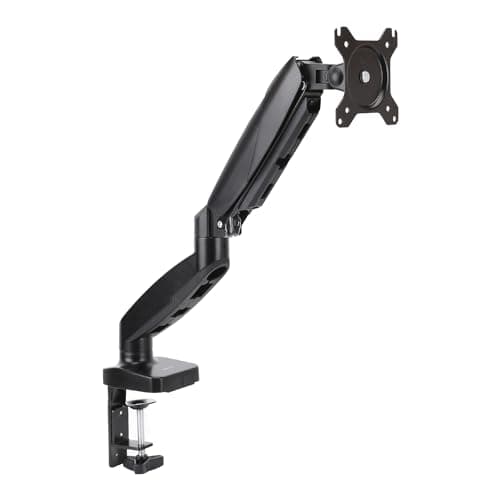
The standing end is far less fussy, because almost every powered frame overshoots what a short user needs. A 5'2" user stands at roughly 37.5 inches; the FEZIBO above reaches 46.5. The thing to check is not whether the desk goes high enough but whether the monitor goes high enough with it. On a low-set desk a screen sitting on its own stand is often several inches below eye level once you stand up. A monitor armdecouples the two, so the screen rises independently of the desktop — and it gives back the desk footprint the monitor base was occupying, which matters on a 32 or 40-inch top.

Footprint: do not buy range at the cost of the room

Adjustable frames are wider than they look, because the feet extend beyond the desktop edge and the crossbar needs clearance behind. In a small apartment a 48-inch adjustable desk occupies about the same wall run as a 52-inch fixed one once you allow for the cable tray and the transformer. If the wall is short, the 32 and 40-inch picks above are the realistic choices; work through what size desk fits a small room before committing to a width.

Stability at the low end

Counter-intuitively, an adjustable desk is usually morestable at its lowest setting, because the columns are fully nested and the leverage is short. That works in a short user's favor: the height you spend most of the day at is the steady one. The movement people complain about appears near full extension, and it is worse on a deep, narrow top with a heavy monitor cantilevered at the back. If yours moves, work through the wobble diagnosis before concluding the frame is faulty.
How we picked

We do not run a testing lab

We compiled the published manufacturer specifications, did the footprint and clearance math ourselves, and read aggregated owner reviews, then scored each product against a published rubric. The scores are judgments from documented research — they are not measurements we took, because we do not have a lab and we are not going to pretend we do. Every spec traces back to a listing or manual named in Sources.

Questions

Frequently asked

What is the lowest height a standing desk goes to?
Mainstream two-stage sit/stand frames bottom out at about 28 to 29 inches, which is roughly a standard fixed desk height. Low-range adjustable desks built for short users and children go far lower - the picks above publish minimums of 18.1 and 18.9 inches - but those frames trade away the standing end and top out under 30 inches.
What desk height should a 5-foot-2 person use?
Roughly 25 inches seated and about 37.5 inches standing, measured to the typing surface rather than the desktop if you use a tray. The full table by height is in our desk height guide, along with how to check it against your own elbow angle rather than a chart.
Can you make a standing desk go lower than its minimum?
Not the frame itself, but you can lower the surface you actually use. An under-desk keyboard traydrops the keyboard two to four inches below the desktop, which turns a 28.3-inch minimum into a usable 24-to-26-inch typing height. Cutting the legs down is not an option on a powered frame — the columns are the mechanism.
Are low-height desks just kids' desks?
Some are marketed that way, and the 32-inch pick above is one of them, but the frame does not know who is sitting at it. What matters is the published height range, the top size and the load it carries. A desk that lands a 5-foot adult at a correct 24-inch typing height is doing the job no mainstream sit/stand frame does.
Is a standing desk converter a better answer for a short user?
No — converters solve the opposite problem. They sit on top of an existing desk and raise the work surface, so they help when your desk is too low to stand at, not when it is too high to sit at. If your desk is already too tall, a converter makes both positions wrong. Compare the two approaches in standing desk vs converter.

Finish the setup

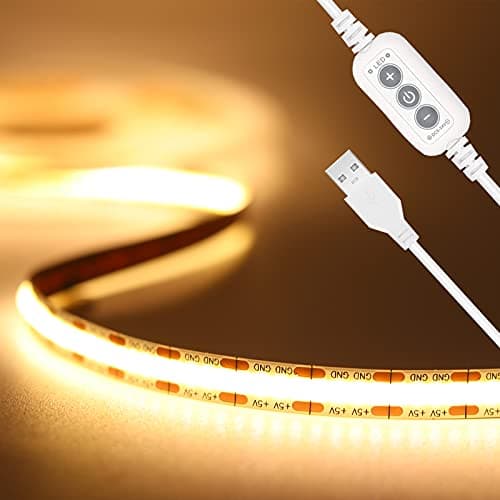
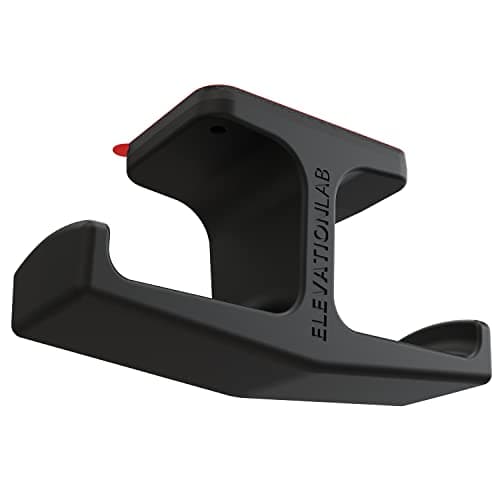
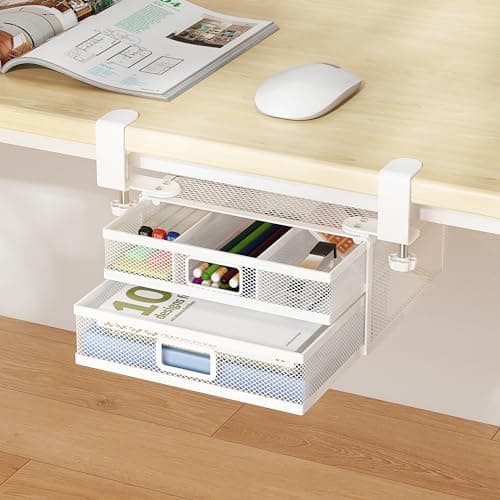
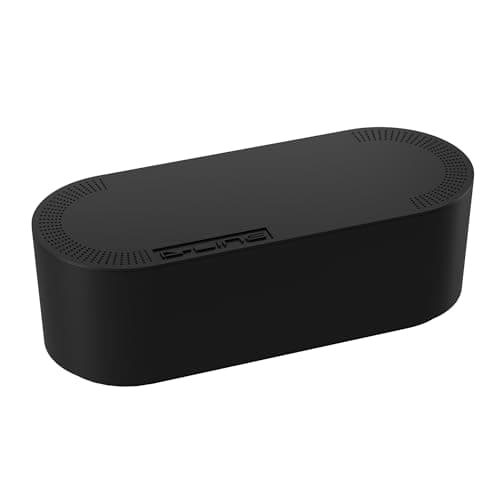
Under $40: the parts that finish a small desk

A desk is the expensive decision. These are the cheap ones that decide whether it actually works in a small room — each is the top pick from one of our own roundups, and each clamps, sticks or stands rather than needing a drill. Prices live as of Sep 7, 2026.

Keep reading

Receipts

Sources

We do not run a testing lab, and we do not pretend to. Specifications come from the manufacturer or retailer listing; the footprint and clearance math is ours and reproducible. Where we could not verify a number, we say so on the page rather than quietly leaving it out. Read our full method.