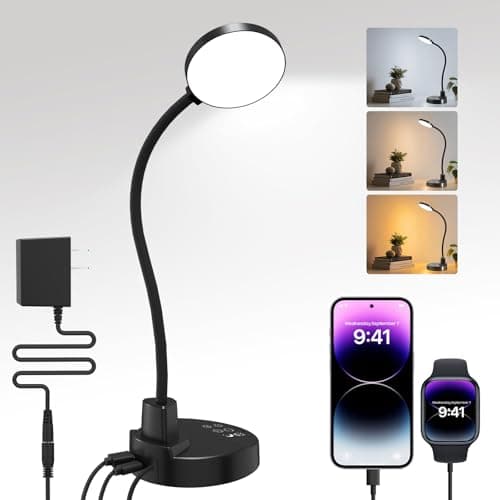
On a small desk the scarcest resource after surface is outlets. A lamp with USB ports built into its base solves a real problem: one wall socket now runs the light and charges a phone, which removes a charging brick from the outlet and a cable from the floor. The trap is buying a bad lamp because it has a port, so we ranked light quality first and charging second.
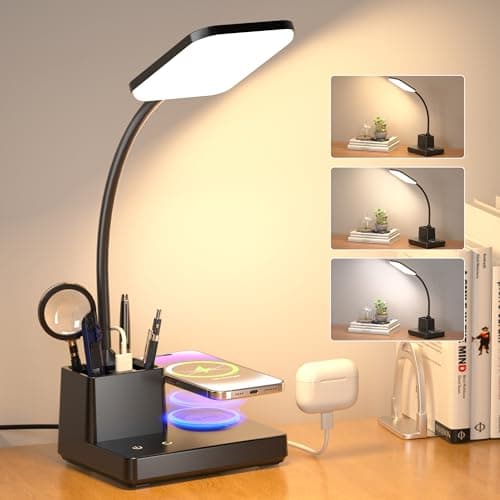
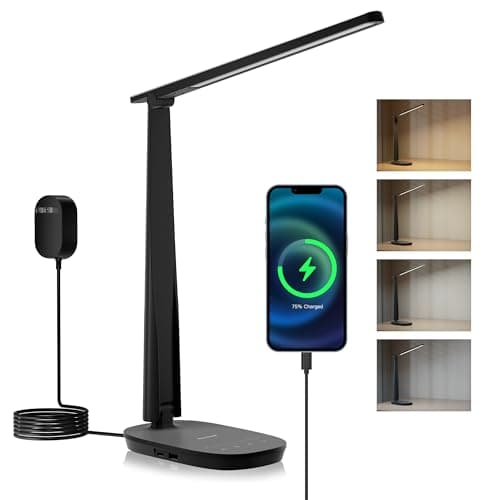
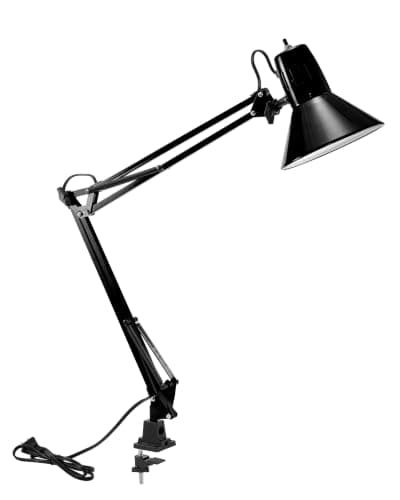
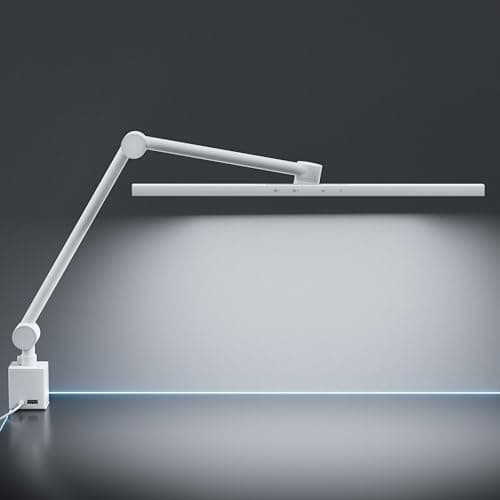
Our pick is the ZAPLIT 15W lamp— USB-A and USB-C, three color temperatures, five brightness levels and four auto-off timers, on a 3.5-inch head with 60 LEDs. The Sailstar adds a Qi wireless charging pad in the base and publishes 95 CRI. The Honeywell HWT-H2 is the best light here on paper at CRI94; the Bostitch VLF100 is the clamp option that takes no desk at all; and the deeloop is the wide asymmetric architect lamp.
One honest caveat, covered in detail below: USB ports on desk lamps are slow. They are for topping up a phone, a watch or earbuds overnight, not for fast-charging a laptop. Specs below come from the manufacturer listings; the methodology explains the scoring.
What a lamp USB port can and cannot do
Be realistic about the numbers. The Sailstar publishes 5V/1A — five watts. The ZAPLIT states plainly that its ports do not support fast charging. That is representative of the category: these are trickle ports designed to top up a phone overnight, run a desk fan, or keep earbuds and a watch charged. They will not fast-charge a modern phone, and they will not charge a laptop at all.
That is still genuinely useful on a small desk, because it removes a charging brick from a crowded outlet and a cable from the floor. Just do not buy a lamp expecting it to replace a proper charger. If you need real charging capacity at the desk, that is a job for a power strip with USB-C, and the lamp is then free to be chosen purely on light.
Judge the light first
A USB port is a convenience; the light is the product. Three specifications matter, and all three are published by the better lamps here:
- CRI. Above 80 is fine for typing and reading; 90 and above matters for anything color-critical. The Honeywell (CRI94) and deeloop (CRI95+) lead here.
- Color temperature range.A lamp that only does 6000K is unpleasant in the evening. Look for at least three modes spanning warm to cool — the reasoning is in our color temperature guide.
- Dimming. Stepless beats fixed steps, because the right brightness for a screen at night is much lower than for paperwork in daylight.
The footprint trade nobody mentions
Almost every lamp with USB ports is a baselamp, because the ports have to live in the base. On a small desk that is a real cost: a weighted base claims a six-to-eight-inch patch of the surface you are trying to protect. Two of our picks avoid it — the Bostitch and deeloop clamp to the edge and still carry a port — and that is worth seeking out if your desk is under 20 inches deep. The full argument is in clamp lamp vs base lamp.
Wireless charging: worth it?
A Qi pad in the base (the Sailstar) removes the cable entirely, which is the tidiest possible outcome on a small desk. Two caveats: your phone has to support Qi, and the pad area of the base cannot be used for anything else. It is a genuine win if you habitually put your phone down beside the keyboard anyway, and dead weight if you do not.
Where the lamp sits relative to the screen
On a desk with a monitor, a lamp aimed across a glossy screen washes it out. Position a base or clamp lamp to the side, angled down at the desk rather than at the display. A lamp with an asymmetric optic (the deeloop) is engineered to avoid it entirely, and a monitor light barsolves it by design — but a light bar has no USB ports, which is the trade you are making by shopping this page.