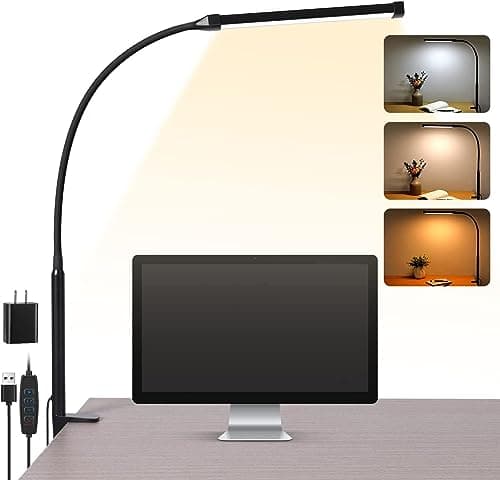
A dorm desk is the hardest lighting problem on this site. It is usually about 30 inches wide and 20 deep, so a base lamp claims a fifth of it. The nearest socket is behind the bed. The overhead light is a single harsh fitting you do not control. And there is another person in the room whose sleep you are responsible for.
That points at a specific shortlist: clamp or clip lamps that use the desk edge or a shelf instead of the surface, cordless lamps that do not need a socket at all, and lamps with USB charging ports so one outlet powers the light and your phone. It also points at warm, dimmable light— a lamp that can drop to 2700K at 10% is a lamp you can use at 1am without turning the room on.
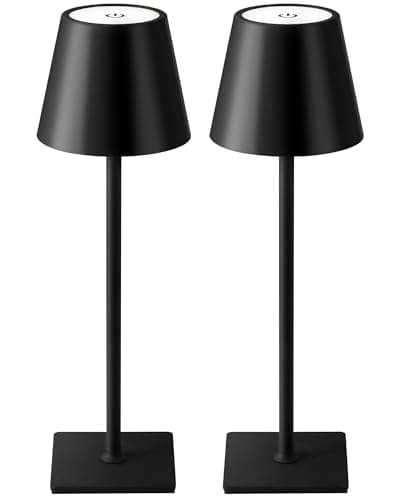
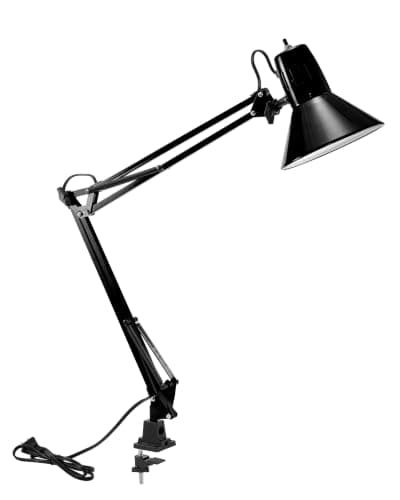
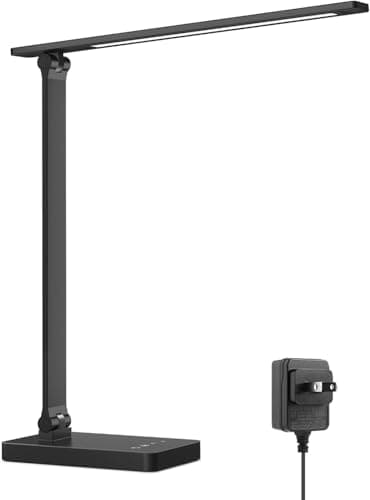
Our pick is the Voncerus clamp lamp: it clips to a desk edge or a shelf, runs from any USB port, and offers three color temperatures across ten brightness levels for less than the price of a textbook. The Honeywell HWT-H2 is the upgrade if you want CRI94 light plus USB-A and USB-C charging in one fitting, and the KDG cordless pairis the answer where there is genuinely no socket. Every figure below is the manufacturer’s published spec.
Format first: clamp, cordless or base
On a 30-inch dorm desk the mounting format matters more than the light quality, because a base lamp claims roughly 6–8 inches of surface and that is a fifth of your desk. A clamp lampuses the edge and costs you nothing — check you have an accessible edge first, because many built-in dorm desks have a back rail or a hutch where a clamp wants to go. A cordless lamp uses no socket, which matters more than people expect in rooms where the only outlet is behind the bed. A base lamp is the fallback: cheapest, brightest per dollar, and fine if your desk is deeper than 20 inches.
The roommate problem is a Kelvin problem
The single most useful spec for a shared room is the low endof the lamp: its warmest color temperature and its dimmest setting. A lamp that goes down to 2700K at 5–10% brightness lights a keyboard without lighting a sleeping person; a fixed 6000K lamp at 100% turns the room on. Three of our picks publish both numbers — the Voncerus (2700K, 10 levels), the KDG (2700K, 5% minimum) and the Honeywell (2700K, 10% stepless). Our color-temperature guide explains which number to use when.
One socket, two jobs
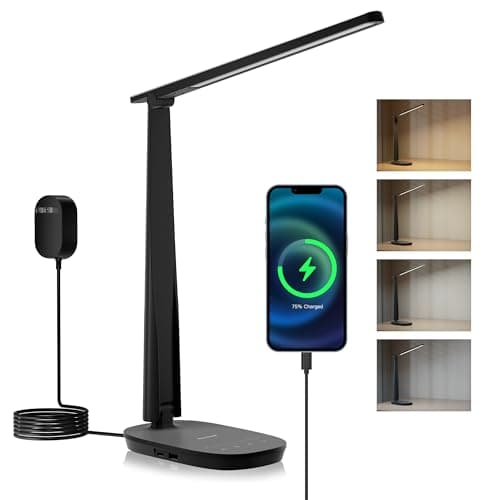
Dorm sockets are scarce and usually badly placed, which makes a lamp with built-in USB charging portsworth more than its spec sheet suggests — the Honeywell here carries both USB-A and USB-C, so the lamp and your phone share one outlet. The same logic makes an extension worth planning: run one surge strip to the desk and put everything on it, then tidy the run with a cable sleeve so it is not a trip hazard in a room you cross in the dark.
Light the screen, not just the desk
The specific discomfort of dorm study is a bright screen in a dark room. A desk lamp fixes it partly; a monitor light barfixes it precisely, because it lights the desk and the wall behind the screen without putting any light on the panel itself — and it uses zero desk space and one USB port. If your problem is eye strain rather than not being able to see your notes, the light bar is the better first purchase. For the full walk-through of a dorm setup, see our dorm desk setup guide.