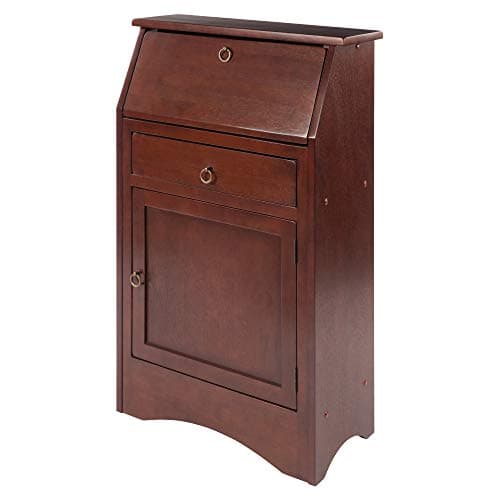
Our pick is the Winsome Regalia secretary desk, and the number that wins it is 11.42 inchesof depth. That is shallower than most bookcases. It means the desk can stand along a wall that a normal 23-inch-deep desk would turn into an obstruction, and when the fall-front is closed the laptop, the cables and the half-finished work are all behind a door — which is the one thing a living room desk has to do that a spare-room desk never does.
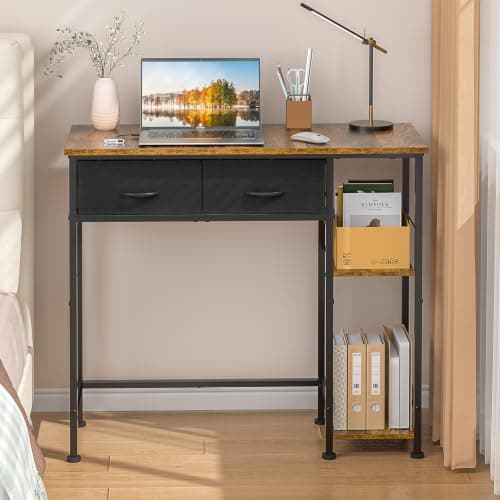
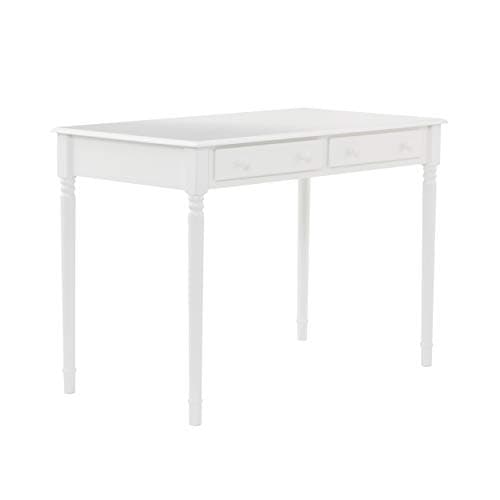
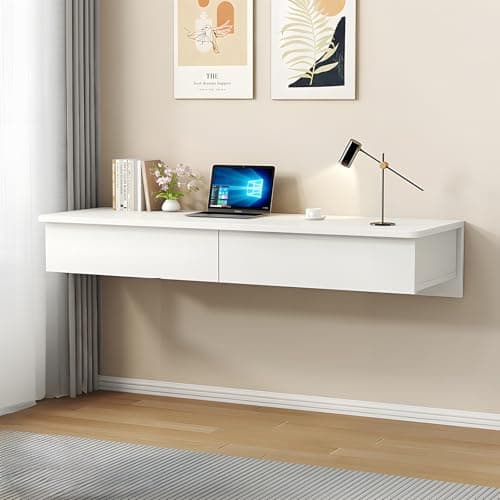
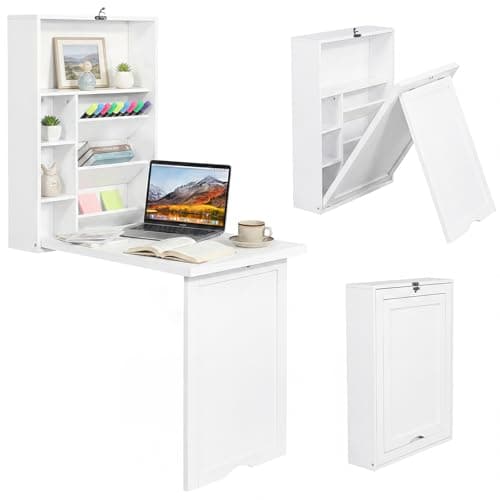
The DAOUTIME 36-inch writing desk is the value pick and the one most people should buy: 15.94 inches deep, open shelving on either side, and cheap enough that putting one in a rented living room is not a commitment. The SEI Furniture HO8800 is the one that looks least like office equipment if you have the floor for 23 inches of depth. The WOOOFA floating desk and the Tangkula fold-out wall desk both give the floor back entirely, in exchange for drilling into a wall.
Why a living room desk is a different purchase
A desk in a spare room is judged on one thing: does the work fit on it. A desk in a living room is judged by everyone who sits on the sofa, every evening, for as long as you own it. That changes which specifications matter, and the ranking below follows the change rather than the usual width-and-weight-capacity routine.
Depth first, not width. Width is a wall problem and most living rooms have a wall. Depth is a room problem, because the depth of the desk plus the depth of the chair comes out of the walkway everybody uses to cross the room. Our desk sizing guide puts the figures at roughly 24 inches behind the desk edge to sit and about 36 inches to push the chair back and stand up. Add a 23-inch desk to that and the furniture has claimed five feet of a room that probably measures eleven. A console-depth desk of 11 to 16 inches changes the arithmetic completely, and every pick here except one is in that band.
Then: can the work stop existing?A living room has an evening shift. If the monitor, the keyboard, the paperwork and the charging cables are still on display at eight o’clock, the room has quietly become an office that happens to contain a sofa. A secretary desk solves this with a door. A fold-down desk solves it by ceasing to be a desk. A plain writing desk solves it only if you are the sort of person who clears it — which is worth being honest with yourself about before you spend anything.
Then: does it read as furniture? Black laminate on a Y-shaped steel frame is fine in a bedroom corner and conspicuous in a living room. Wood legs, a painted or veneered top, and no visible crossbar are what let a desk sit next to a sofa without announcing itself. Three of the five below are explicitly sold as living room furniture by their own makers.
Last: storage, because there is nowhere else.A living room has no filing cabinet and no cupboard you are allowed to fill with printer paper. Whatever storage the desk itself carries is the storage you get, which is why every pick here has drawers, shelves or a cabinet — and why the one with the least storage ranks on something else entirely.
The four placements that work in a living room
| Placement | Depth it can take | What it costs you |
|---|
| Against a short wall between two doors | 11–16 in | Nothing, if the desk is console depth. This is the placement the Winsome and DAOUTIME are for. |
| Behind the sofa, facing the wall | 11–16 in | The walkway between sofa and desk. Needs about 36 in of gap to be usable as a route. |
| In an alcove beside the chimney breast | Whatever the alcove is | Usually nothing — alcoves are dead space. Measure the narrowest point, not the back wall. |
| On the wall, folded or floating | Zero when closed | Drilling, fixings and a patch when you move out. |
The placement that does not work is the one most people try first: the desk under the window in the middle of the long wall, where the sofa wants to go. You end up with a room organized around work rather than around the sofa, which is the wrong way round in a room that has to serve both. Our living room desk setup guide walks the four placements in detail, and desk in front of a window covers the glare arithmetic if the window placement is the only one available.
Console depth: the band that decides everything
A console table is 11 to 16 inches deep. A desk is conventionally 23 to 30. The reason a living room desk should live in the console band is not style — it is that the chair has to come out somewhere, and the room has to stay crossable while it does.
Work it through with a real room. A 12 by 14 foot living room has a 144-inch wall. Put a 23-inch desk against it and you have used 23 inches of the 168-inch dimension before the chair exists; add the roughly 36 inches you need behind the desk edge to stand up and you are at 59 inches, nearly five feet, of a fourteen-foot room. The same sum with the Winsome’s 11.42 inches comes to 47 inches, and with the DAOUTIME’s 15.94 to about 52. That 12-inch difference is the sofa fitting or not fitting.
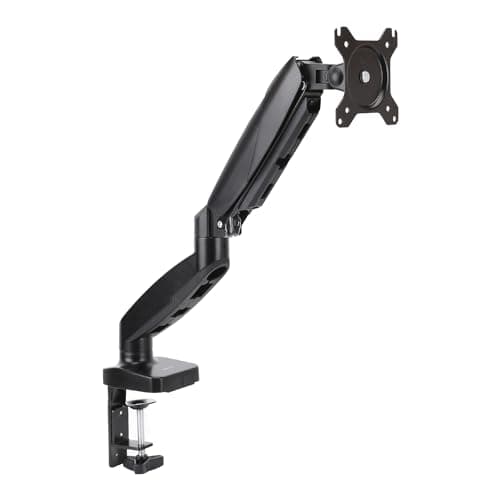
The cost of console depth is honest and worth stating: a 16-inch-deep desk puts a 24-inch monitor closer to your face than is comfortable unless you move the screen back over the rear edge. That is what a monitor arm is for, and it is the single accessory that makes a shallow desk behave like a deep one. Our monitor size and distance guide has the viewing-distance numbers by screen size.
Shutting down: three mechanisms, ranked by how little willpower they need
A door or a fall-front needs none. You close it, the work is gone, and the state of the desk the next morning is the state you left it in. This is why the secretary format has survived two centuries of furniture fashion and why it tops this page.
A folding leaf needs a little: you have to clear the surface before it will close. That enforces a daily reset, which some people find useful and others find exhausting. It is the right pick when the floor matters more than the convenience, which in a very small living room it often does.
A clear surfaceneeds all of it. A plain writing desk only disappears in the evening if you put things away, every day, forever. If you are going to buy one anyway — and the SEI is a genuinely handsome desk — give the clutter somewhere to go first. A desk organizer and under-desk storage are what turn a nightly clear-down from a chore into a ten-second habit, and how to organize a small desk is the method.
Cables, in a room where the back of the desk is visible
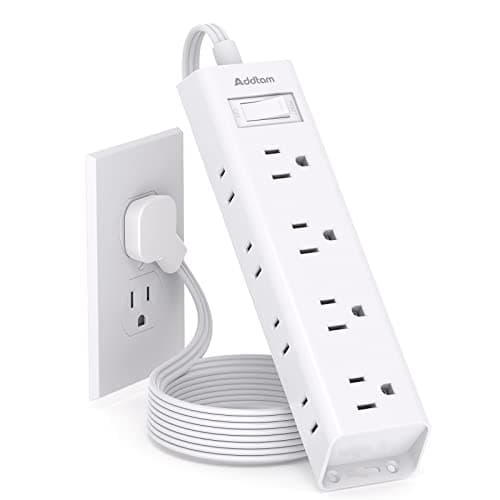
A desk against a bedroom wall hides its own cabling. A living room desk frequently does not: it sits behind a sofa, in an alcove you can see into, or at an angle. Assume the back of the desk is a face people look at and plan accordingly. Bundle the drop into one sleeve, mount the power strip under the top rather than on the floor, and run one lead to the wall rather than five. Our cable management picks cover the box, the sleeve and the raceway; the no-damage version does the same without adhesive on a wall you do not own. If the desk ends up away from the wall entirely, a desk in the middle of a room is the specific version of this problem.
What about a standing desk in a living room?
It is the one format we would steer away from here, and the reason is visual rather than ergonomic. A sit-stand frame is two steel columns, a crossbar and a controller box, and none of those read as living room furniture at any price. If standing matters more than the room does, a shallow standing desk at 19 to 20 inches of depth is the least intrusive option, and a converter on a normal desk lets you keep a desk that belongs in the room and stand when you want to. The converter is almost always the better answer in a shared space.
Where this page stops
If the desk is going anywhere other than the living room, the constraints relax and the field widens: best desks for small apartments ranks on raw footprint across the whole apartment, best desks for small bedrooms ranks for a room with one occupant and no audience, and best narrow desks is the pure depth league table. If you want the format rather than the room, secretary desks and wall-mounted folding desks go deeper on the two mechanisms that top this page.