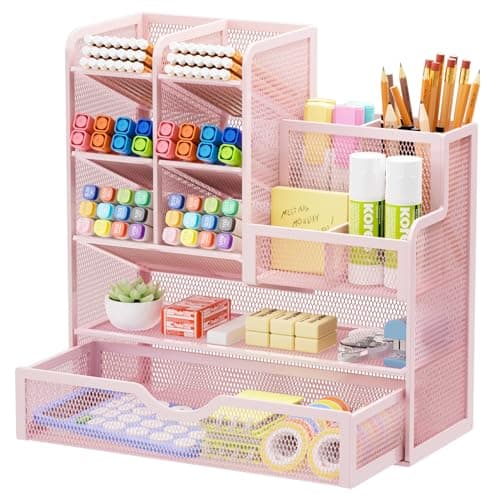
There is one test a desk organizer has to pass on a small desk, and most fail it: does it take up less room than the loose items it replaces? A three-tier tray that swallows eight scattered objects into a smaller total area is a win. A large caddy that sits where your notebook used to go, holding four pens, is a loss dressed up as tidiness.
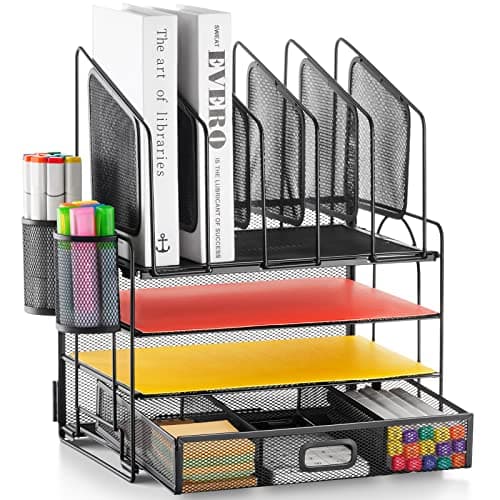
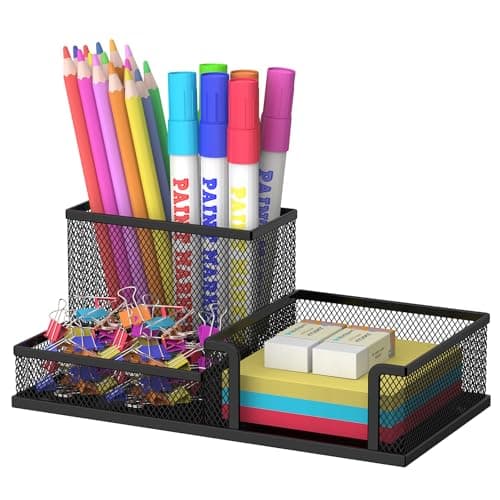
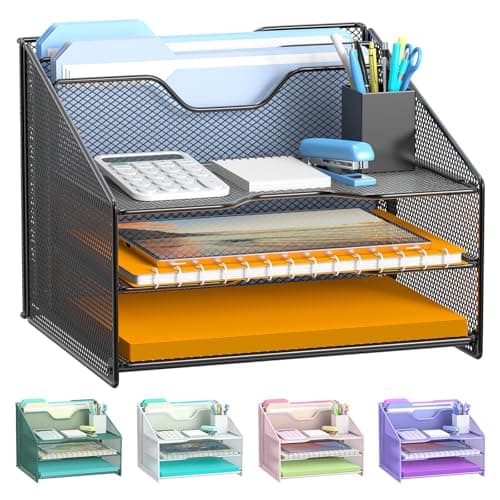
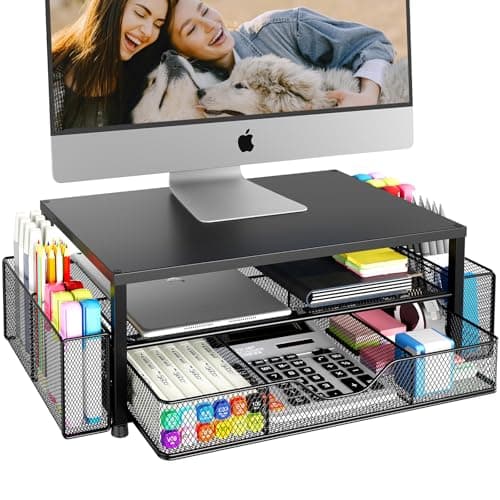
Our pick is the Marbrasse mesh organizer with drawer— twelve compartments and a drawer in one compact metal block, which is a high consolidation ratio for the surface it claims. The Marbrasse 4-tier goes vertical for the same idea. The SUPEASY pen holderis the minimum viable version at 8 × 4 inches, the Samstar file organizer is the one for paper, and the OPNICE riser is the clever one: it organizes by lifting the monitor and using the space underneath.
Every dimension below is published by the manufacturer, which matters more here than in most categories — footprint is the whole argument. The methodology explains the scoring.
The only test that matters
Before buying anything in this category, do this: gather the loose items you want to tidy into a single group on the desk and look at the area they occupy. Now compare that with the organizer’s published footprint. If the organizer is bigger, you are spending surface to look tidy, which on a small desk is the wrong trade.
It sounds obvious and almost nobody does it, which is why so many small desks end up with a large empty caddy on one side and the clutter still spread across the other.
Consolidation ratio, roughly
| Organizer | Footprint | Best when |
|---|
| Compact pen caddy | ~32 sq in | A handful of loose stationery items |
| Multi-compartment with drawer | Corner of a desk | Stationery plus cables and chargers |
| Vertical 3-tier | One tier’s area | A lot to store, little floor area |
| File organizer | ~11 × 3 in | Paper documents, which spread badly |
| Riser with storage | Space the monitor already used | Almost always, if you have a monitor |
Go vertical, then go under
The best organizer on a small desk is the one that does not use the desk. Three directions, in order of preference:
- Above.A riser with a drawer, a shelf, or a wall rail. The OPNICE here is the clearest example — it converts the dead volume beneath the monitor into storage.
- Below.A clamp-on drawer or a rolling cart takes bulk off the surface entirely — see under-desk storage.
- On the desk. Only for the things you reach for constantly, in the smallest container that holds them.
Mesh, plastic or wood
Metal mesh is the sensible default: it is rigid, it does not flex when you pull something out, and you can see the contents, which matters when the container is small. Plastic is cheaper and lighter but bows over time under any weight. Wood looks better and costs more surface for the same capacity, because the walls are thicker. On a compact desk, mesh wins on capacity per square inch.
The step before you buy anything
Organizers are step five of six in tidying a small desk, not step one. Before adding a container, get the big objects off the surface: the monitor onto an arm or a riser, the tower into an under-desk holder, the headphones onto a hanger, and the base lamp swapped for a clamp lamp. Those four moves free more surface than any organizer can, and they change what you actually need to buy here. The full sequence is in how to organize a small desk.