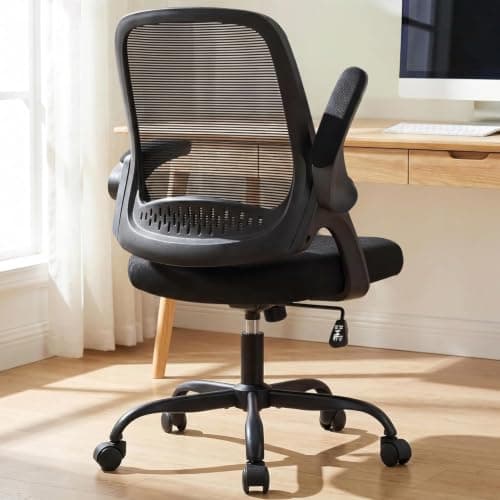
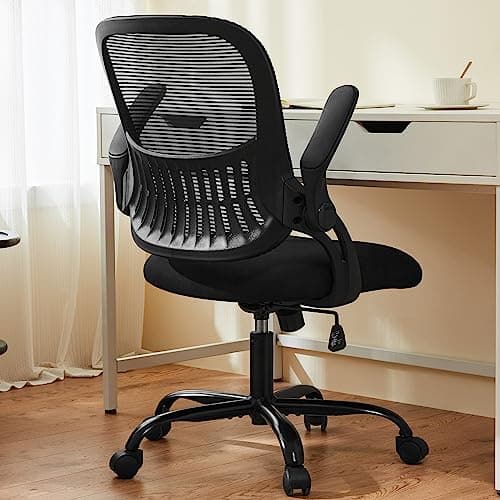
If you are under about 5′4″, the chair problem is not comfort — it is altitude. Standard task chairs start at around 17–19 inches of seat height and run to 22 or 23, a range built for a 5′9″ body. Sit a shorter person in one at the height that puts their forearms level with the desk and their feet leave the floor, which moves the whole load of both legs onto the front edge of the seat. Our pick for most people is the Sweetcrispy mid-back task chair, for one unglamorous reason: it is the only chair here whose listing actually publishes its seat-height range, and that range starts at 18.5 inches.
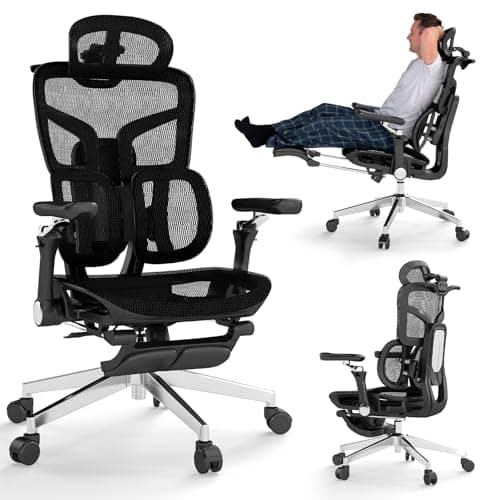
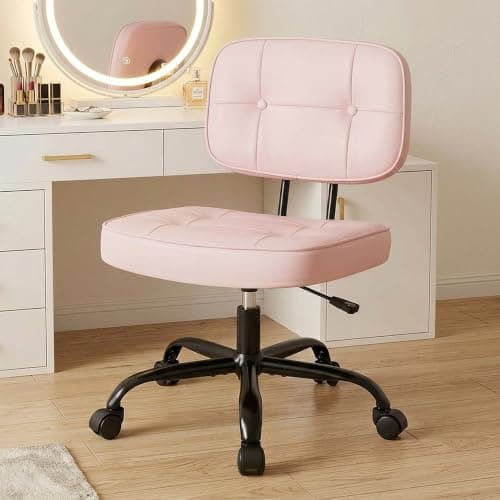
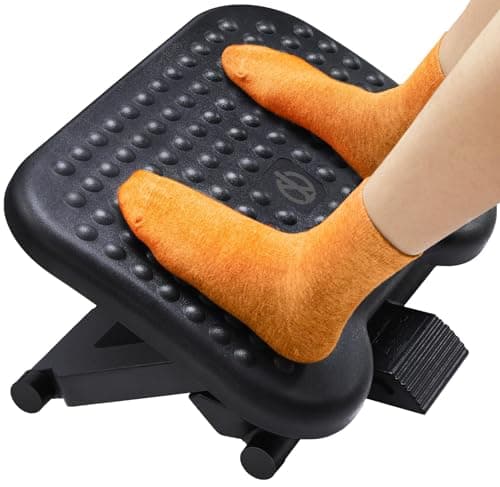
The MOJAYis the pick if you sit all day — it publishes a 50 mm seat-depth adjustment and a retractable footrest, which are the two features that fix a short-legged fit rather than working around it. The NEO CHAIR is the flip-up-arm option for a desk you need to tuck fully under, the DUMOS is the cheapest armless frame that still has lumbar support, and the ErGear footrest is here because on a chair that will not drop far enough it is the correct answer, not a consolation prize.
Measure one thing before you read on: sit on a hard dining chair, put your feet flat, and measure from the floor to the back of your knee. That is your target seat height, and it is usually 15–17 inches for someone 5 feet to 5′4″. Everything below is checked against it. Specs come from each product’s own listing; we do not run a lab, and the methodology says so plainly.
The one number that decides it, and why it is so hard to find
Seat height. Specifically the bottomof the chair’s seat-height range, because a shorter user lives at the bottom of it. Measure floor to the back of your knee while sitting with your feet flat; for most people between 5 feet and 5′4″ that is 15–17 inches. Then look for a chair whose range starts at or below that figure.
You will mostly fail, and not because the chairs are wrong — because the number is not printed. Of the four chairs here, exactly one (the Sweetcrispy, at 18.5–22.2 in) publishes a range at all. The other three say “height adjustable” and stop. That is why this page leads with the chair that publishes the number rather than the chair with the longest feature list: a stated 18.5 inches you can plan around beats an unstated figure you cannot.
Seat height, seat depth, and what each one actually breaks
| Measurement | What goes wrong when it is too big | The fix |
|---|
| Seat height | Feet leave the floor; both legs load the front seat edge | Lower the seat, or raise the floor with a footrest |
| Seat depth | Front edge presses behind the knee; you perch forward and lose the backrest | Seat-depth adjustment, or a shallower seat |
| Backrest height | Lumbar curve lands above your lower back and does nothing | Adjustable backrest height, or a separate lumbar cushion |
| Armrest height | Fixed arms hit the desk edge and stop you getting close | Flip-up or no arms at all |
Why “just lower the chair” is only half an answer
Drop the seat far enough for your feet to go flat and your elbows end up below the desk, so you type with your wrists angled up and your shoulders shrugged. That is the real short-user trap: there are two correct heights and only one seat. The fix is to set the seat by your elbows(forearms level with the desk surface) and then deal with your feet separately — which is what the footrest in this roundup is for, and why the full footrest roundup is worth a look if none of these platforms suits.
The other half of the fix is the desk, not the chair. A standard desk is about 29–30 inches high, which is simply too tall for a 5-foot body no matter what the chair does. If you are buying the desk as well, a low-height adjustable one solves the problem at source — see standing desks for short people, where the lowest model here drops to 18.9 inches. Our desk-height guide has the sitting and standing numbers by user height.
Arms: flip-up or none, almost never fixed
A shorter user sits closer to the desk than a taller one, because reach to the keyboard is set by arm length rather than by the room. Fixed armrests collide with the desk edge an inch or two before you get where you need to be, and the chair stops. Flip-up arms (Sweetcrispy, NEO CHAIR, MOJAY) or no arms at all (DUMOS) both solve it. This is the one place where the short-stature requirement and the small-room requirement happen to agree, which is why our small-office-chair picksoverlap with this page — that roundup ranks the same frames on footprint and tuck-under instead.
A note on what we will not tell you
We have not sat in these chairs, we have not measured a seat, and we are not going to publish a seat height that the manufacturer did not. Where a listing is silent, the spec row above says “range not published” and the con says so again. If the exact figure is the deciding factor for you — and for a 5-foot user it reasonably is — buy the one that prints it, or buy from somewhere with a free return window and measure it yourself on day one.