Most small-space desk advice assumes the desk stays put. In a studio, a shared living room or a bedroom that is also the dining room, the more useful property is that the desk can leave. A rolling desk works against a wall from nine to six and tucks beside a wardrobe, behind a sofa or into a hallway afterwards — which means the floor it occupies is borrowed rather than surrendered.
The spec that separates a good one from a bad one is not the top size, it is the casters. Wheels that do not lock turn every keystroke into a slow drift away from the wall, and a desk you have to keep repositioning is worse than a fixed one. Every pick below either publishes lockable casters or is a cart format heavy enough not to need them, and we say which is which.
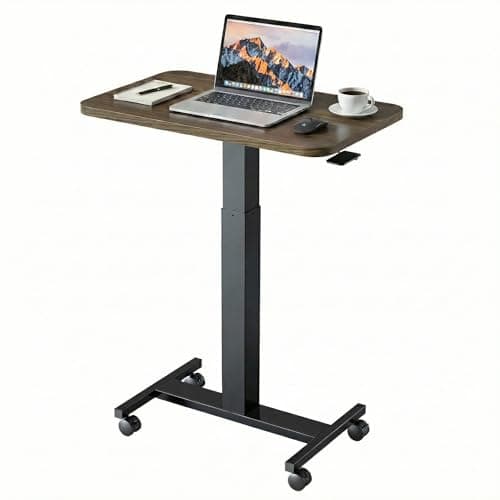
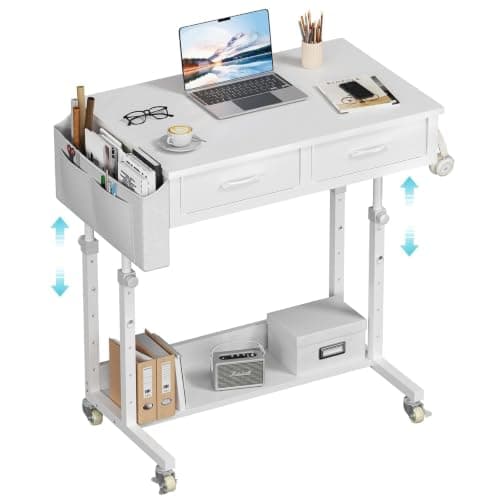
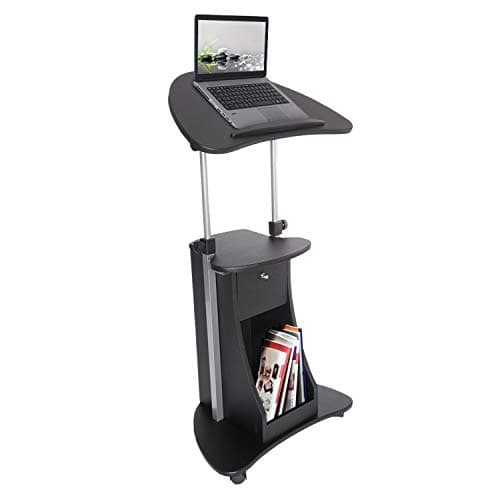
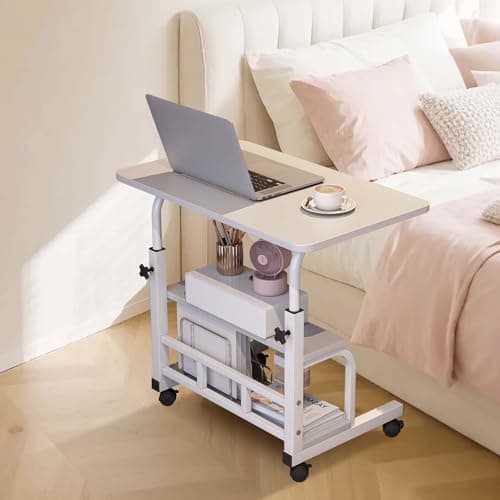
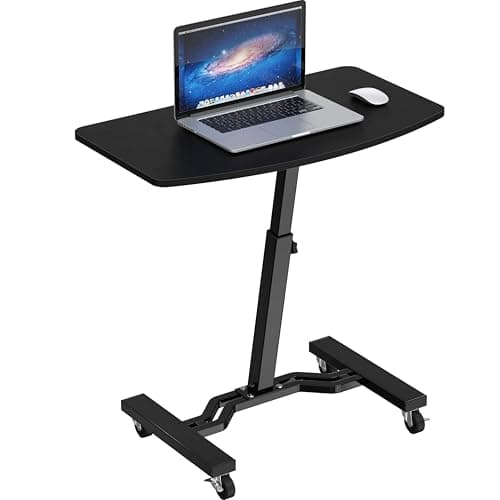
Our pick is the SHW mobile rolling cart: height adjustable, lockable wheels, and cheap enough that a mobile desk stops being a compromise. The HUANUO T-base is the one that rolls over a sofa or a bed, the WINAZ 32-inch adds real drawer storage, the Techni Mobili cart is the sturdiest of the classic laptop-cart shape, and the FinerFurnis cart is the budget entry. Live prices below; how we score is published in full.
Locking casters are the whole specification
A wheel that swivels freely under a typing load will creep, and on a hard floor it creeps fast. There are two things to look for. Locking casters have a small plastic lever that presses a brake against the wheel; two locked wheels on the same side is usually enough to hold a light desk. Non-swivel rear castersare the other approach — fixed rear wheels and swivelling fronts, the way a shopping trolley works — which stops sideways drift without any lever at all. What you do not want is four free-swivelling unlocked casters under a surface you type on.
Floor type matters as much as the caster. Hard casters roll beautifully on carpet and skid on laminate; soft rubber casters grip laminate and drag on carpet. If your floor is laminate or engineered wood, look for rubber or polyurethane wheels, both for grip and because hard nylon marks a soft finish. In a rental, that mark is a deposit question.
Cart or desk? Be honest about how often it moves
| If you move it… | Buy… | Why |
|---|
| Every evening | A cart (SHW, HUANUO, FinerFurnis) | Light enough that moving it never becomes a reason not to |
| Weekly, or for guests | A mobile workstation (WINAZ) | Real desk surface and storage; heavy but shiftable |
| Almost never | A fixed small desk | You are paying for wheels you will not use |
The failure mode we see described most often is buying the biggest rolling desk that fits, then never moving it because it is genuinely heavy. If the desk is going to stay against one wall, our small desk roundup gets you more surface and more stability for the money, and a wall-mounted folding desk gets the room back more completely than any cart.
What a rolling desk cannot do
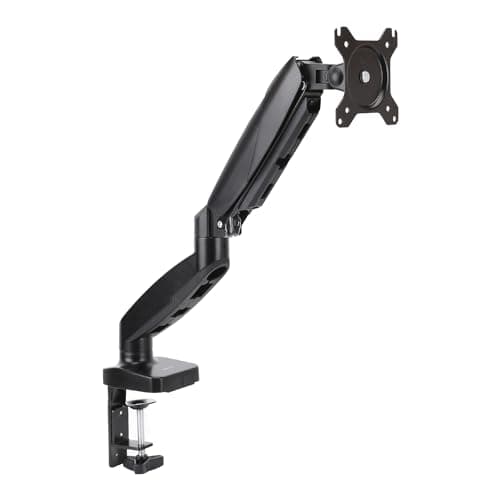
It cannot carry a monitor arm. A clamp arm exerts serious leverage on the desk edge, and on a light mobile frame the result is a desk that tips toward the screen. Every arm we recommend assumes a top of a stated thickness fixed to a stable base; see will a monitor arm fit my desk for the thickness and material limits. If you want a screen on a cart, put it on a riser or keep to a laptop.
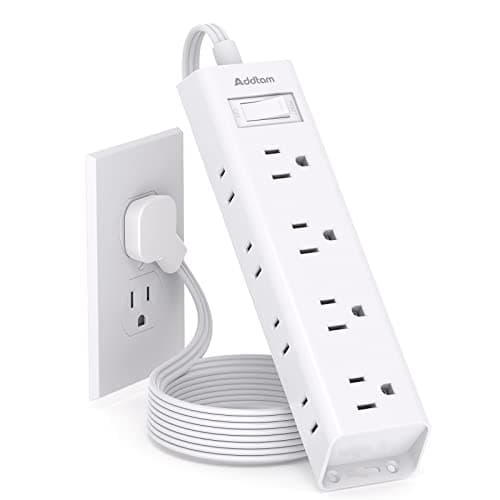
It also will not solve cable management on its own. A desk that moves cannot be permanently plugged in, which in practice means either a single extension lead you unplug each time, or a laptop that runs on battery for the mobile half of its day. A short lead coiled on a hook under the top beats a long one trailing across a room you walk through — our cable management kit covers the parts.
And if the job is specifically working from the sofa rather than moving a desk around the room, a cart is the second-best tool for it. A C-shaped table slides its base under the couch and costs no floor at all, which a wheeled frame parked beside the arm cannot — the field is in couch desks and C-tables.
Parking it: the part people forget to measure
A rolling desk needs somewhere to go, and that place has a width. Measure the gap beside the wardrobe, the space behind the sofa or the width of the hallway before you buy, not after — a 32-inch mobile workstation that will not fit its parking slot is simply a 32-inch desk in a worse position. Check the door width too if it moves between rooms; interior doors are commonly 28 to 32 inches, which rules out the wider tops.