A writing desk is defined by what it leaves out. No CPU cage, no cable towers, no monitor bridge — a flat top, four legs, and usually a drawer. That restraint is exactly why it suits a small apartment: it is shallower than a computer desk, it is lighter to move, and it reads as furniture in a bedroom or a living room instead of announcing that you work here.
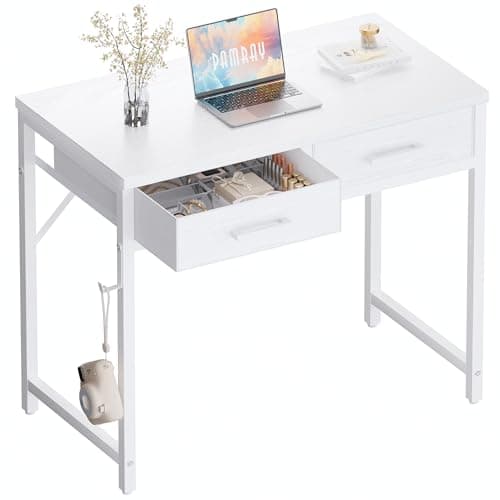
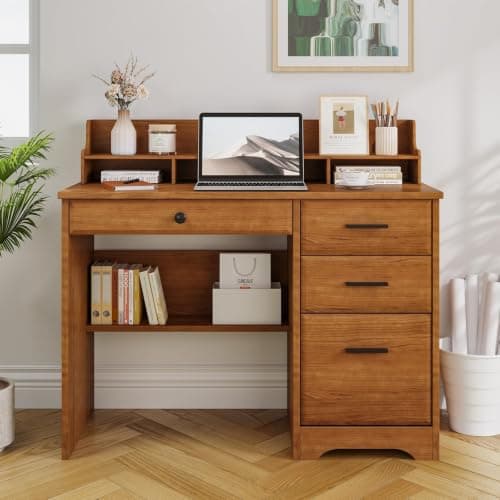
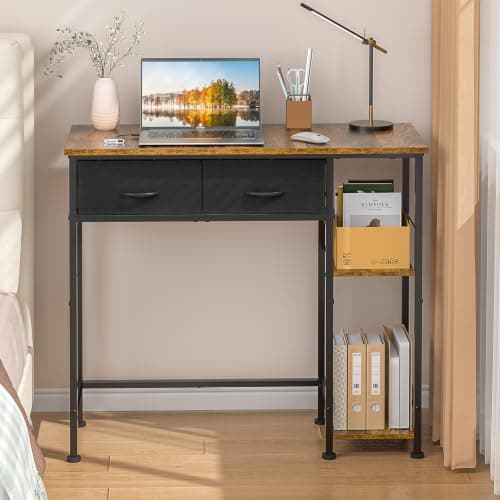
Our pick is the DAOUTIME 36-inch: 15.9 inches deep, two fabric drawers and reversible shelves so it works against either wall. The Pamray 32in is the smallest and the cheapest; the 4 EVER WINNER 44in is the one with real wooden drawers including a file drawer; the WOPITMER is solid rubberwood for people who want the desk to outlive the apartment; and the Nathan James Parker is the design pick.
What a writing desk asks of you in return is a plan for the screen. These tops run 15.7 to 20.5 inches deep, and a monitor on its own base wants 8–10 of that — the buying guide below deals with it. Specs come from the manufacturer listings, and the methodology explains how we score.
Writing desk or computer desk?
The difference is not marketing. A writing desk is shallower (typically 16–24in versus 20–30in), has no CPU cage or cable management built in, and carries its storage in a drawer rather than in shelving. That makes it lighter, better looking and better suited to a room with a bed in it — and worse at hosting a full multi-screen setup. We put the two formats head to head in writing desk vs computer desk.
The depth decision
Depth is the number that decides whether a writing desk works in your room, and it cuts both ways.
| Depth | What fits | Walkway impact |
|---|
| 15–16 in | Laptop, or a screen on a clamp arm | Minimal — works in a circulation path |
| 18–20 in | Laptop plus a small monitor on a stand, tight | Noticeable in a narrow room |
| 21–24 in | Monitor on its stand with keyboard room | Wants a dedicated wall |
Measure the wall-to-walkway distance before you shop and keep about 30 inches of path clear. Our desk size guide turns your room measurements into width and depth bands.
Fabric bins are not drawers
Several desks in this category advertise “drawers” that are fabric bins in a frame. They are genuinely useful for cables, chargers and notebooks, they keep the desk light, and they cost almost nothing — but the Pamray publishes a 10 lb limit per bin, and that is representative. If you need to file paper or store anything heavy, you want wooden drawers on metal glides, which in this roundup means the 4 EVER WINNER. Knowing which you are buying prevents the most common disappointment in the category.
Solve the screen before you buy the desk
A monitor on its factory stand claims 8–10 inches of depth. On a 15.9-inch writing desk that leaves about six inches for a keyboard and your hands, which is unworkable. Three honest options:
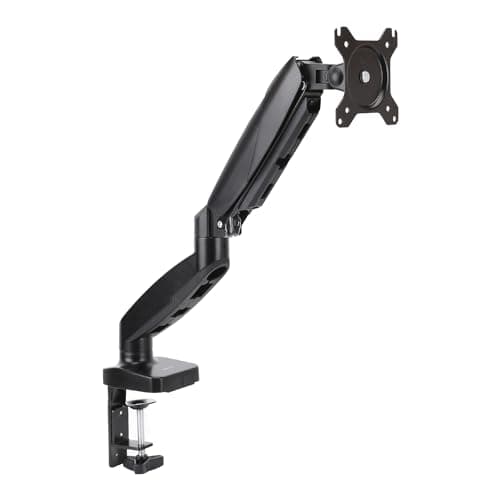
- Clamp arm. The best answer — a monitor arm removes the base entirely and pushes the screen back over the desk edge. Check the top thickness first with our desk-fit guide, because a thin hardwood or laminate top has limits.
- Buy the depth.At 20.5–24 inches (the 4 EVER WINNER, the Nathan James) a monitor simply fits. You pay for it in floor space.
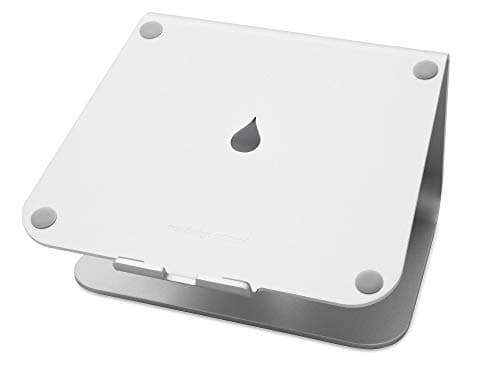
- Work on a laptop. With a laptop stand and an external keyboard, a 16-inch-deep desk is genuinely comfortable.
Materials, and what actually lasts
Most desks at this size are laminate over particleboard, which is fine — it is stable, flat and cheap — but it chips at the edges and will not survive many moves. Solid wood (the WOPITMER’s rubberwood) costs several times more and takes knocks, refinishes and apartment moves that laminate does not. If you move often, that premium is not vanity. If this is a desk for one apartment, it is.