Width decides whether a desk fits the wall. Depth decides whether you can walk past it.In a hallway, a narrow bedroom or a studio where the desk sits between the bed and the door, four inches of depth is the difference between a room that works and a room you edge through sideways — and it is the number almost nobody checks before ordering.
A narrow desk is roughly 16 inches deep instead of the 24 a conventional desk claims. The trade is specific and worth understanding before you buy: at 16 inches, a monitor stand alone eats 8–10 inches, leaving almost nothing for a keyboard. So a narrow desk is really a laptop desk, or a desk plus a clamp arm. Buy it knowing that, and it is the most space-efficient desk you can own. Buy it expecting a monitor to sit on it and you will be disappointed within a week.
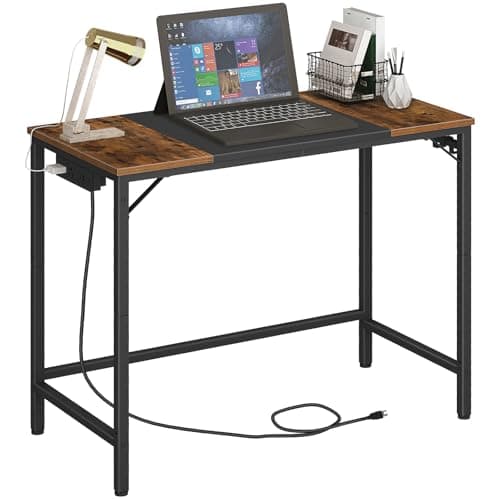
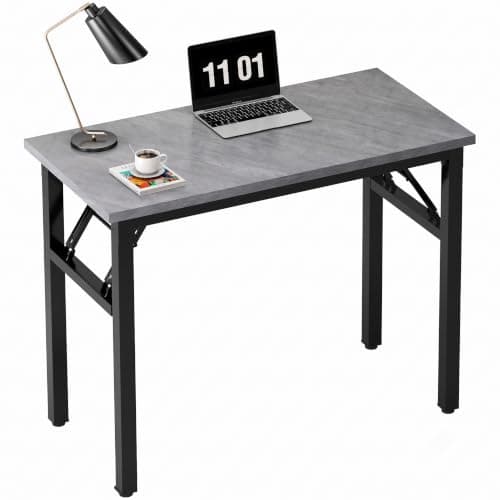
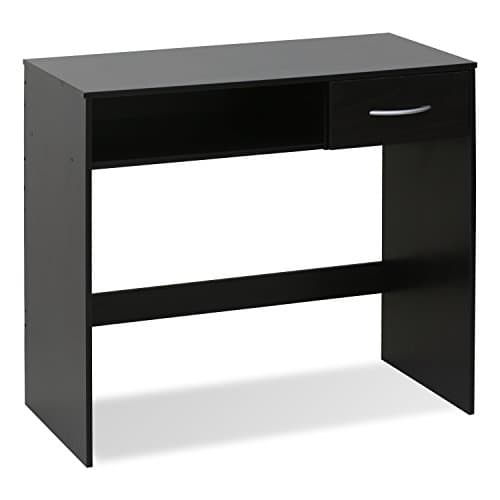
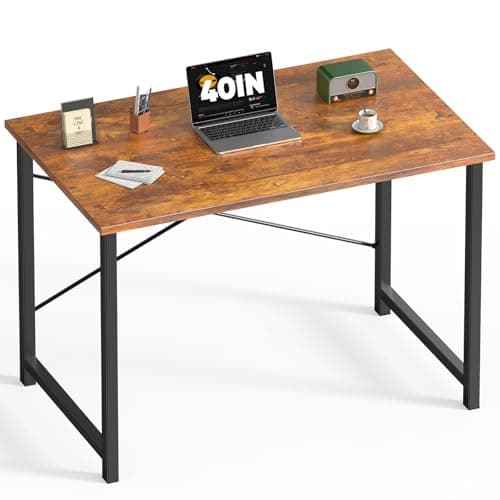
The WOPITMER 39 × 16″ is our pick: solid rubberwood, two drawers, and a published 15.75-inch depth. The HOOBRO 31.5″ is the cheapest genuinely narrow desk here and has a built-in power outlet. If you can spare four more inches, the DUMOS 40″ at 19.7 inches buys back real usability. Every depth below is the manufacturer’s published figure.
The clearance math, once
Here is why 16 inches behaves so differently from 24. A monitor on its own stand needs roughly 8–10 inches of depth for the base and the backwards lean of the screen. A keyboard needs about 6 inches, and you want a few more inches in front of it so your wrists are not hanging off the edge. Add those up: on a 24-inch desk the monitor and the keyboard both fit with room left over. On a 16-inch desk, they do not. The desk is not badly designed — it is designed for a laptop, or for a screen that is mounted rather than standing.
How to run a monitor on a 16-inch desk anyway
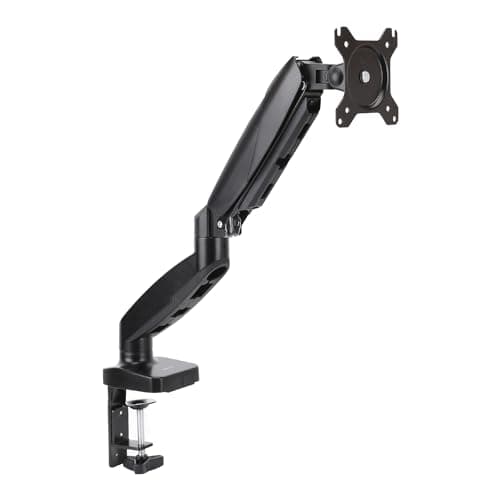
Clamp it. A single monitor armgrips the back edge of the desk, pushes the screen back over the edge and takes zero surface depth. That one purchase turns a narrow desk into a full workstation, and it is usually cheaper than the extra eight inches of desk would have been. Two cautions specific to narrow desks: check the arm’s clamp thickness range against your desktop, and check that the top is solid enough to clamp — our arm-compatibility guide walks through both checks in a couple of minutes.
Where narrow desks earn their keep
Four situations, from the keyword data and from how real small rooms are laid out. A hallway or landing, where anything deeper blocks passage. A narrow bedroom, where the desk sits between the bed and the wall — see our bedroom desk picks. A studio, where the desk doubles as a console table behind a sofa. And a shared room, where two narrow desks along one wall beat one deep desk in the middle. In all four the depth is doing the work, not the width.
What to give up, and what not to
Give up on-desk monitor stands, deep drawers and a printer living on the surface. Do not give up sturdiness: a narrow top has less leverage against a wobbly frame, so a flexing narrow desk feels worse than a flexing wide one. Look for a metal frame with adjustable feet (HOOBRO), diagonal bracing (DUMOS) or solid wood legs (WOPITMER), and if the desk still moves when you type, our wobble guide fixes most cases in ten minutes with hardware you probably own.