In a small apartment, a desk with storage is not a luxury feature — it is one fewer piece of furniture. A drawer or a cabinet built into the desk you already need does the job of a nightstand, a filing cabinet or a shelf unit that would otherwise claim its own square footage. That is the whole argument for paying a little more for drawers, and it is a good one when the floor is the resource you are short of.
The catch is that storage is the one small-desk feature that quietly costs you space. Drawers add depth, cabinets add width, and a pedestal eats the legroom on one side. So we ranked these five by the same number as always — the footprint they claim — and then by what the storage genuinely holds. A fabric bin that takes cables is not the same product as a file drawer that takes Legal hanging folders, and the listings do not always make that obvious.
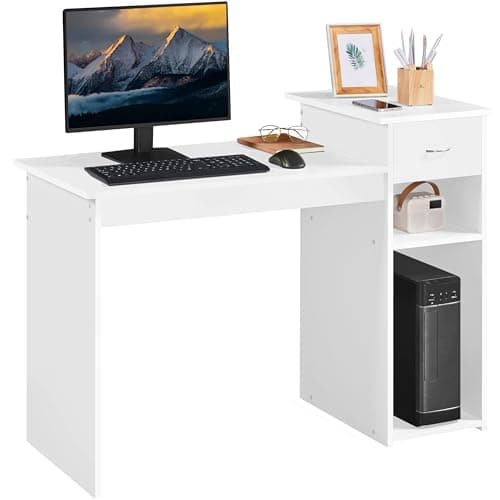
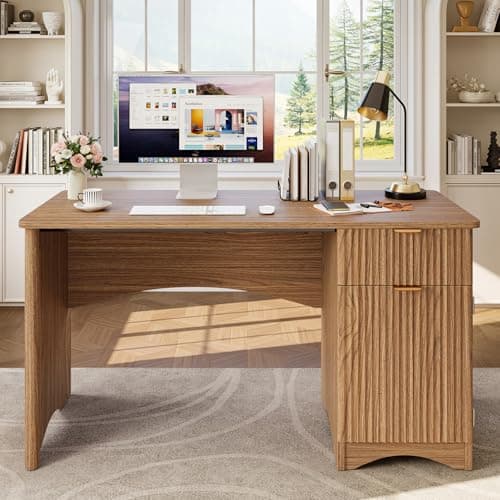
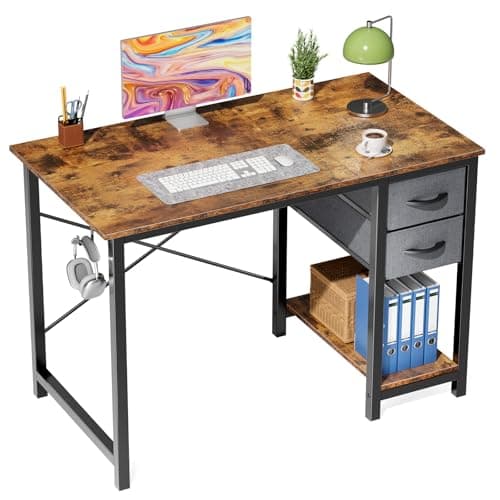
Our pick for most people is the Sweetcrispy 40″: two drawers inside a 39.4-inch footprint for about the price of a takeaway dinner for two. If paperwork is the actual problem, the Bestier 47″ has a real Letter/Legal file drawer plus an adjustable-shelf cabinet. If your room cannot spare 40 inches, the Yaheetechsqueezes a drawer, a shelf and a monitor platform into a 31.5 × 19.7-inch top. Every dimension below comes from the manufacturer listing; the methodology explains the scoring.
Match the storage to what you actually store
“Storage” on a desk listing covers four different things, and they are not interchangeable. A shallow drawer (most sub-$60 desks) takes pens, cables, a notebook and a charger. A fabric bin takes soft, light items and sags under anything heavy. An open cubby or shelf takes books and a router but shows everything. A file drawer is the only one that takes hanging folders, and it is the feature that separates the Bestier from everything else here. Decide which of those four you need before you compare prices, because the cheap end of the category genuinely cannot do the fourth one.
The depth tax on drawers
A drawer has to go somewhere, and on a small desk it usually goes into the depth. That is why the storage picks here run 19.7–21.7 inches deep while our narrow picks sit at 15.7. If your walkway is tight, work out your maximum depth first — our desk-size guidehas the bands — and only then decide how much storage that depth can carry. Where the depth simply is not available, the honest answer is to keep the desk narrow and hang the storage underneath it instead: a clamp-on under-desk drawer adds a drawer to a desk that never had one, and costs a fraction of a bigger desk.
Storage versus surface: pick one to optimize
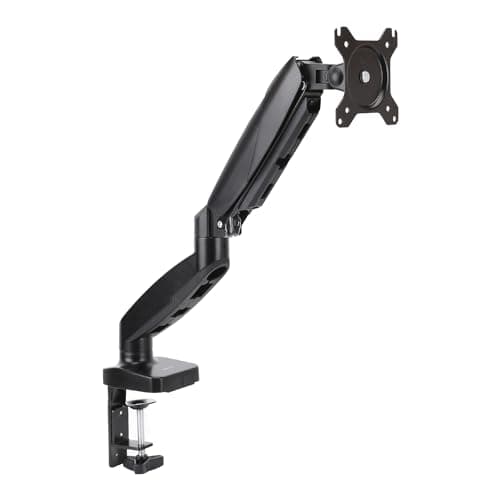
There is a real trade in this category. On a 31–40 inch desk, every inch a cabinet claims is an inch your keyboard does not get. Two moves buy the surface back without buying a bigger desk. First, get the screen off the top: a monitor armclamps to the back edge and returns the 8–10 inches of depth a monitor base was using. Second, get the keyboard off the top when you are not typing — an under-desk keyboard tray slides the whole typing surface out of the way. Do both and a 40-inch desk with drawers behaves like a 47-inch one without them.
What to spend, and where not to
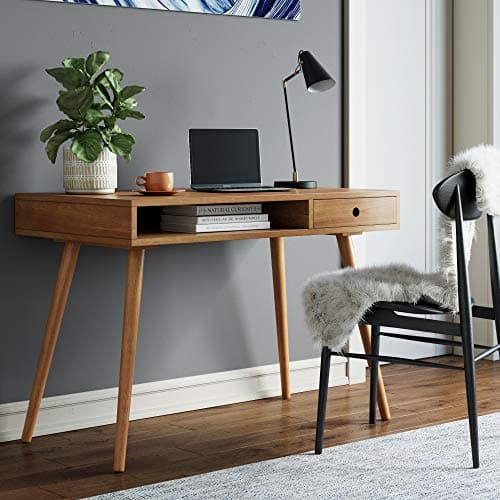
Under about $60 you are buying a plain top with shallow drawers, and the Sweetcrispy is the best version of that. Around $150 you can buy real filing (Bestier) or real wood (WOPITMER) — but not both. Above that you are paying for design and finish, which is a legitimate thing to want in a studio where the desk is visible from the bed, and exactly what the Nathan James Parker is for. What is never worth paying for is a “storage” feature you cannot see in the photos: if the listing does not name the drawer’s interior size or say the file drawer takes hanging folders, assume it does not.