The secretary desk was invented for exactly the problem small apartments have: a workspace in a room that is not an office. It builds upward instead of outward, so the floor footprint stays small, and it closes — a drop front, a hutch with doors, or a top that folds away — so the room stops being an office the moment you stand up. In a studio or a bedroom, that ability to shut is worth more than another six inches of desktop.
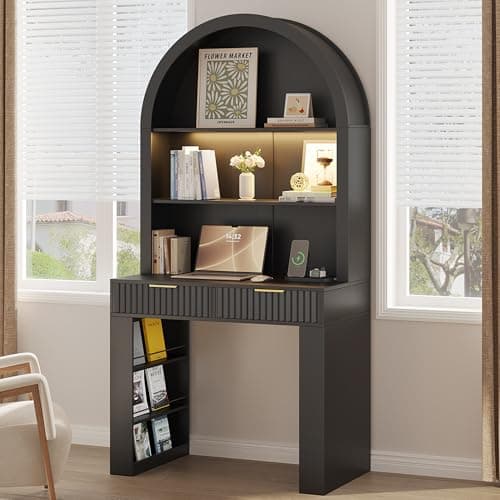
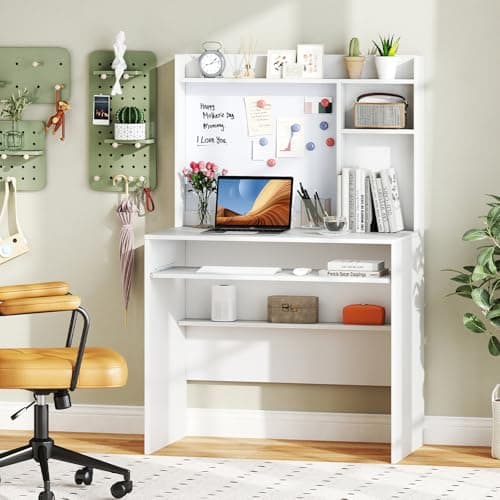
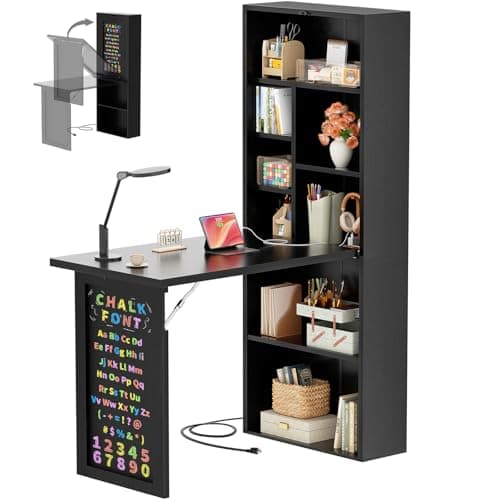
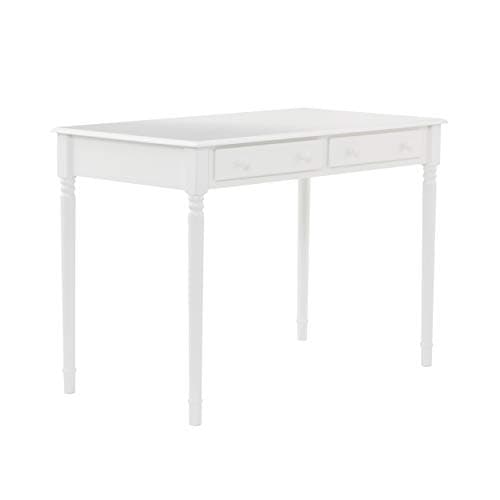
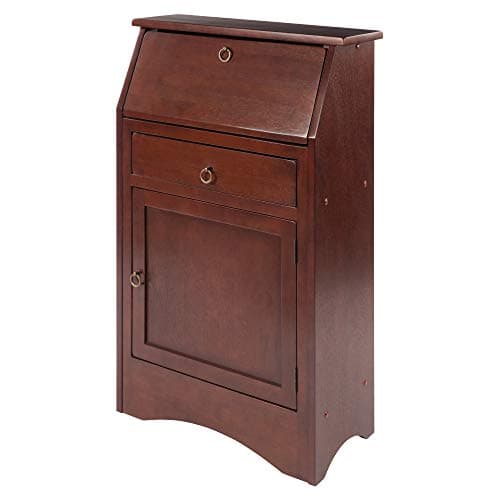
Our pick is the Winsome Regalia: a genuine drop-front secretary at 25 inches wide and 11.4 inches deep, which is a smaller floor claim than almost any desk sold. If you want a modern equivalent with power built in, the ZKIODV arched desk stacks a hutch, outlets and USB ports into a 35-inch footprint. The Giantex is the budget hutch desk, the Armocity is the fold-away version for the tightest rooms, and the SEI Furniture is the plain, wide writing variant.
A note on the category: “secretary desk” now covers everything from a true antique-style drop-front to a modern desk with a hutch bolted on. We have ranked both, and said which is which, because they solve the small-room problem differently. Specs come from the manufacturer listings; the methodology explains the scoring.
“Secretary desk” now means three different things
Search the term and you get three formats sold under one name, and they solve a small room very differently.
| Format | What it does | Best when |
|---|
| True drop-front | A hinged front becomes the desktop and closes over the mess | The desk lives in a living room or bedroom |
| Hutch desk | Builds storage upward over a small floor footprint | You need storage and a permanent monitor |
| Fold-out / murphy | Whole desk folds flat into a slim cabinet | The room genuinely has no space for a desk |
Decide which of those you are buying before you compare prices, because a drop-front and a hutch desk at the same price are not competing products.
Depth is what buys you the room back
The reason this format suits apartments is depth, not width. The Winsome here is 11.4 inches deep — less than a bookshelf — so it can sit against a wall in a walkway that a 24-inch desk would block. Our desk size guide has the arithmetic, but the short version is that a walkway wants about 30 inches clear, and every inch of desk depth comes straight out of it. If the desk has to go in a circulation path, depth is the spec to optimize and everything else is secondary.
The monitor question, answered honestly
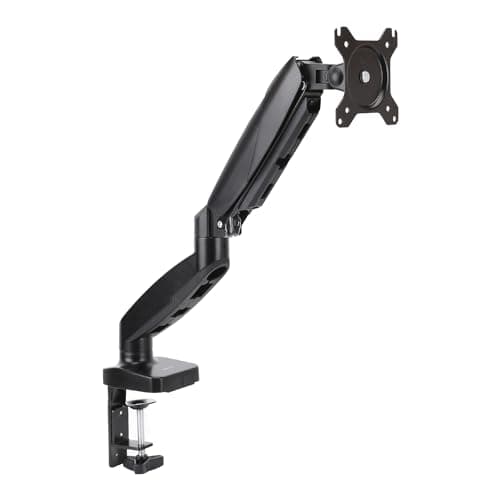
Anything that closes cannot host a permanent monitor — the front has to be able to shut, and a screen bolted to the desk stops that. So: if you work on a laptop, a drop-front or fold-out desk is ideal. If you run an external screen, you want a hutch desk with 20 inches of depth (the ZKIODV or the Giantex here), and you should still put the screen on a clamp armrather than its base, because a hutch already eats the back of the surface. Two screens on a desk this size is a different problem — see two monitors on a small desk.
Tall furniture and the tip-over rule
The hutch desks here stand 54 to 71 inches tall on a footprint under two feet deep, which is the geometry that makes tall furniture tip. Every one of them ships with an anti-tip strap or bracket. Fit it. This is not optional in a home with children or pets, and it takes two screws into a stud. It is the single most-skipped step in this category.
Power, and why built-in beats bolt-on here
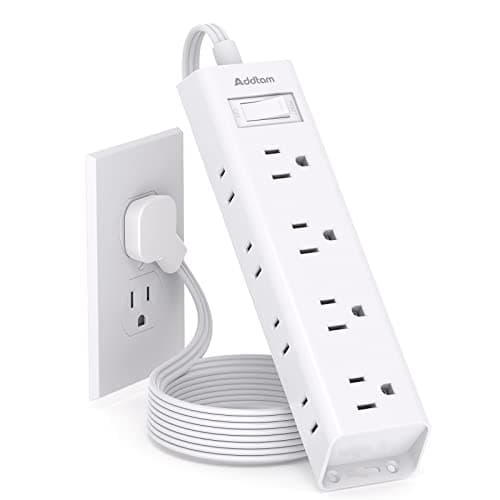
A secretary desk usually ends up against a wall in a room that was never wired for work, so the outlet situation is worse than at a normal desk. Two of these picks solve it in the furniture — the ZKIODV has two outlets plus USB-A and USB-C, the Armocity has sockets in the cabinet. If yours does not, mount a strip underneath rather than running one across the floor; the options are in best desk power strips.