HUB 05 · Small-Space Setups
What Height Should Your Desk Be?
Standard desks are built at 29–30 inches for a 6-foot user. Here is the height that actually matches your body, and three ways to fix a fixed-height desk.
We earn a commission when you buy through our Amazon links, at no extra cost to you. It never affects our rankings, and we say so when the cheaper product is the better buy. How this works.
Almost every desk sold is built to the same height — 29 to 30 inches from the floor to the top — and that figure was set for a user around six feet tall. If you are shorter than that, and most people are, a standard desk puts your keyboard above your elbows and your shoulders up around your ears for eight hours a day. Because you cannot change the desk, you compensate with the chair, and then your feet dangle.
On a small desk this matters more, not less: there is no room to slide the keyboard around until the posture works, and the desk is often doing double duty in a bedroom or a corner where you cannot just buy a different one. Here are the numbers, and the fixes that do not require replacing the desk.
Seated desk height by your height
The target is simple: with your feet flat on the floor and your upper arms hanging at your sides, your forearms should be roughly parallel to the floor when your hands are on the keyboard. That puts the working surface a little below elbow height.
| Your height | Seated desk height | Seat height |
|---|---|---|
| 5′0″ (152 cm) | ~23.5 in | ~14.5 in |
| 5′4″ (163 cm) | ~25 in | ~16 in |
| 5′8″ (173 cm) | ~26.5 in | ~17.5 in |
| 6′0″ (183 cm) | ~28.5 in | ~18.5 in |
| 6′4″ (193 cm) | ~30.5 in | ~20 in |
These are starting points derived from the standard seated-posture guidance published by OSHA and NIOSH — elbows at roughly 90 degrees, wrists straight and neutral, feet flat, thighs approximately parallel to the floor. Bodies are not proportional in the same way, so treat the number as a place to begin and adjust by feel. The test that matters: after twenty minutes, are your shoulders relaxed and your wrists flat?
Why the standard desk is too tall for most people
Read the table against the 29–30in standard and the mismatch is obvious. At 5′8″ — near the middle of the adult range — the ideal seated surface is around 26.5 inches, three and a half inches below what the desk gives you. The usual coping strategy is to raise the chair, which fixes the arms and breaks the legs: your feet leave the floor, the seat edge presses into the backs of your thighs, and you end up perched.
The correct sequence is the opposite. Set the chairfirst so your feet are flat and your thighs are level. Then deal with the desk. If the desk is too high after that, you fix the desk — you do not un-fix the chair.
Three fixes for a desk you cannot adjust
- Lower the keyboard, not the desk. An under-desk keyboard trayclamps beneath the top and drops the typing surface 2–4 inches, which is usually the exact gap in the table above. It is the cheapest real fix, it works on almost any desk, and on a small desk it has a second benefit: it moves the keyboard off the surface entirely and gives you the depth back.
- Raise the floor. If your feet no longer reach after setting the chair correctly, an under-desk footrest restores the contact your posture depends on. This is the standard fix for shorter users at a fixed-height desk and it costs less than any other option.
- Change the desk height. Some desks have adjustable feet or replaceable legs; failing that, furniture risers raise a desk that is too low. If you want the height to change on demand, that is what a small standing desk or a desk converter is for.
Measure your own numbers in five minutes
The table is a starting point derived from average proportions. Your own numbers are better, and you can take them with a tape measure and a chair.
- Sit properly. Feet flat on the floor, thighs roughly parallel to it, back against the chair. If your chair cannot get you there, adjust the chair before measuring anything.
- Measure elbow height. With your upper arms hanging at your sides and your forearms level, measure from the floor to the underside of your elbow. That is your elbow height.
- Subtract an inch or two.The working surface wants to sit slightly below elbow height, so your wrists stay flat rather than bending upward. Elbow height minus 1–2 inches is your target desk height.
- Compare with your desk.Measure floor to desktop. The difference is the gap you have to close — and it tells you which fix you need. Under two inches, a thinner keyboard or a wrist rest may be enough. Two to four inches, a keyboard tray. More than that, and the desk is genuinely the wrong height for you.
Write those numbers down. They do not change, and they are the single most useful thing to have when you next shop for a desk, a chair or a standing frame.
Where these numbers come from
Nothing here is a lab measurement — we do not run a lab, and our methodology says so plainly. The heights above are derived from the seated-posture guidance published by OSHA and NIOSH: elbows at roughly 90 degrees, wrists straight and neutral, feet supported, thighs approximately parallel to the floor, with the screen top at or just below eye level. Applying those constraints to standard adult proportions produces the table. Treat it as a well-founded starting point rather than a prescription, because limb proportions vary considerably between people of the same height.
The test that overrides any number: after twenty minutes at the desk, are your shoulders relaxed, your wrists flat and your feet supported? If yes, the height is right for you whatever the table says.
Standing height, if you use it
Standing height follows the same elbow rule and lands roughly 16–17 inches above your seated number — about 38–40 inches for a 5′8″ user, 42–44 for someone at 6′2″. Check the range before you buy: many budget electric desks stop around 47 inches at the top and start at 28 at the bottom, which is too high for a short user seated and too low for a tall one standing. A converter’s range stacks on top of your existing desk height, so measure from your real desktop, not from the floor.
The clearance a small desk still owes you
Height is only half of the fit. Under the desk you need roughly 24 inches of width and 15 inches of depth at knee levelto sit square to the screen, with about 24 inches of clear depth at foot level. Small desks lose this to drawer boxes, a low stretcher bar, or a CPU parked in the footwell — which is a reason to mount the tower with an under-desk CPU holder rather than stand it on the floor. When you measure a desk for a small room, measure the legroom too; our desk size guide covers the surface dimensions that go with it.
Then set the screen
Once the desk and chair are right, the monitor follows: the top of the screen at or just below eye level, about an arm’s length away. On a fixed-height desk that is hard to achieve with a factory stand, which is why a monitor armis worth more on a small desk than almost anything else — it decouples screen height from desk height, and gives back the 8–10 inches of depth the stand was using.
Questions
Frequently asked
What is standard desk height?
What desk height do I need for my height?
How do I lower a desk that is too high?
How much legroom does a desk need?
What height should a standing desk be?
Finish the setup
Under $40: the parts that finish a small desk
A desk is the expensive decision. These are the cheap ones that decide whether it actually works in a small room — each is the top pick from one of our own roundups, and each clamps, sticks or stands rather than needing a drill. Prices live as of Sep 25, 2026.
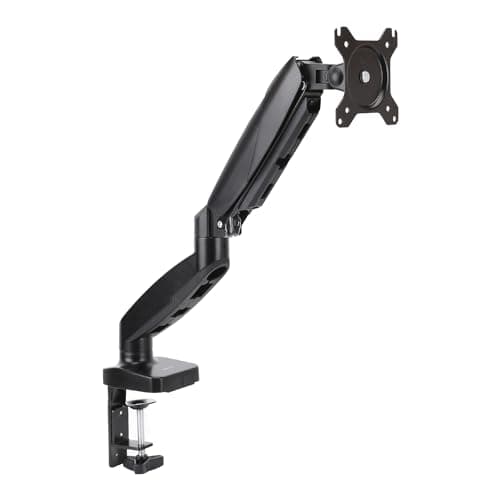
Monitor arm
Amazon Basics Single Monitor Arm (Gas Spring)
Clamps to the back edge and gives you back the whole footprint the monitor stand was standing on — the single biggest surface win on a narrow desk.
$25.49Amazon#ad · Our top pick in The Best Monitor Arms for a Small Desk
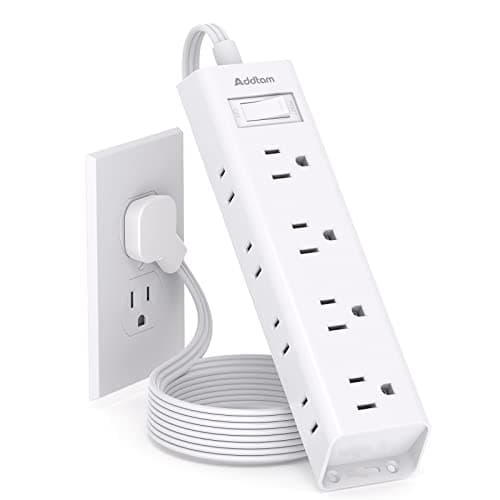
Power strip
Addtam Flat-Plug Power Strip (12 outlets)
The flat plug is the point: a normal brick stops a desk sitting flush to the wall and costs you two inches of depth you do not have.
$11.99Amazon#ad · Our top pick in The Best Power Strips for a Desk
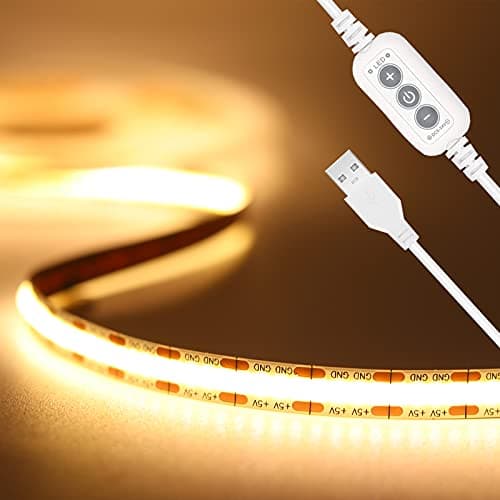
Bias lighting
PAUTIX COB LED Strip (6.56ft, 3000K)
Sticks under a shelf or behind the monitor and lights the wall instead of the desk, so it takes no surface at all.
$9.19Amazon#ad · Our top pick in The Best LED Strip Lights for a Desk
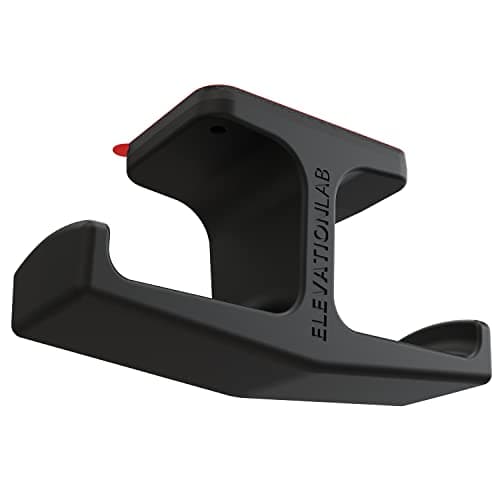
Headphone mount
Elevation Lab The Anchor Under-Desk Headphone Mount
Adhesive, mounts under the desk, and clears the one bulky object that otherwise lives permanently on a small surface.
$11.99Amazon#ad · Our top pick in The Best Headphone Stands for Small Desks
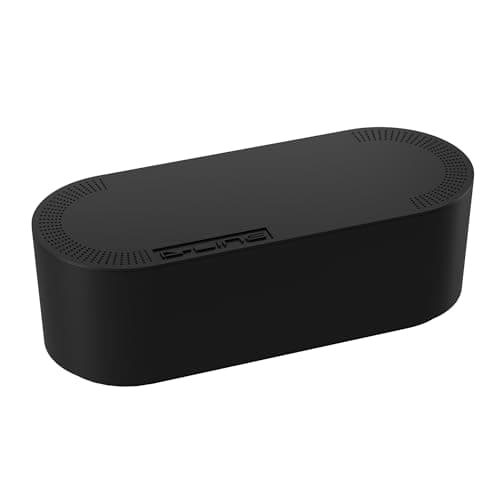
Cable box
D-Line Cable Management Box (Large)
Puts the strip and the wall-warts in one closed box so the floor under a desk in a studio does not read as a nest.
$27.99Amazon#ad · Our top pick in The Best Desk Cable Management for a Small Setup
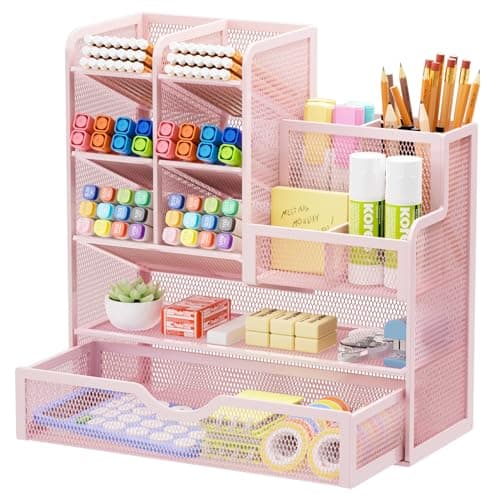
Desk organizer
Marbrasse Mesh Desk Organizer with Drawer
Goes vertical with the pens and notebooks that otherwise spread flat across the only surface you have.
$22.99Amazon#ad · Our top pick in The Best Desk Organizers for Small Desks
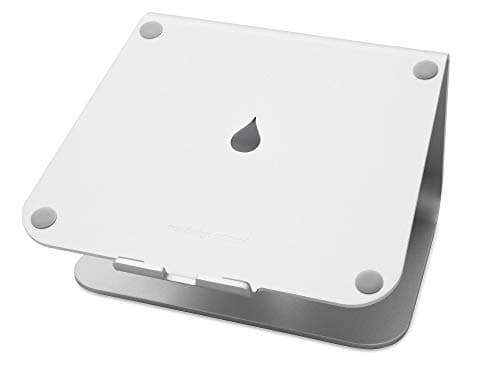
Laptop stand
Rain Design mStand Laptop Stand
Lifts the screen to eye level and opens the space underneath for a keyboard, which is how a 40-inch desk fits a full setup.
$38.99Amazon#ad · Our top pick in The Best Laptop Stands for a Small Desk
Keep reading
Related
- Desk size for small spacesThe width and depth numbers that pair with these heights.
- Best keyboard traysThe cheapest fix for a desk that is too tall.
- Best under-desk footrestsFor when the chair is right and your feet are not.
- Best small standing desksWhen you want the height to change on demand.
- Office chair fit for small spacesArmrest height against the desk underside, and the rest.
Receipts
Sources
- OSHA — Computer Workstations eTool: workstation components (desk and chair height guidance)
- OSHA — Computer Workstations eTool: good working positions
- CDC / NIOSH — office ergonomics resources
We do not run a testing lab, and we do not pretend to. Specifications come from the manufacturer or retailer listing; the footprint and clearance math is ours and reproducible. Where we could not verify a number, we say so on the page rather than quietly leaving it out. Read our full method.