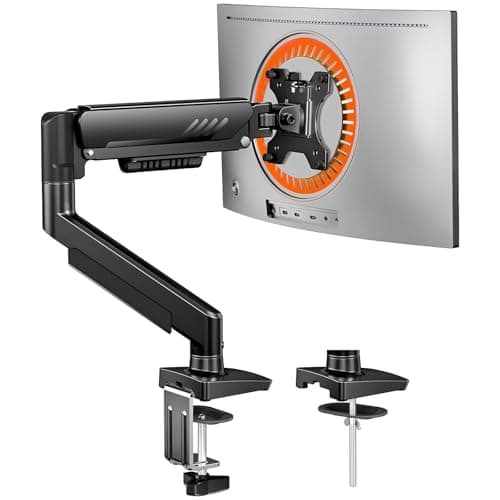
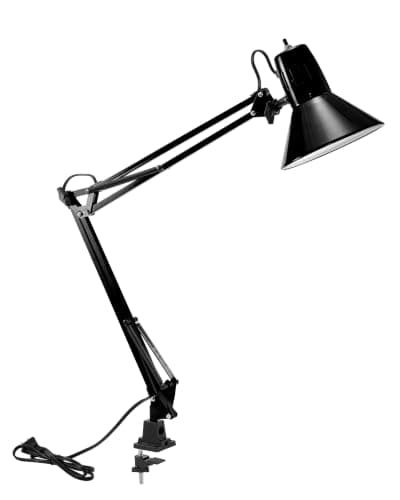
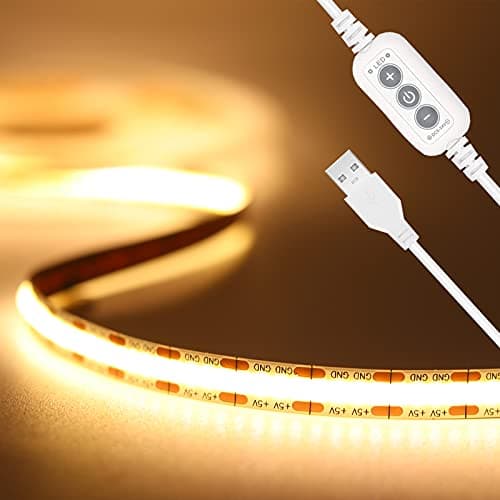
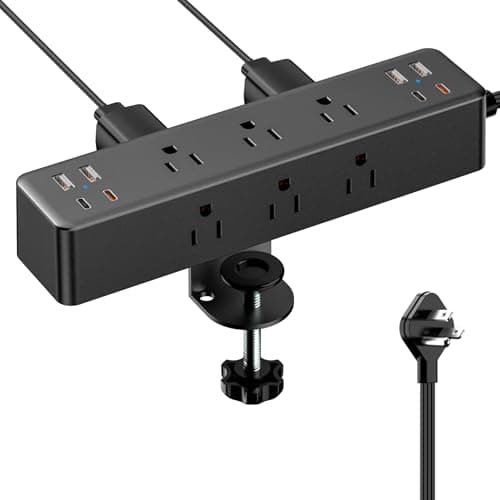
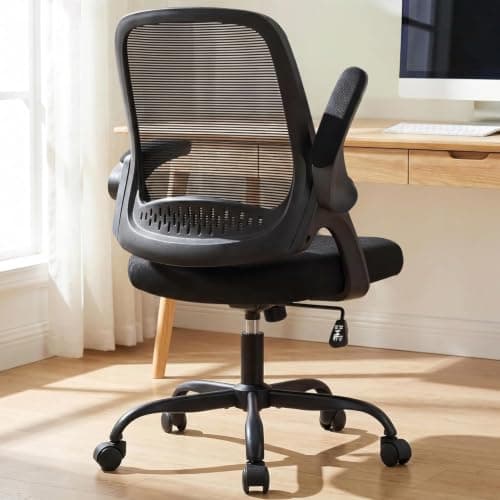
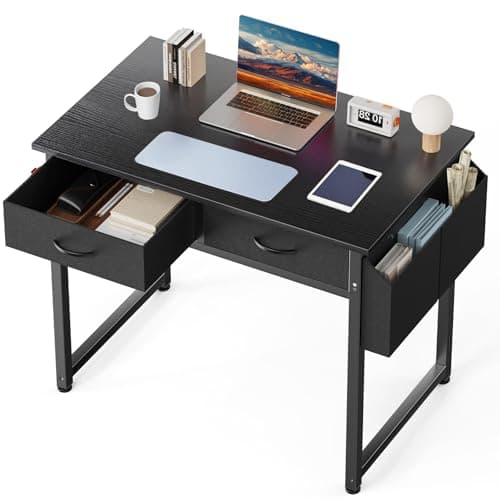
A closet office fails for three predictable reasons: the desk is too deep for the closet, there is no daylight, and there is no outlet inside. This build solves all three — a 32-inch desk that clears a standard reach-in opening, two layers of light because there is no window to help, and a power strip with a ten-foot cord that reaches the socket outside the closet.
If you have not measured yet, start with closet desk setup, which covers the depth and width a closet actually gives you and what to do about the rod. This page is the shopping list that follows it. Parts are listed in build order, not rank order.
The three budget tiers
The middle column is the build above. As everywhere on this site, no totals are printed — add the live prices on the buy rows.
The two closet measurements that decide everything
A standard reach-in closet is around 24 inches deep and five feet wide, with the door opening narrower than the interior. Your desk has to clear the opening, not the interior, and it has to leave you room to get in beside the chair. That is why the desk here is 32 inches wide rather than 40. The depth question is the same one every small desk faces — a 15.7-inch top plus a monitor on an arm works; a 24-inch top with a monitor stand does not fit at all.
Lighting a box with no window
A closet needs two layers, and this is the part most cloffice builds get wrong. Task light over the desk (the clamp lamp) stops you working in your own shadow. Ambient light under the shelf (the strip) stops the space reading as a cave and, more practically, stops your face being lit from one side on video calls. Between them they replace the daylight the space does not have. If you take calls in there, read lighting for video calls at a desk before you buy either.
The rod, the shelf and the doors
Three closet-specific decisions. The rodusually has to go, or the desk has to sit under it — measure from the floor to the rod before assuming a 30-inch desk fits. The shelf is free storage: it is the one place in this build where you gain space rather than spending it, and the LED strip mounts to its underside. The doorsdecide the cable route — bi-fold doors that must close need a flat cord path, which is exactly what a flat-plug ten-foot cord is for.
Ventilation, which nobody mentions
A closet with the doors shut, a person in it and a computer running gets warm and stuffy faster than a room does. Work with the doors open, or leave them off entirely and treat the alcove as a nook. If you have a desktop PC, keep it out of the closet or mount it under the desk with airflow around it — the options are in best under-desk CPU holders.