The number pad is the single largest piece of unexamined desk furniture most people own. A full-size keyboard is a wide object — typically around 17 to 18 inches for a 104-key layout — and on a 36 or 40-inch desk it takes roughly half the width. Worse, it pushes the mouse out to the right of the number pad, which means your mouse arm works at an angle away from your shoulder all day. Dropping to a shorter layout fixes both problems at once, for the price of a keyboard.
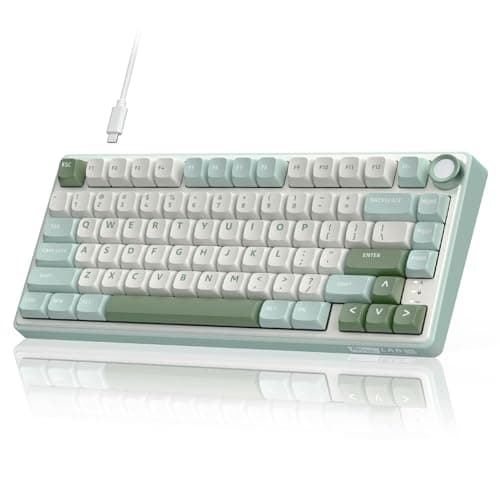
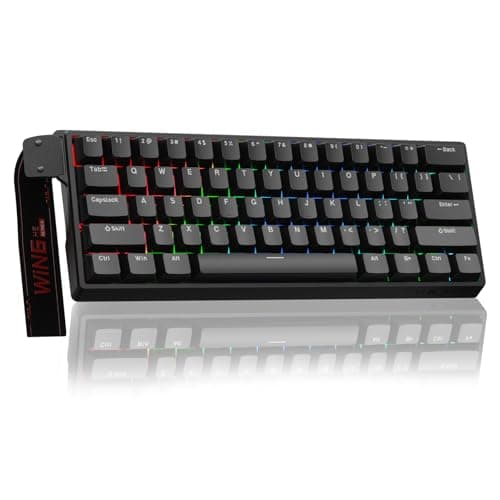
The layouts, in order of what they remove. A tenkeyless (TKL, 87 keys) drops the number pad and keeps everything else, which is the easy win. A 75 percent (around 84 keys) keeps the function row and the arrow keys but compresses the gaps. A 65 percent drops the function row and keeps the arrows. A 60 percent (around 61 keys)drops both, and everything missing lives on a modifier layer. Widths vary between models and switch types, so measure a specific board rather than trusting the percentage — but the direction is consistent and the saving is real.
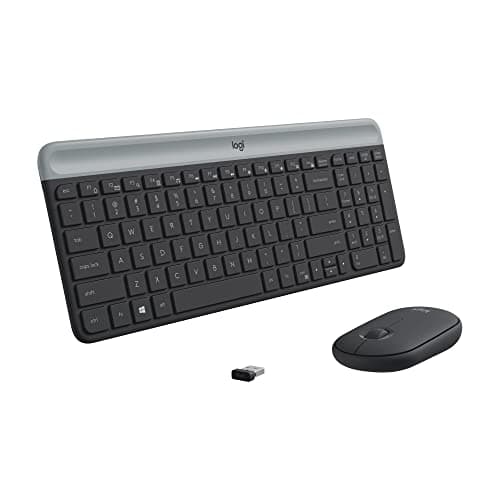
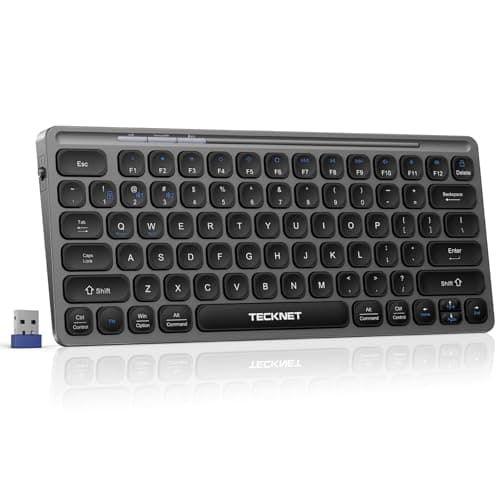
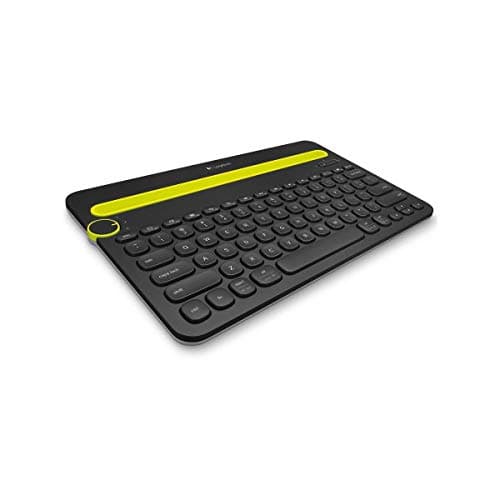
For most people working from a small apartment desk, a compact wireless board is the correct answer rather than the smallest possible one: the cable is as much of a desk problem as the width. Our pick is the Logitech K480, which is compact, multi-device and cheap. Live prices below; the methodology explains the scoring.
The desk arithmetic
Work out what you actually have. Take your desk width, subtract anything permanently parked on it (a laptop on a stand, a speaker, a lamp base), and what remains is the keyboard and mouse zone. A mouse needs roughly 8 to 10 inches of free movement to be comfortable at a normal sensitivity. On a 36-inch desk with a laptop stand at one end, a full-size keyboard leaves you a mouse pad's worth of space and no more.
| Layout | Keys | What it removes | Suits |
|---|
| Full size | 104 | Nothing | 48in+ desks, heavy numeric entry |
| Tenkeyless | 87 | Number pad | 40–48in desks; the easy first step |
| 75% | ~84 | Number pad, spacing | 36–40in desks; keeps every key |
| 65% | ~68 | Also the function row | 32–36in desks |
| 60% | ~61 | Also the arrow keys | Under 32in, or a keyboard tray |
The shoulder argument, which matters more than the desk one
A number pad sits between the letter keys and your mouse, so your mouse hand works four to six inches further right than your shoulder. Sustained reaching to the side loads the shoulder and upper back rather than the wrist, and it is a common cause of the ache people blame on their chair. Removing the number pad brings the mouse back toward the centerline for free. If you genuinely need numeric entry, a separate wireless number pad on the leftis the standard fix — it comes out for the hour a month you need it and lives in a drawer the rest of the time.
Reach is one half of it; the angle your forearm holds once your hand gets there is the other. Vertical and contoured shells rotate the wrist out of the flat, palm-down position, and the better ones publish a grip angle you can actually compare — Desk & Daylight ranks the best ergonomic mice on exactly that number. Fix the reach first, though: it is the change that costs nothing.
The reach argument gets sharper if you game on the same desk, because there the mouse is not parked — it travels several inches per flick, at keyboard level, repeatedly. That is why dropping the number pad is the first change on our gaming desk ergonomics page, ahead of the chair and ahead of the desk.
Wireless, wired, and the cable question
On a small desk, a keyboard cable is not a trivial thing: it runs across the surface, it gets caught under the board when you slide it aside, and it is one more line to route. Bluetooth boards leave your laptop's USB ports free, which matters on machines that have two. Receiver-based boards are more reliable on desktops with poor Bluetooth but cost you a port — recoverable with a docking station or an arm-mounted hub. If you go wired, our cable management kit covers getting the lead off the surface.
Compact keyboards and keyboard trays
A compact board is what makes an under-desk keyboard traygenuinely practical. Most trays are sized for a keyboard alone or a keyboard plus a small mouse area, and a full-size board plus mouse simply does not fit on the common widths. A 75 or 65 percent board and a mouse do. That combination — compact keyboard on a tray — is the single most effective way to reclaim a small desktop, because it moves the largest two objects off the surface entirely.
Noise, which is a small-apartment specification
In a studio, a shared flat or a bedroom desk, keyboard noise is a real constraint and mechanical keyboards are loud. If the desk is in a room someone else uses, the membrane and scissor-switch boards here are the pragmatic choice; if you want mechanical feel with less noise, gasket-mounted boards with pre-lubed linear switches are considerably quieter than plate-mounted clicky ones. Neither is silent. Consider where the desk is before you consider how the switches feel.