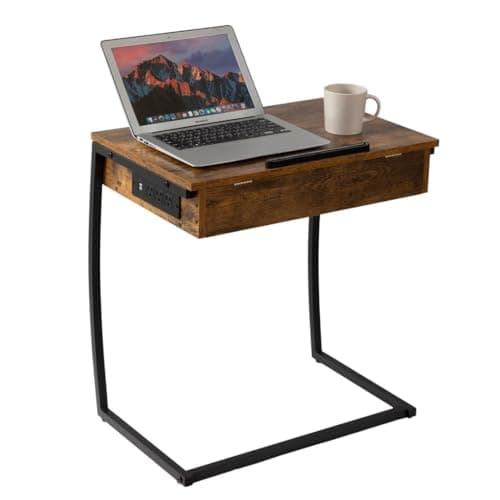
Every other page on this site starts by asking how much floor a desk claims. A C-table is the format that answers almost none, and it does it with a trick rather than a compromise: the flat part of the base slides under your sofa, into the gap you were never using, and the top cantilevers out over your lap. The floor it occupies is floor you had already written off.
That makes it the honest answer for a specific reader — a studio, a shared living room, a bedroom where the wall run is spoken for, or a lease where one more piece of furniture is one too many. It is also, and we should say this before the picks rather than after, a part-time answer. A couch is not a workstation, and nothing below changes that. What these do well is make the two hours in front of the TV usable without adding a desk to a room that has no room for one.
The three numbers that decide it
Usable top. A 15-inch laptop needs roughly 14 by 10 inches of surface, and a mouse wants another 8 to 10 inches beside it. The five here range from a 16 by 12 inch top to 31.5 by 15.7 inches, and that spread is the difference between a laptop-only perch and a surface you can actually work across. Be careful with the cheapest end of this category: a typical sub-$20 C-table publishes a top around 15.8 by 7.8 inches, which holds a mug and a phone, not a computer.
Height.This is the fit spec, and it is personal rather than universal. Sit on the sofa you will actually use, rest your forearms in a relaxed typing position and measure from the floor to the underside of your wrists. That number is your target. Two of the picks below are fixed height, three adjust — and if you are buying for a deep sofa or a recliner, adjustment is worth more than any other feature on this page.
Clearance under your sofa.The whole format depends on the base being able to slide underneath. Measure the gap between the floor and the underside of your couch before you buy anything. Sofas with a plinth base, a skirt to the floor or storage drawers have no gap at all, and for those the C-table cannot tuck — you want a rolling cart that parks beside the arm instead, which is a different product we cover in rolling desks.
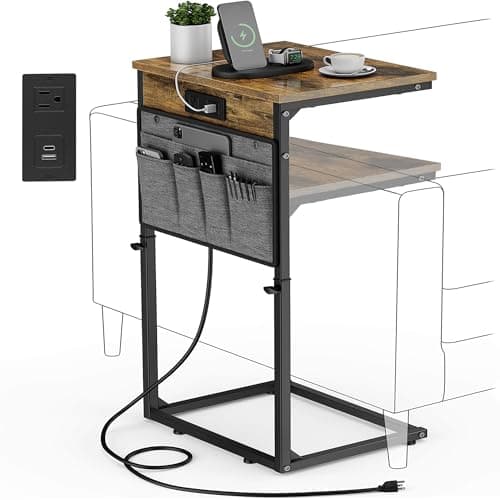
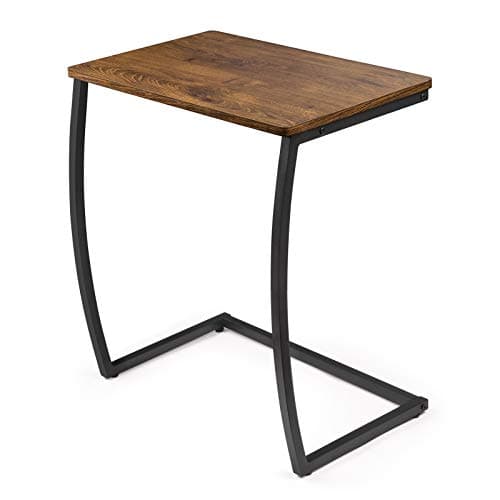
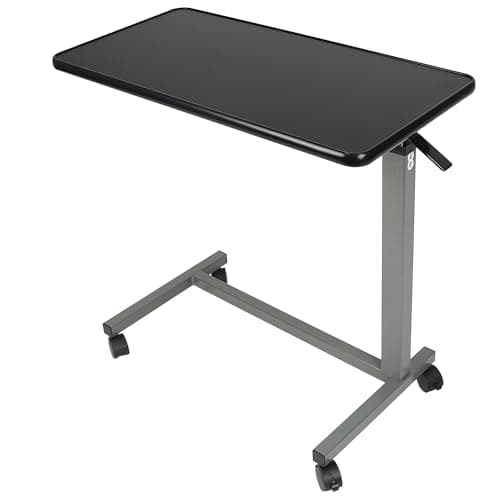
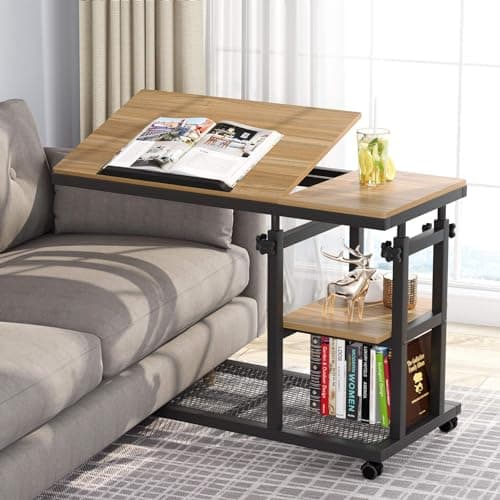
Our pick is the Hadulcet, which has the largest fixed top here plus a tilting section and mains power built in. The Vagusicc is the cheap adjustable one, the SRIWATANA has the lowest, slimmest base, the Vaunn is the answer if the room in question is a bedroom, and the Tribesigns is the largest surface of the lot. Every dimension comes from the manufacturer listing; our methodology explains what our scores are and are not.
What you actually get, side by side
Listings for this category sell a lifestyle photograph and bury the two measurements that decide whether it works. Here they are, taken from the published specifications:
| Table | Top (W × D) | Height | Published load |
|---|
| Vagusicc | 16 × 12 in | 17.7–32 in | 22 lb |
| SRIWATANA | 22 × 13.8 in | 24.4 in fixed | Not published |
| Hadulcet | 23.6 × 15.8 in | 25.5 in fixed | Not published |
| Vaunn | 30 × 15 in | 29.5–40.5 in | 45 lb |
| Tribesigns | 31.5 × 15.7 in | 26–34.5 in | 30 lb |
The widest top here is nearly double the narrowest, and the two tables with the most surface are also the two heaviest by a wide margin. That is the trade the category runs on: surface costs weight, and weight is the thing that stops a couch desk being something you move.
Measure the gap under the sofa first
This is the single check that decides whether a C-table works in your room, and it takes thirty seconds. Get a tape measure under the front edge of the couch and record two things: the height of the gap and how far back it stays clear before it hits a rail or a storage drawer. If the sofa sits on a solid plinth or a skirt that reaches the floor, there is no gap, the base cannot tuck, and no amount of good design will fix it.
Where there is a gap but it is shallow, the tables with a slim flat base do better than those with an H-shaped or wheeled base, because a caster adds height that has to fit under there too. That is the reason the SRIWATANA does well on this one measure: it has no casters at all, just floor protectors, so its base sits about as low as a C-table base gets.
Height is a personal number, not a standard one
Desk height has a rule of thumb because dining chairs are a standard height. Sofas are not: seat height, cushion softness and how far you sink all vary, and two people on the same couch do not sit at the same height. So do not shop from a chart — sit down, get into a relaxed typing posture and measure floor to wrist. That number is what the top should be near.
If you cannot get a clean measurement, buy adjustable. The Vagusicc spans 17.7 to 32 inches, the Tribesigns 26 to 34.5, and the Vaunn 29.5 to 40.5 — between them they cover a low couch, a bed and an armchair. Our desk height guide has the seated numbers for a conventional desk if you are also fixing your main setup.
Load ratings are low, and that is the point
Four of the five publish a rating and they run from 22 to 50 pounds. That is a laptop, a drink and a notebook — it is not a monitor. A cantilevered top on a C-shaped base carries its load at the end of a lever, so the number is lower than it would be for the same materials on four legs, and the failure mode is tipping rather than snapping.
Two practical consequences. Keep the weight over the base rather than at the outer edge, and do not put anything on a couch desk that would hurt if it went over — the external monitor stays on the desk. If your setup really needs a screen, an arm and a keyboard, this is not the product; a compact desk from our small desks roundup or a fold-down wall desk that closes at night will serve you far better in the same room.
Power at the sofa, which is where sockets never are
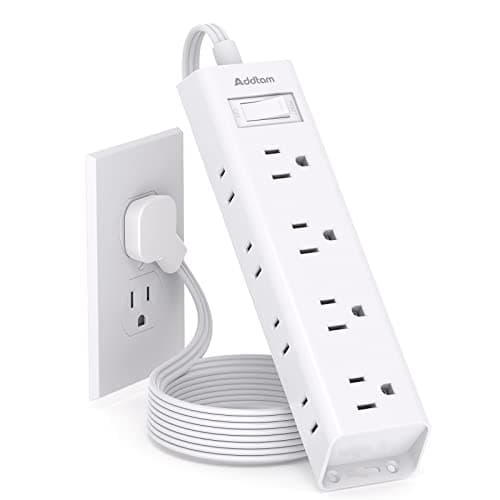
Living rooms are wired for a TV wall and a lamp, not for a laptop in the middle of the seating. Two of the picks solve that in the table itself: the Hadulcet carries three mains outlets and two USB ports, the Vagusicc an outlet plus USB-A and USB-C on a lead long enough to reach the wall. On a table without power, the tidy alternative is a mountable power strip fixed to the underside rather than a bare extension across the carpet, which is a trip hazard in a room people walk through.
The same reasoning applies to a proper desk, incidentally — the models with an outlet in the frame are collected in small desks with power outlets.
Be honest about what couch work does to you
A couch puts your screen well below eye level and your wrists at whatever angle the cushion decides. For an hour of email that is fine. For a working day it is the posture that produces the neck and shoulder complaints people blame on their chair. A couch desk buys you comfort and flexibility, not ergonomics, and anyone selling it as an ergonomic upgrade is selling you something.
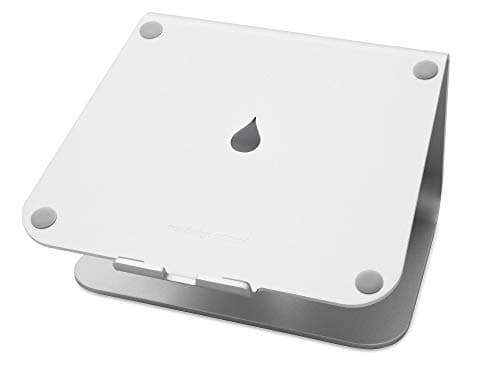
Two things genuinely help. Raise the laptop screen with a laptop standand type on a separate keyboard, which is the same fix that works at a desk. And alternate — move to a real surface for the parts of the day that need concentration. If the living room is your only option for that surface, our living room desk setup guide covers where a desk can go without turning the room into an office, and our living room desk picks rank the furniture that survives being looked at all evening.
C-table, rolling cart or lap desk?
Three formats solve “no room for a desk” and they are not interchangeable. A C-table needs a gap under the sofa and gives you a stable surface at a fixed spot. A rolling laptop cartstands on its own legs beside the couch, works with any sofa including a plinth base, and usually adjusts higher — the field is in our rolling desks roundup. A lap desk costs the least and takes no floor at all, but it puts the heat and the weight on your legs and gives you no height adjustment whatsoever.
For a studio where the sofa is also the office, the C-table is usually the right first buy: it is the only one of the three that disappears when you push it back. Our studio apartment workspace guide covers how it fits alongside the rest of a one-room setup.