HUB 05 · Small-Space Setups
Desk Dimensions by Room Size
Start from the room, not the desk. Here is what actually fits a 10x10 bedroom, a 10x12, a 12x12 and a studio once the furniture already in there is accounted for.
We earn a commission when you buy through our Amazon links, at no extra cost to you. It never affects our rankings, and we say so when the cheaper product is the better buy. How this works.
Most desk-sizing advice starts with the desk. That is the wrong end: in an apartment the desk is the last object into a room that already contains a bed or a sofa, and what fits is decided by what is left. This page works the other way round — pick your room size, subtract the furniture that is already there, and read off the desk that fits.
Three numbers do all the work. Usable wall run is the longest clear wall minus a couple of inches at each end. Walkway is the path past the desk, and it wants to stay around 30 inches so the room still works as a room. Chair zone is the space behind the desk: about 24 inches to sit, about 36 to push the chair back and stand up. If a desk breaks the walkway or the chair zone, it is too big for the room regardless of how well it fits the wall.
The quick answer by room size
These assume the room is already doing its main job — a bed in a bedroom, a sofa in a living room — and that the desk goes against a wall rather than floating.
| Room | Typical free wall | Desk that fits | What to avoid |
|---|---|---|---|
| 8 × 10 ft bedroom, twin bed | ~5 ft | 31–36 in wide, 15–16 in deep | Anything over 40 in; corner desks |
| 10 × 10 ft bedroom, full bed | ~5–6 ft | 39–40 in wide, 16 in deep | 24 in depth — it eats the walkway |
| 10 × 12 ft bedroom, queen bed | ~6 ft | 40–47 in wide, 16–20 in deep | L-shapes unless the corner is genuinely free |
| 12 × 12 ft room, queen bed | ~7 ft | 47–55 in wide, 20–24 in deep | Nothing much — this size has options |
| Studio, ~400 sq ft | One 4–6 ft zone | 36–40 in wide, 15–16 in deep | Deep desks; anything that cannot be cleared |
| Living room corner | ~4–5 ft | 32–40 in wide, 16 in deep | Office-looking desks in a shared room |
How to get your own numbers in five minutes
- Measure the longest clear wall. Clear means no radiator, no door swing, no closet that has to open. Subtract 2 inches at each end for breathing room; that is your maximum desk width.
- Measure from that wall to the nearest obstacle— the bed, the sofa, the path through the room. Subtract 30 inches for the walkway. What is left is your maximum desk depth, and it is usually the number that surprises people.
- Check the chair zone. Stand where the chair will be. If you cannot push a chair back 36 inches without hitting something, the desk needs to move or the chair needs to be one that tucks fully under.
- Tape it out.Painter’s tape on the floor at the desk’s width and depth, then live with it for a day. This costs nothing and catches every mistake the tape measure misses.
Why depth is the number that decides the room
Width is negotiable and depth is not. A 40-inch-wide desk and a 47-inch-wide desk occupy the same walkway; a 16-inch-deep desk and a 24-inch-deep desk do not — the deeper one takes 8 inches straight out of the path through the room. In a 10 × 10 bedroom with a bed, 8 inches is often the difference between walking past the desk and turning sideways.
The catch is that a shallow desk only works if the monitor is not standing on it. A monitor on its own base needs roughly 8 to 10 inches of depth, which on a 16-inch desk leaves nowhere for your hands. Put the screen on a clamp arm and the whole depth comes back — which is why every small-room build on this site treats the arm as part of the desk rather than an accessory. See best monitor arms for small desks and, for the band-by-band sizing, our what size desk for a small room guide.
Room by room, in detail
The 10 × 10 bedroom
The most common apartment bedroom, and the one where a desk most often goes wrong. A full bed against one wall leaves roughly five to six feet of usable run on the wall beside or opposite it. A 39–40 inch desk at 16 inches deep fits that comfortably; a 47-inch desk usually does not once you leave clearance at the ends. Keep the desk off the wall the door opens onto, and do not put the screen in your eyeline from the pillow. The full build for this room is the bedroom office split.
The 10 × 12 bedroom
Two extra feet changes the options more than it sounds: a queen bed still fits, and there is usually room for a 47-inch desk at 20 inches deep, or an L-shape if one corner is genuinely unused. Before buying a corner desk, measure both legs — an L-shape claims two walls, and in a bedroom the second wall is usually the one the wardrobe needs. The comparison is in corner desk vs L-shaped desk.
The 12 × 12 room
At this size the room stops being the constraint and personal preference takes over. A 55-inch desk at 24 inches deep is comfortable, a sit-stand desk becomes realistic, and two monitors stop being a squeeze. If you are here, the useful question is no longer what fits but what you actually need — two monitors on a small desk covers the width math for a dual setup.
The studio
A studio is not measured in room dimensions but in zones. The desk needs a four-to-six-foot stretch of wall that is not the bed wall and not the kitchen, and it needs to be able to look like something other than an office in the evening. Sizing is the same as a small bedroom — 36 to 40 inches wide, 15 to 16 deep — but the format matters more: folding, wall-mounted or console-style desks all earn their keep here. The complete parts list is in the studio corner office build.
The measurements people forget
- Door swing.A door opening 32 inches into the room removes that arc from the desk’s available wall, permanently.
- Radiators and baseboard heaters. Most manufacturers ask for clearance in front; a desk pushed against one also cooks your legs.
- Window sill height. If the desk goes under a window, the sill decides whether a monitor arm can lift the screen at all.
- Outlet position. A desk placed away from the only free outlet needs a long-cord strip and a cable route, which is a decision, not an afterthought.
- Rear clearance. Clamp-on arms and lamps need a few inches behind the desk to close. A desk pushed hard against the wall cannot take either.
Questions
Frequently asked
What size desk fits in a 10x10 room?
How much space do you need behind a desk for a chair?
How wide should a walkway past a desk be?
Can I fit a desk in a 10x12 bedroom with a queen bed?
Is a corner desk a good idea in a small room?
What is the smallest usable desk?
Finish the setup
Under $40: the parts that finish a small desk
A desk is the expensive decision. These are the cheap ones that decide whether it actually works in a small room — each is the top pick from one of our own roundups, and each clamps, sticks or stands rather than needing a drill. Prices live as of October 21, 2026.
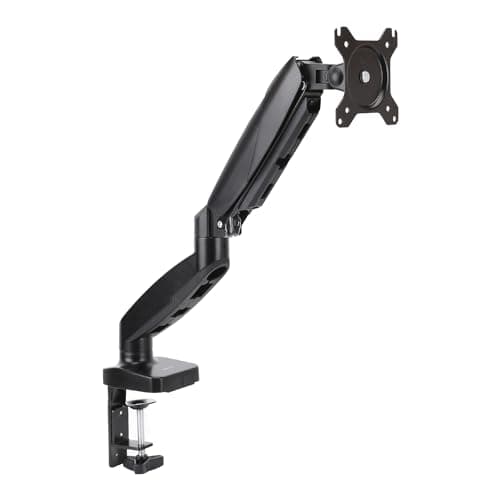
Monitor arm
Amazon Basics Single Monitor Arm (Gas Spring)
Clamps to the back edge and gives you back the whole footprint the monitor stand was standing on — the single biggest surface win on a narrow desk.
$27.29Amazon#ad · Our top pick in The Best Monitor Arms for a Small Desk
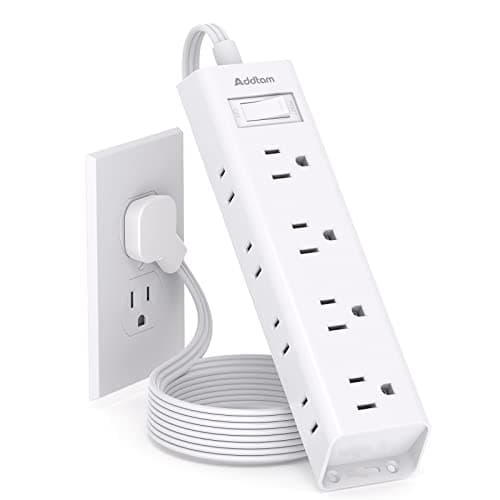
Power strip
Addtam Flat-Plug Power Strip (12 outlets)
The flat plug is the point: a normal brick stops a desk sitting flush to the wall and costs you two inches of depth you do not have.
$9.98Amazon#ad · Our top pick in The Best Power Strips for a Desk
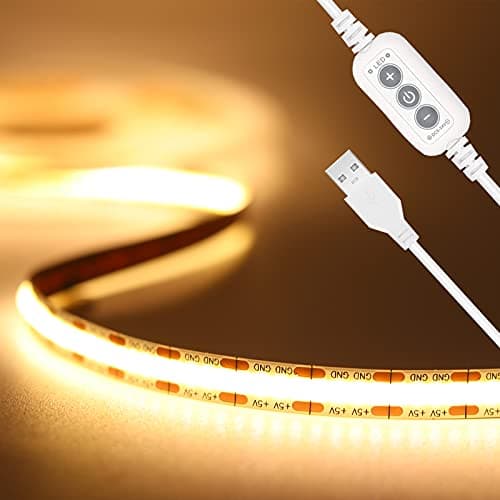
Bias lighting
PAUTIX COB LED Strip (6.56ft, 3000K)
Sticks under a shelf or behind the monitor and lights the wall instead of the desk, so it takes no surface at all.
$9.19Amazon#ad · Our top pick in The Best LED Strip Lights for a Desk
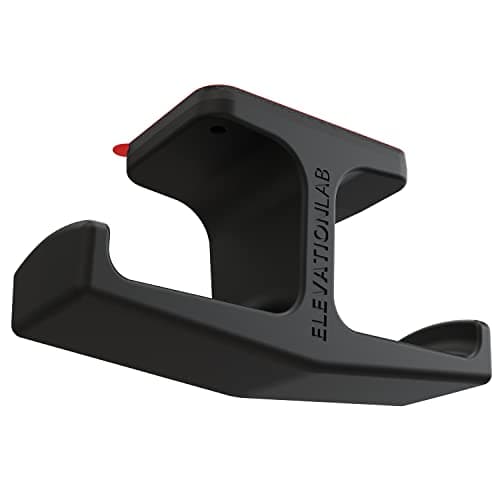
Headphone mount
Elevation Lab The Anchor Under-Desk Headphone Mount
Adhesive, mounts under the desk, and clears the one bulky object that otherwise lives permanently on a small surface.
$11.99Amazon#ad · Our top pick in The Best Headphone Stands for Small Desks
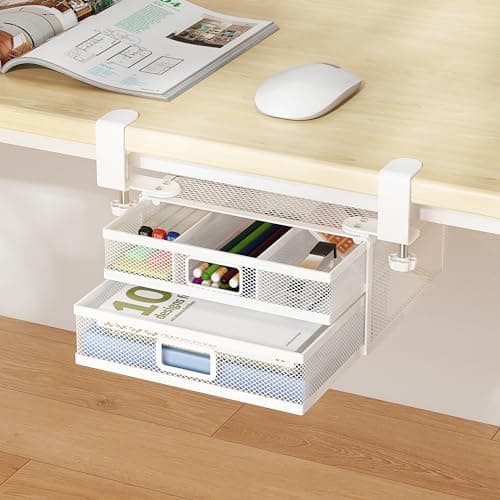
Under-desk drawer
ROLIZOE 2-Drawer Clamp-On Under-Desk Organizer
Clamps on, adds storage in dead space beneath the top, and comes off without a mark when the lease ends.
$34.99Amazon#ad · Our top pick in The Best Under-Desk Storage for a Small Desk
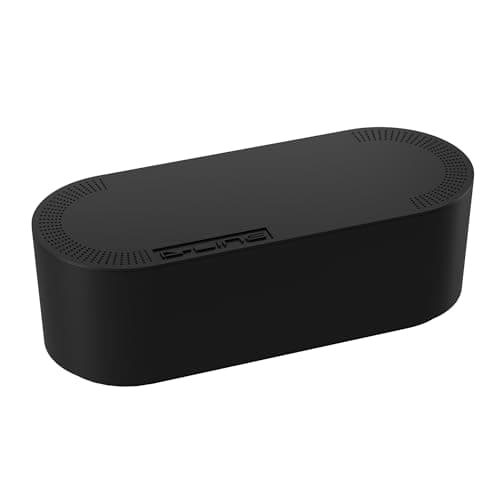
Cable box
D-Line Cable Management Box (Large)
Puts the strip and the wall-warts in one closed box so the floor under a desk in a studio does not read as a nest.
$27.99Amazon#ad · Our top pick in The Best Desk Cable Management for a Small Setup
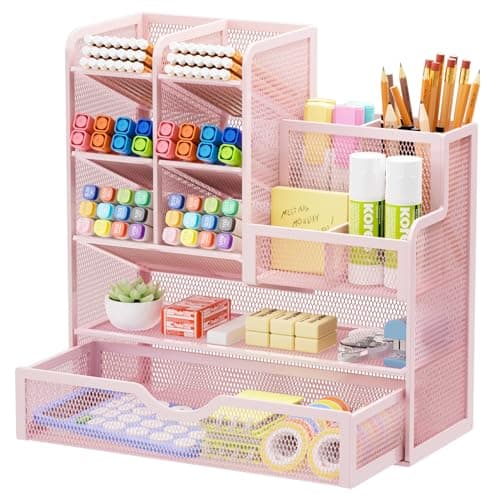
Desk organizer
Marbrasse Mesh Desk Organizer with Drawer
Goes vertical with the pens and notebooks that otherwise spread flat across the only surface you have.
$22.99Amazon#ad · Our top pick in The Best Desk Organizers for Small Desks
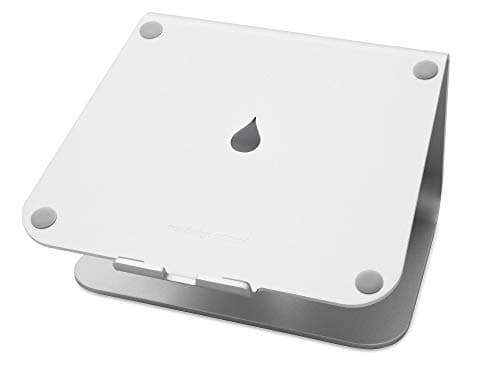
Laptop stand
Rain Design mStand Laptop Stand
Lifts the screen to eye level and opens the space underneath for a keyboard, which is how a 40-inch desk fits a full setup.
$39.90Amazon#ad · Our top pick in The Best Laptop Stands for a Small Desk
Keep reading
Related
- What size desk for a small roomThe width and depth bands, with the reasoning shown.
- Office chair fit for small spacesThe chair zone, measured properly.
- The bedroom office splitThe build for a 10x10 with a bed in it.
- Best narrow desksWhen depth is the number that has to give.
- Standing desk in a small roomWhat changes when the desk goes up.
Receipts
Sources
- OSHA — Computer Workstations eTool (working posture, clearance and workstation layout guidance)
- CDC / NIOSH — office ergonomics and musculoskeletal health resources
We do not run a testing lab, and we do not pretend to. Specifications come from the manufacturer or retailer listing; the footprint and clearance math is ours and reproducible. Where we could not verify a number, we say so on the page rather than quietly leaving it out. Read our full method.