HUB 05 · Small-Space Setups
How to Fit a Workspace into a Studio Apartment
One room doing three jobs. Zone it, pick a desk that folds or hides, build an end-of-day reset, and make each piece of furniture earn its floor twice over.
We earn a commission when you buy through our Amazon links, at no extra cost to you. It never affects our rankings, and we say so when the cheaper product is the better buy. How this works.
A studio is the hardest workspace problem there is: the same room is your bedroom, your living room, and your office, and it has to switch between all three every day. Cram a full-size desk into it and the studio always feels like an office you happen to sleep in. The fix is not a smaller desk alone — it is a strategy: zone the room so the work area has a defined place, choose a desk that folds or hides so it can leave when the day ends, build a two-minute reset that clears the work away, and make each piece of furniture do two jobs so nothing is claiming floor for a single use.
Zone the room before you place the desk
A studio works when it reads as several small rooms rather than one cluttered one, and you create those zones without building walls. A rug under the bed and a different rug under the desk visually separate sleeping from working. A bookshelf or an open shelving unit placed perpendicular to the wall acts as a half-height divider that screens the desk from the bed without blocking light. Orientation matters too: face the desk toward a window or into the room rather than at the bed, so that when you are working you are not staring at the place you sleep — the psychological separation is as useful as the physical one. Pick the desk zone first; the desk itself comes second.
Pick a desk that folds, mounts, or hides
In a studio, the best desk is often the one that is not always there. Four strategies, from most-hidden to always-present:
- Wall-mounted fold-down desk— folds flat to the wall and returns the floor completely when closed. The smallest footprint there is, but it needs to be anchored into studs, so it suits owners more than renters. See wall-mounted and folding desks.
- Folding floor desk— the renter’s version of the same idea: unfold it to work, fold it flat and slide it behind a door or the sofa when done. No holes, no anchors.
- Console-to-desk— a narrow console table that lives against a wall as an entry or display surface and pulls out to work at, so it never reads as office furniture.
- Compact fixed desk— a small rectangular desk that stays put but stays out of the way; the least flexible option, but the sturdiest. Start from best small desks.
The more the room has to double as living and sleeping space, the further up that list you want to go — a fold-away or hideable desk is what stops the studio from feeling like an office after hours.
Strategies compared
| Strategy | Footprint when stowed | Effort to deploy | Best when |
|---|---|---|---|
| Wall fold-down desk | Near zero (flat to wall) | Seconds; fold down | You own, or can drill into studs |
| Folding floor desk | Slim; stores behind a door | A minute; unfold and place | You rent and cannot drill |
| Console-to-desk | Full, but disguised as a table | None; it is always out | You want it to read as furniture |
| Compact fixed desk | Full, against a wall | None; always ready | You have a dedicated corner to spare |
Build an end-of-day reset
The habit that keeps a studio livable is a short routine that puts the workspace away, so the room becomes a living room again each evening. Design the setup to make that reset take two minutes, not twenty. Keep the work laptop and loose papers in one under-desk drawer or a basket you can lift away in one trip — see under-desk storage. Wire the desk so the whole thing runs off one power feed you can switch off at the wall, and use a single quick-disconnect for the laptop rather than four separate cables; the cable management guide covers doing that cleanly. If the desk folds, this is also when it folds. The point is that ending work should feel like leaving an office, even though you never left the room.
Make furniture do two jobs
In a studio, floor space is too scarce for any piece to have a single use. Look for furniture that earns its footprint twice: a console that is an entry table and a desk; a storage ottoman that is a footrest, a seat for a guest, and a box for the work gear; a slim bookshelf that both stores books and divides the sleep zone from the work zone. Even the desk chair can double as the dining or extra seat if it looks like a dining chair rather than an office chair. Every dual-purpose piece is one fewer thing competing for the same small floor. The extreme version of that idea is a C-table, whose base slides under the sofa so the work surface costs the room no floor at all.
Light and clear the work zone
Two finishing moves make a studio desk feel like its own space. First, light the zone specifically: a clamp desk lamp pooling light on the desk marks the work area as separate from the softer light in the rest of the room, and it clears when the desk does. Second, keep the surface itself clear by putting the monitor on a no-drill clamp arm— on a shared, on-display desk in a studio, a clear top is the difference between a workspace that looks intentional and one that looks like it took over the room. The end-to-end build, in order, is in the small-apartment desk setup guide; the no-drill version of all of it is in the renter-friendly setup.
Questions
Frequently asked
Where do you put a desk in a studio apartment?
How do you hide a desk in a studio apartment?
What is the best desk for a studio apartment?
How do you separate a work area in a studio?
Can a dining table double as a desk in a studio?
Finish the setup
Under $40: the parts that finish a small desk
A desk is the expensive decision. These are the cheap ones that decide whether it actually works in a small room — each is the top pick from one of our own roundups, and each clamps, sticks or stands rather than needing a drill. Prices live as of October 21, 2026.
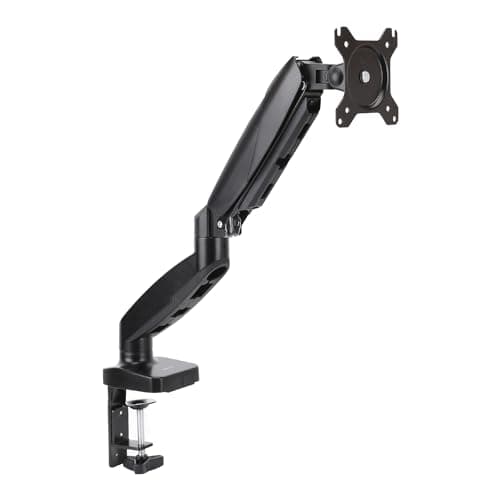
Monitor arm
Amazon Basics Single Monitor Arm (Gas Spring)
Clamps to the back edge and gives you back the whole footprint the monitor stand was standing on — the single biggest surface win on a narrow desk.
$27.29Amazon#ad · Our top pick in The Best Monitor Arms for a Small Desk
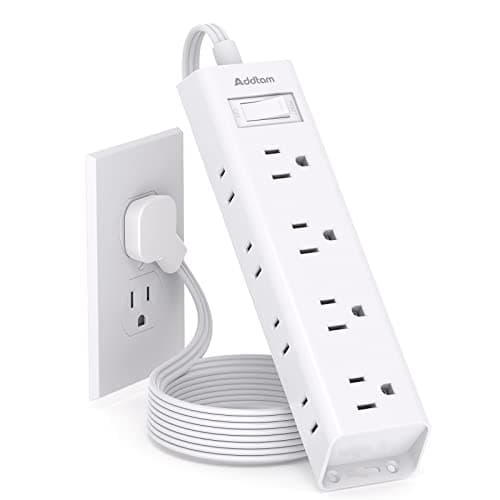
Power strip
Addtam Flat-Plug Power Strip (12 outlets)
The flat plug is the point: a normal brick stops a desk sitting flush to the wall and costs you two inches of depth you do not have.
$9.98Amazon#ad · Our top pick in The Best Power Strips for a Desk
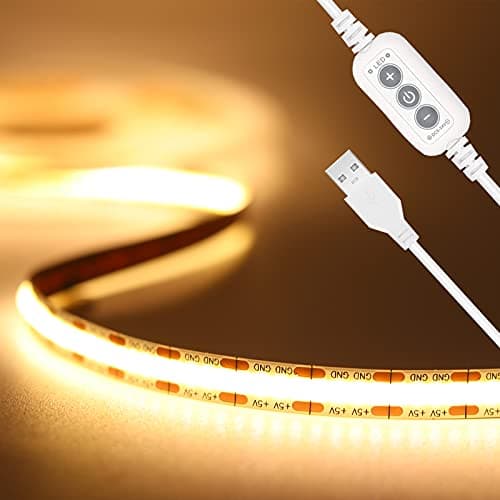
Bias lighting
PAUTIX COB LED Strip (6.56ft, 3000K)
Sticks under a shelf or behind the monitor and lights the wall instead of the desk, so it takes no surface at all.
$9.19Amazon#ad · Our top pick in The Best LED Strip Lights for a Desk
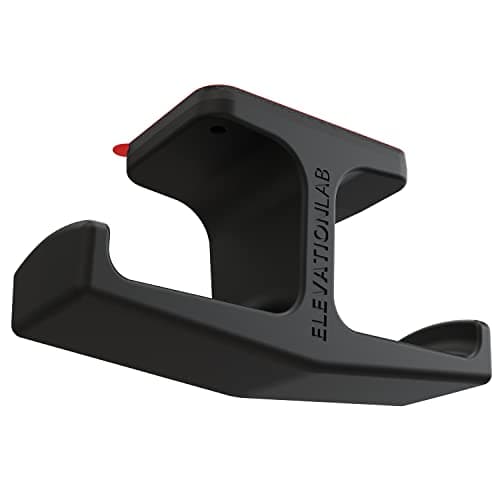
Headphone mount
Elevation Lab The Anchor Under-Desk Headphone Mount
Adhesive, mounts under the desk, and clears the one bulky object that otherwise lives permanently on a small surface.
$11.99Amazon#ad · Our top pick in The Best Headphone Stands for Small Desks
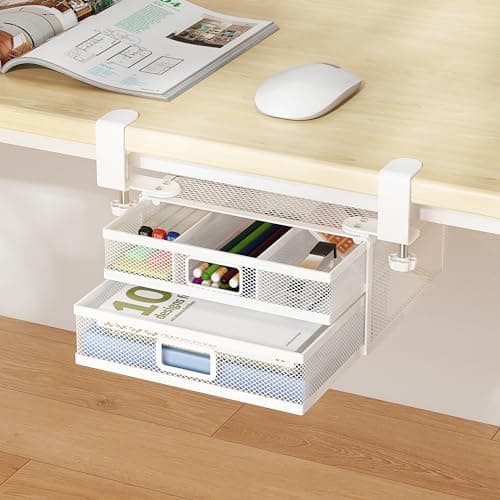
Under-desk drawer
ROLIZOE 2-Drawer Clamp-On Under-Desk Organizer
Clamps on, adds storage in dead space beneath the top, and comes off without a mark when the lease ends.
$34.99Amazon#ad · Our top pick in The Best Under-Desk Storage for a Small Desk
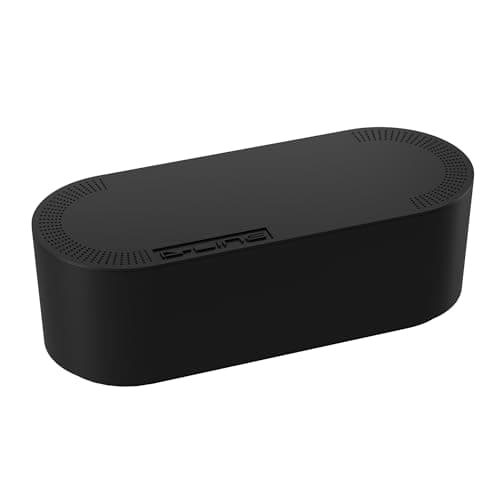
Cable box
D-Line Cable Management Box (Large)
Puts the strip and the wall-warts in one closed box so the floor under a desk in a studio does not read as a nest.
$27.99Amazon#ad · Our top pick in The Best Desk Cable Management for a Small Setup
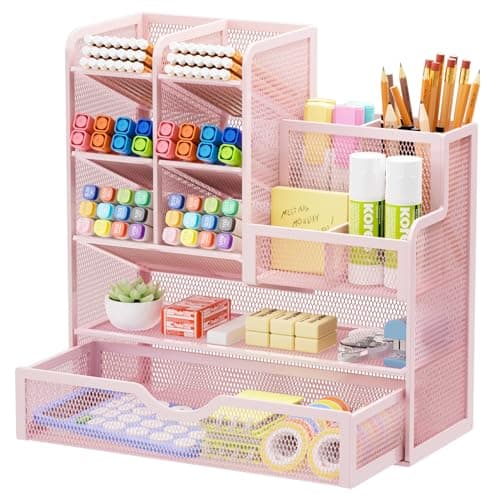
Desk organizer
Marbrasse Mesh Desk Organizer with Drawer
Goes vertical with the pens and notebooks that otherwise spread flat across the only surface you have.
$22.99Amazon#ad · Our top pick in The Best Desk Organizers for Small Desks
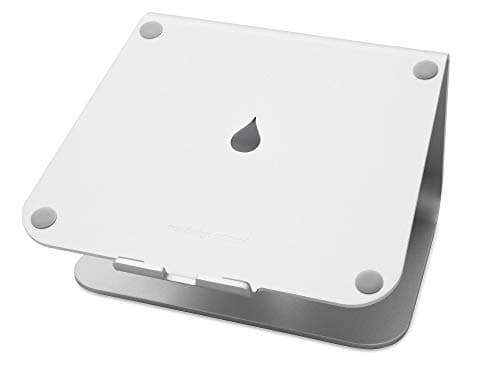
Laptop stand
Rain Design mStand Laptop Stand
Lifts the screen to eye level and opens the space underneath for a keyboard, which is how a 40-inch desk fits a full setup.
$39.90Amazon#ad · Our top pick in The Best Laptop Stands for a Small Desk
Keep reading
Related
- Wall-mounted & folding desksThe foldaway and hideable desks a studio is built around.
- Best small desksCompact fixed picks if you have a corner to spare.
- Renter-friendly desk setupThe no-drill version of every move above.
- Two monitors on a small deskThe layouts that fit when width runs out.
- Best ladder desksA desk and a bookcase from 15 inches of floor.
- Small standing desk convertersStand up in a studio without a second piece of furniture.
- Folding vs wall-mounted deskThe two ways to get the studio floor back.
- Standing desk vs converterWhich one fits a studio budget and footprint.
- Closet desk setupThe studio trick that gives the desk a door.
- Best secretary desksA desk that shuts on the workday.
- The studio corner office buildThe parts list that follows this zoning guide.
Receipts
Sources
- OSHA — Computer Workstations eTool (workstation layout and clearance guidance)
- CDC / NIOSH — office ergonomics resources
We do not run a testing lab, and we do not pretend to. Specifications come from the manufacturer or retailer listing; the footprint and clearance math is ours and reproducible. Where we could not verify a number, we say so on the page rather than quietly leaving it out. Read our full method.