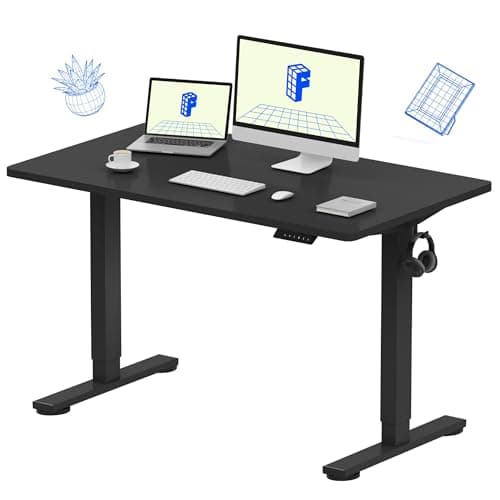
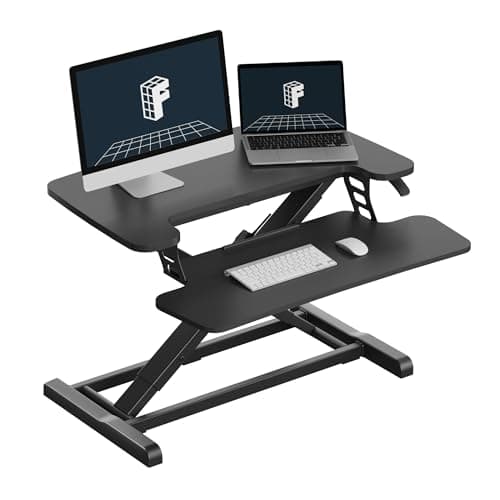
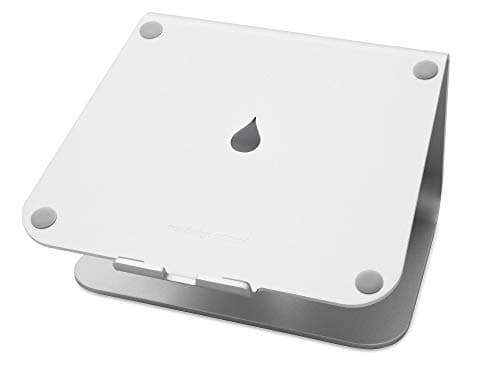
You want to work standing up sometimes. You have a small apartment and possibly a lease. The question is whether to replace the desk with an electric standing desk or put a converteron the desk you already own. For most people in a small space, the converter is the right first move — and not just because it is cheaper.
The short answer
Buy a converter if you already own a stable desk, you move house every year or two, or you are not yet sure how much you will stand. Buy a full standing desk if you stand for hours daily, run heavy equipment, or want the cable run and the surface to be one clean thing rather than two stacked things.
The decision table
| Factor | Standing desk (electric) | Converter (desktop riser) |
|---|
| Typical cost | Highest in this category | Roughly a third of a desk |
| Needs a new desk? | Yes — it replaces yours | No — it sits on top |
| Assembly | Frame build, two people advisable | Almost none; unbox and place |
| Load capacity | Very high (FLEXISPOT EN1: 176 lb) | Modest (28–36″ risers: ~33 lb top) |
| Desk surface at sitting height | All of it | Reduced — the riser occupies the middle |
| Moving house | Disassemble and lift | Pick it up |
| Stability when standing | Better — one rigid structure | Depends on the desk underneath |
| Cable management | Runs with the whole surface | Cables must tolerate the travel |
The small-space arithmetic
A converter does not add floor area, which is the headline for anyone in a studio — it uses desk you already paid for. What it does cost you is surface: a 28-inch riser occupies a 28-inch-wide block of your desktop permanently, even when it is lowered. On a 40-inch desk, that is most of your working width, so plan on the keyboard living on the riser’s tray rather than on the desk. A full standing desk has the opposite profile: it costs no surface at all, but it commits you to a specific desk footprint and a frame that is heavy to move.
The second small-space factor is the desk underneath. A converter magnifies whatever wobble your desk already has, because it raises the mass higher. If your desk moves when you type, fix that first — our wobble guideis ten minutes of work — or buy a sturdier base like the SHW Mission 48″ before you put a riser on it.
What each one is actually like to live with
With a converter, the switch to standing is a physical lift of the top — a couple of seconds with a spring or gas assist, and no cables move much because everything on the riser travels together. With an electric desk, the switch is a button press and the whole surface goes, which means your mug goes up with the monitor. The electric desk is the nicer daily experience; the converter is the more reversible purchase. For a renter who may be in a different room in a year, reversible has real value.
One thing is identical either way: you are standing on the floor you already have. The usual reason a sit/stand setup quietly reverts to sitting is not the desk at all — a hard floor stops being comfortable after half an hour, which is what an anti-fatigue mat is for.
If you decide on a converter, size it to the desk rather than the monitor: our small standing desk converter picks run from a 24-inch tabletop model to a 36-inch dual-monitor unit. If you decide on the desk, our compact standing desk roundupcovers the 40–48 inch frames that fit a small room.