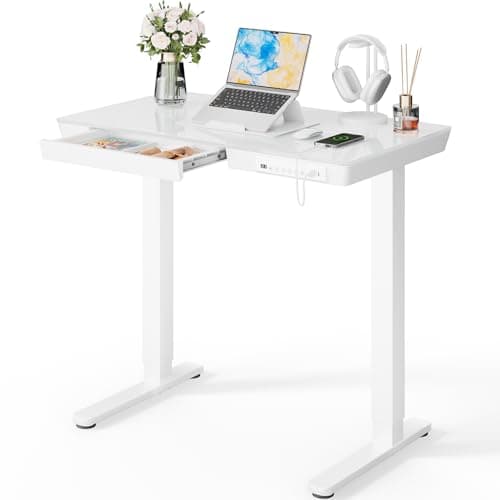
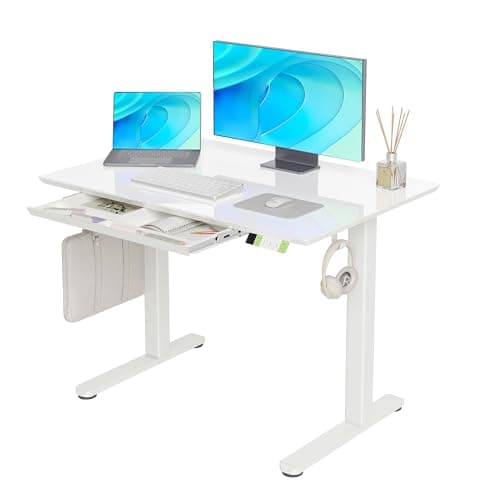
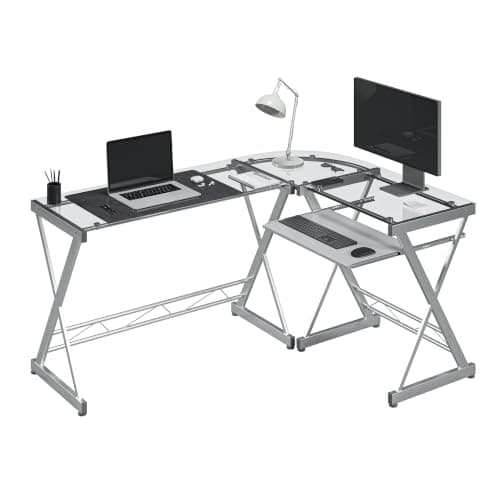
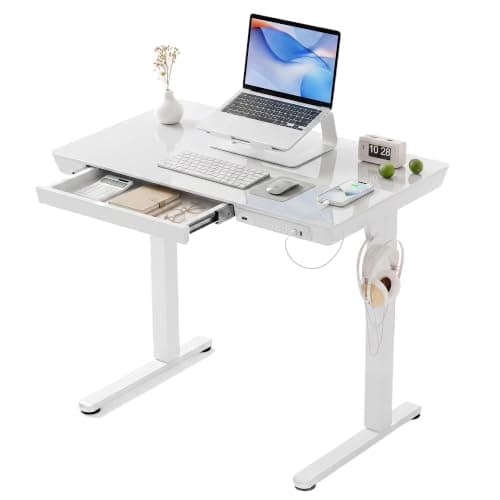
For a small room, buy the INNOVAR 32in glass standing desk: at 31.5 x 19.7 inches it has the shallowest glass top we could verify, and it still carries a full 28.3–46.5 inch electric range with four presets, a drawer and USB-C. Want a little more width at the same depth? The Marsail 35 x 20. Want the best-documented desk on the page — a 132 lb frame rating and a 25.7 inch drawer? The Claiks 40 x 24. For a corner, the Techni Mobili L is the only glass desk here that turns one, and the only one that publishes its glass thickness.
Glass earns its place in a small apartment for one honest reason: it is the only desk surface that does not visually occupy the floor it stands on. You see the rug through it, the room keeps its sight lines, and a 40-inch desk reads like a side table instead of a wall of furniture. In a studio where the desk is in the same field of view as the bed, that is worth more than it sounds. Everything else about glass is a trade, and the rest of this page is those trades with prices on them.
What we ranked on: published top depth
Depth, not width. Width is a negotiation with your wall; depth is a negotiation with your walkway, and it is the dimension that decides whether a chair can get past a bed. So the order on this page runs 19.7 in, 19.7 in, 23.6 in, then the two fixed-height desks whose footprint is set by their shape rather than their depth. Our desk size guide has the depth bands and the clearance math; the short version is that 19.7 inches is enough for a laptop and a 27-inch screen, and anything deeper is a bonus you pay for in floor.
The finding: the glass desk is now a standing desk
Three of the five desks here are electric sit-stands, all three published at exactly 28.3–46.5 inches, and that is not a coincidence of our shortlist — it is what the category has become. A single sheet of glass is the easiest top in furniture to ship pre-assembled, because it needs no edge banding, no veneer and no flat-pack carcass, and a motorized frame is the one desk part a maker cannot simplify. So glass and motors have ended up on the same product. If you came looking for a plain glass writing desk you will find the choice thinner than you expect, and you will usually be choosing between a sit-stand you did not plan on and a large fixed slab like the BINGTOO. Our small standing desk roundup covers the laminate and wood alternatives at the same heights, and shares no products with this page.
The real price of glass: nothing clamps to it
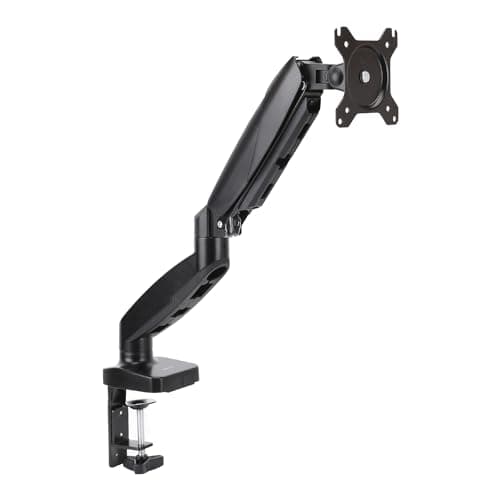
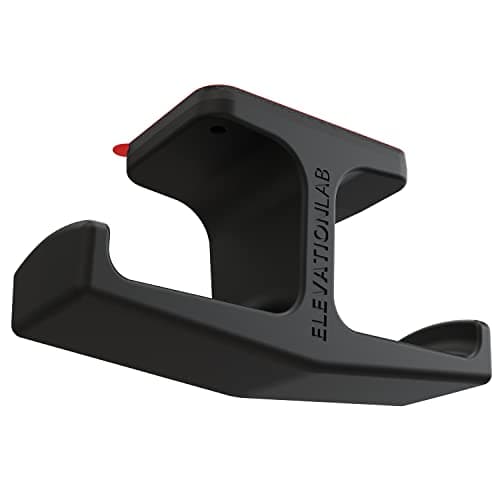
This is the part the listings mostly do not tell you, with one honorable exception. On a small desk the highest-value upgrades are all clamp-on: a monitor arm (which returns eight to ten inches of depth), an under-desk keyboard tray (about eleven more), a clamp desk lamp, a clamp-on power strip, a headphone hook. None of them can go on a glass top. Every monitor arm maker excludes glass outright, and it is a safety exclusion rather than a cosmetic one: a clamp concentrates a moving load exactly where glass is weakest, at an edge. The Claiks listing states the same thing from the other side — its own feature list says the clamping arm should not be used on top of the glass.
That does not rule out a glass desk. It changes what you buy with it. A freestanding monitor stand or a wall mount does the arm’s job without touching the top, and one of the five desks here (the Techni Mobili) solves the keyboard tray by bolting one to the frame at the factory. But you should price those in before you order, not after: what a clamp does to each desk material is the page to read if you are still deciding between glass and wood.
Thickness, glare and the two other things nobody mentions
Thickness is not comparable.Exactly one of these five publishes a figure: the Techni Mobili’s 8 mm tempered safety glass. The rest say “thickened”, “high-quality” or “tempered” and stop there. We have not estimated the others, because a guessed thickness is worse than no thickness on the one component that decides whether a desk can hold a desktop PC.
Glare is real and fixable.A glass top is a mirror pointed at your ceiling. A downlight or a lamp placed behind the screen will bounce off the surface into your eyes all day. The fix is positional, not financial — light from the side, at desk height or above eye level, never straight down from the front. Our desk lamp placement guide has the three positions to avoid, and a floor lamp standing beside the desk is the one lighting class that lights a glass top well, because the light arrives at an angle and the lamp claims none of the surface everyone can see.
And it weighs 37 to 54 pounds. A glass desk is not a desk you carry up a stairwell on your own, and it is not a desk you move house with casually. If you expect to move inside a year, read our moving-friendly gear guide first.
The five compared on what they publish
| Desk | Top (W x D) | Height | Storage / power |
|---|
| INNOVAR 32in | 31.5 x 19.7 in | 28.3–46.5 in, 4 presets | Drawer, USB-A + USB-C |
| Marsail 35 x 20 | 34.6 x 19.7 in | 28.3–46.5 in, 4 presets | 14.4 x 8.3 in drawer, USB-A + USB-C |
| Claiks 40 x 24 | 40 x 23.6 in | 28.3–46.5 in, 4 presets | 25.7 x 12.4 in dual drawer |
| Techni Mobili L | L-shape, 8 mm glass | 29.5 in fixed | Pull-out keyboard tray |
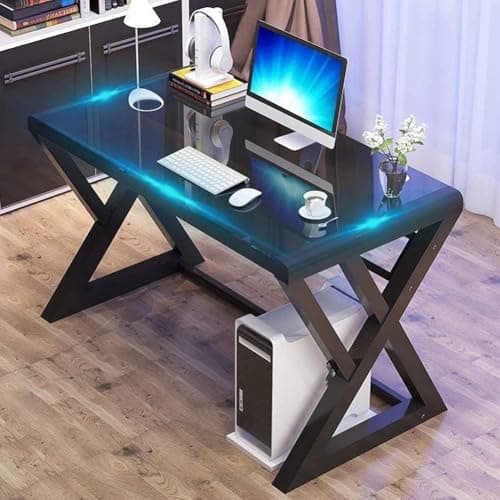
| BINGTOO 55in | 55.1 x 23.6 in | 28.7 in fixed | Wire hole only |
Every figure is the figure the listing publishes. Where a cell would have needed a guess — glass thickness on four of the five, frame load on four of the five — it is not in the table at all.
One desk we left off, and why
A $149 tempered-glass writing desk appears high in the search results for every query on this page and we did not rank it: the only dimensions its listing publishes are package-shaped (19.7 x 15.7 x 11.8 inches), so there is no way to know how big the actual desk is. On a site that ranks desks by published depth, a desk with no published depth cannot be ranked. If you buy a glass desk that does not state its top dimensions, treat the photographs as decoration and message the seller first.
How to choose, in four checks
One: measure your wall run at 29 inches off the floor, which is where the desk actually lives — not at the skirting board, where a radiator or a baseboard heater will lie to you. Then subtract. A 55-inch BINGTOO needs more uninterrupted wall than most bedrooms have. Desk dimensions by room size works through this room by room.
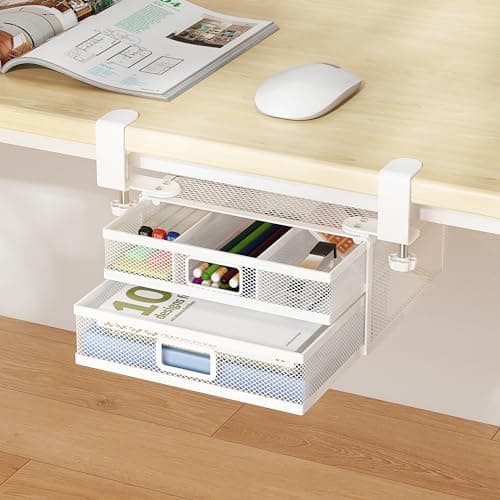
Two: decide the clamp question before you buy, not after.If you already own a monitor arm, a clamp lamp or a keyboard tray, a glass desk retires all three. Price the replacements — a freestanding stand, a base lamp or a light bar, and a tray that bolts to a frame — into the cost of the desk.
Three: if you want sit-stand, check the bottom of the range, not the top. All three electric desks here start at 28.3 inches, which is a normal desk height and slightly tall for shorter users. Our standing desks for short people page explains why the low end of the range is the spec that decides fit.
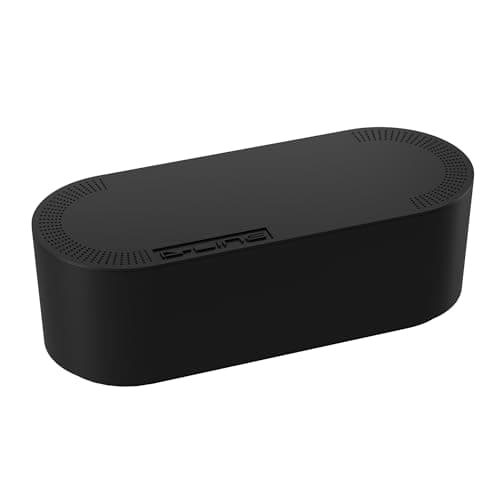
Four: plan the cables first.On a wood desk a cable mess is hidden by the top. On glass it is the view. Only the BINGTOO and the sit-stands publish any cable provision at all, so assume you are adding a tray or a sleeve — our cable management picks are the cheapest meaningful upgrade to any glass desk.
Living with a glass top
Tempered glass is strong in flat compression and weak at edges and points, which tells you everything about how to treat it. Weight spread across the middle of the top is a non-issue — the Claiks frame is rated to 132 lb. A knock on a corner, a clamp jaw on an edge or a dropped tool is the failure mode, so keep heavy objects off the perimeter and never clamp anything. Fingerprints are the daily cost: a clear top shows every one, and most owners end up with a desk pad under the keyboard and mouse, which also stops the mouse feet skating. The ultra-white tops (INNOVAR, and the “super white” Claiks) hide marks noticeably better than clear glass, and both take a dry-erase marker, which is a genuinely useful feature on a desk you cannot pin anything to. Coasters are not optional: a cold glass surface condenses, and a ring of water sits there until you wipe it.
If the glass is for the look rather than the surface
There is a cheaper route to the same visual effect. A narrow desk with a slim profile and light-colored legs makes a room read nearly as open as a glass top, costs a third as much, and takes every clamp you own. Our narrow desk picks start around 15.75 inches deep, which is shallower than any glass desk on the market, and floating desksgo further still by showing the floor underneath. Glass is worth paying for when you want the top itself to disappear — across a room, looking at the desk head-on. If you mostly see it from above, you are paying for an effect you will not notice.