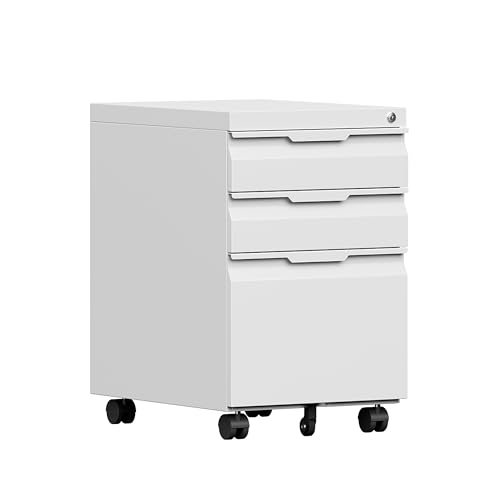
Five under-desk filing cabinets ranked criteria-first on published height, footprint, lock scope and top load - because the one that does not fit under your desk is not a small cabinet.
We earn a commission when you buy through our Amazon links, at no extra cost to you. It never affects our rankings, and we say so when the cheaper product is the better buy. How this works.
The verdict: the best small filing cabinet for a home office is the Kooyon 3-drawer mobile— the shortest cabinet here at a published 24.2 inches, with three drawers in a 14.6-inch width and one key that locks all three. It is for anyone whose cabinet has to live under the desk. The budget pick is the SISESOL narrow vertical, the only cabinet on this page that publishes a top load figure (120 lb). If the gap beside your desk is genuinely narrow, the LEKETREEis 10.87 inches wide and nothing else here comes close.
The finding that organizes this page: the spec that disqualifies a filing cabinet in an apartment is height, not capacity. Every cabinet here is sold as an “under desk” cabinet. They are 24.2, 24.6, 25.8, 26.18 and 26.38 inches tall. A seated desk is typically 29–30 inches to the top of the surface, and the clearance underneath is less than that by the thickness of the top plus whatever the frame puts in the way — an apron rail, a sit-stand crossbeam, a cable tray or a keyboard tray. On a 29-inch desk with a 1-inch top and a 2-inch apron you have about 26 inches; two of these five do not go under it. Measure the clearance, not the desk.
The second thing to settle before you shop is where the cabinet actually lives, because it changes which spec matters. A cabinet that sits under the desk must roll, because you cannot open a drawer in a 24-inch-high slot — you pull the cabinet out, open it, and push it back. That makes the SISESOL, which publishes no casters and weighs 51 lb empty, a beside-the-desk cabinet rather than an under-desk one, however short it is. A cabinet that lives beside the desk is judged on width and depth in a walkway instead, and that is where a 10.87-inch unit earns its place.
Third: read the lock scope, not the word “lockable”. Three of these five lock every drawer from one key. One locks only its top drawer. And on the LEKETREE the lockable parts are the casters— the drawers do not lock at all. If the reason you want a cabinet rather than a drawer tray is that something needs to be shut away, that distinction is the whole purchase.
We do not run a lab. Every figure here is the manufacturer listing’s own published number — we have not loaded a drawer, weighed a top or tested a lock, and two of these five publish no top load rating at all, which we have written as “not published” rather than estimating. Scores are editorial judgments against a published rubric, and prices are live with an as of date under each table.
The shortest cabinet here at a published 24.2 inches, and the only one with three drawers: it clears the most desks, holds the most paper, and one key locks all three drawers at once.
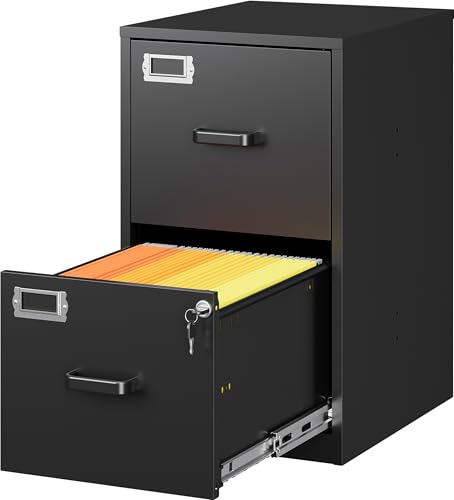
The budget pick, and the only cabinet here that publishes what its top will carry: 120 pounds, on an all-metal frame, in a 14.2-inch width. If the cabinet is also the printer stand, this is the one with a number behind the claim.
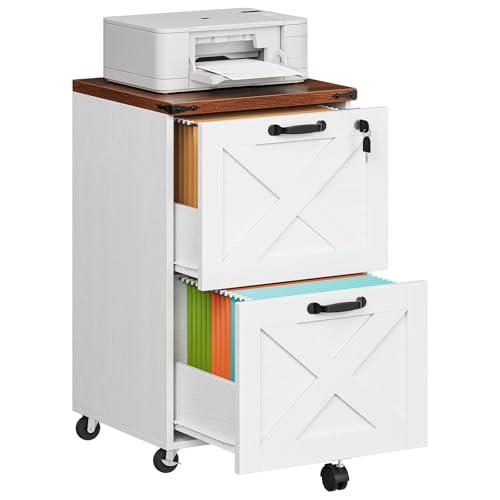
The squarest, shallowest footprint here at a published 15.7 by 15.7 inches, on five casters with two brakes - and the only cabinet on this page that looks like furniture rather than office equipment.
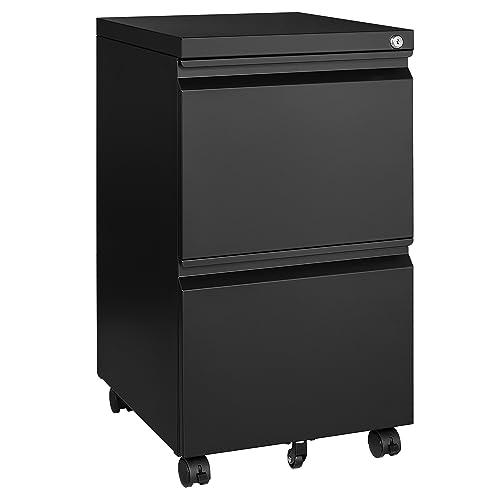
The one that arrives built and the most secure cabinet here: 0.8 mm steel, one key for both drawers, and an interlocking mechanism that allows only one drawer open at a time so a loaded cabinet cannot tip forward.
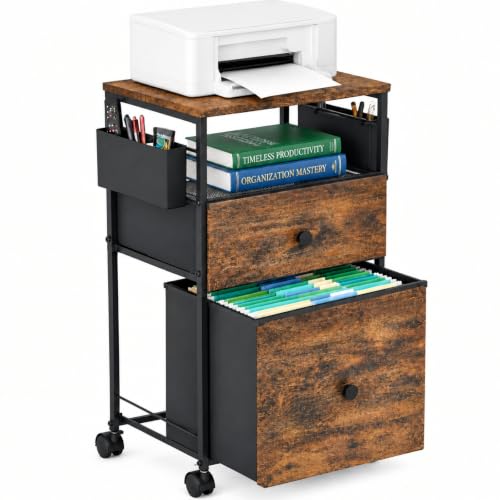
The narrowest unit here by four inches, at a published 10.87 inches wide - the cabinet for a gap beside a desk where nothing else fits. The trade is real: fabric drawers, and no document lock.
#ad · Live prices from the Amazon Product API, as of November 12, 2026. Where we have no verified live price we show none — we would rather leave a gap than print a number that has rotted.
In detail
The picks, in full
01
Best overall
Kooyon 3-Drawer Mobile File Cabinet
Height
24.2 in (published)
Footprint
14.6 W x 17.3 D in
Drawers
3, with adjustable hanging bars
Lock
1 lock secures all 3 drawers, 2 keys
Top load
Not published
8.8/10
The shortest cabinet here at a published 24.2 inches, and the only one with three drawers: it clears the most desks, holds the most paper, and one key locks all three drawers at once.
Under-desk clearance
9.6
Capacity per inch
9.4
Security
9
Mobility
9.2
Published specs
6.6
Pros
+24.2 in is the lowest published height on this page, which is the spec that decides whether it goes under the desk at all
+Three drawers in a 14.6-inch width - the best paper-per-square-inch on this page by a clear margin
+Adjustable hanging bars take letter, legal and A4 hanging files, plus removable pencil trays
+Five swivel wheels with lockable casters and a published center support wheel that resists tipping
+Solid steel body rather than particleboard, so the drawers stay square when the cabinet is loaded
Cons
−Publishes no top load rating, which matters because it is sold as a printer stand
−17.3 in deep is the second-deepest here - on a 15.7-inch desk it sticks out past the front edge
−Requires assembly, where the Letaya arrives built
−No published product weight, so you cannot judge how it will behave loaded
Skip this if…
…the only free floor is beside a 15-inch-deep desk in a walkway. At 17.3 inches deep this protrudes, and the 10.87-inch-wide LEKETREE is the cabinet for that gap.
The budget pick, and the only cabinet here that publishes what its top will carry: 120 pounds, on an all-metal frame, in a 14.2-inch width. If the cabinet is also the printer stand, this is the one with a number behind the claim.
Under-desk clearance
9.2
Capacity per inch
7.8
Security
8.4
Mobility
3
Published specs
9.4
Pros
+A published 120 lb top load - the highest figure on this page and the only one high enough for a laser printer without guessing
+24.6 in high, within half an inch of the shortest cabinet here
+All-metal construction with a reinforced overall frame, published as resisting deformation under a full load
+14.2 in wide, the second-narrowest cabinet on this page
+Takes letter, A4 and legal files, and the lock ships with two foldable keys
Cons
−No casters at all - it does not roll out, so it has to live somewhere you can open a drawer in place
−17.9 in deep is the deepest footprint here
−51 lb empty, which is heavy to reposition and heavy to carry upstairs
−Requires assembly, and at this weight that is a two-person job
Skip this if…
…the cabinet has to tuck under the desk and be pulled out to use. With no wheels you would be dragging 51 pounds across a floor you may not own.
The squarest, shallowest footprint here at a published 15.7 by 15.7 inches, on five casters with two brakes - and the only cabinet on this page that looks like furniture rather than office equipment.
Under-desk clearance
7.4
Capacity per inch
7
Security
6
Mobility
9.4
Published specs
8.6
Pros
+15.7 in deep is the shallowest footprint here, which is the one that does not protrude past a shallow desk
+Publishes a 50 lb top load figure, so the printer question has an answer
+Adjustable crossbars let you switch the drawer between A4 and letter hanging folders
+Five universal casters, two with brakes, plus published undermount drawer slides
+A walnut-and-white finish that reads as a side table in a studio where the desk is visible from the bed
Cons
−The lock covers the top drawer only - the lower drawer is open to anyone in the room
−Quality particleboard rather than steel, so it is the least robust carcass here when fully loaded
−25.8 in high: taller than the two metal picks, and that is clearance you may not have
−50 lb is the lowest published top load on this page
Skip this if…
…both drawers need to lock. A single locked drawer is a real limitation if the cabinet is storing documents for two people, and the Kooyon and Letaya lock everything from one key.
Letaya 2-Drawer Mobile File Cabinet (Fully Assembled)
Height
26.18 in (published)
Footprint
14.57 W x 17.32 D in
Steel
0.8 mm, published
Drawer interior
12.1 W x 16.3 D x 9.8 H in
Lock
One key locks all drawers, interlocking
8.3/10
The one that arrives built and the most secure cabinet here: 0.8 mm steel, one key for both drawers, and an interlocking mechanism that allows only one drawer open at a time so a loaded cabinet cannot tip forward.
Under-desk clearance
6.4
Capacity per inch
8.2
Security
9.6
Mobility
8.6
Published specs
8.8
Pros
+Ships fully assembled - only the wheels are fitted by you, which no other cabinet here offers
+Published 0.8 mm steel and an interlocking drawer mechanism, so one drawer at a time and no forward tip
+Publishes its drawer interior dimensions and a 150-300 file capacity per drawer, which nothing else here does
+Lockable wheels plus a universal wheel published as an anti-tip measure
+One key secures both drawers, and ball-bearing slides are published rather than implied
Cons
−26.18 in high - the second-tallest here, and over the clearance of most desks with an apron
−The dearest cabinet on this page by a clear margin
−Publishes no top load rating despite being sold for under-desk and printer use
−51 lb before you put anything in it
Skip this if…
…it has to slide under a 29-inch desk with a crossbar or a keyboard tray. At 26.18 inches the clearance is gone before the cabinet gets there.
Price as of November 12, 2026. Prices change — Amazon's is the one that counts.
#ad · we may earn a commission from this link to Letaya 2-Drawer Mobile File Cabinet (Fully Assembled)
05
Best for a narrow gap
LEKETREE 2-Drawer Compact Rolling Cabinet
Height
26.38 in (published)
Footprint
10.87 W x 14.57 D in
Drawers
2 fabric, plus open shelf and 2 side bags
Support
66 lb (published)
Lock
None (2 casters lock)
6.5/10
The narrowest unit here by four inches, at a published 10.87 inches wide - the cabinet for a gap beside a desk where nothing else fits. The trade is real: fabric drawers, and no document lock.
Under-desk clearance
5.8
Capacity per inch
7.4
Security
3
Mobility
9
Published specs
7.4
Pros
+10.87 in wide: it fits a gap between a desk leg and a wall that every other cabinet here is too wide for
+14.57 in deep, so it does not protrude in front of even a 15.7-inch desk
+A published 66 lb support figure and a 14.57-inch tabletop sized for a home printer
+Four swivel wheels, two of them lockable, so it rolls out and stays put
+Open shelving and two side bags add storage that a closed cabinet does not have
Cons
−Fabric drawers, not steel ones on slides - they will not take hanging files properly or a heavy load
−No document lock at all; the two 'lockable' casters are wheel brakes, not security
−26.38 in is the tallest unit here, which is the opposite of what a small desk wants
−Wood-and-fabric construction is the least durable here under daily use
Skip this if…
…you need a filing cabinet in the strict sense. Fabric drawers with no lock are a storage cart that fits files, which is a different purchase from a cabinet that secures them.
#ad · Live prices from the Amazon Product API, as of November 12, 2026. Where we have no verified live price the button says so rather than showing a number that has rotted.
The four specs that decide a small filing cabinet
1. Height against the clearance you actually have
Do this with a tape measure before you read any further. Measure from the floor to the undersideof your desk, then to the underside of anything lower — an apron rail, a modesty panel, a crossbeam, a fitted keyboard tray. That lowest number is your clearance, and it is routinely two to four inches less than the desk height everyone quotes. The cabinets here need 24.2 to 26.38 inches. If your clearance is 26 inches, the two tallest are out; if it is 24 inches, all five are out and the answer is a tray rather than a cabinet. Our desk height guide has the standard seated and standing bands, and desk dimensions by room size covers the floor side of the same arithmetic.
2. Footprint, and specifically depth in a walkway
Width is the number people check; depth is the one that trips them. These cabinets run 14.57–17.9 inches deep. On a 15.7-inch-deep desk — which is most of the compact desks we rank, including four of the five on our IKEA MICKE alternativespage — a 17.9-inch cabinet protrudes two inches into the room whether it is under the desk or beside it. In a studio where the walkway past the desk is already tight, those two inches are the difference between a path and an obstacle. Measure the walkway, not the wall.
3. Lock scope, and whether anti-tip is published
A single-drawer lock is a common and rarely stated limitation. So is the opposite: an interlockingmechanism, where only one drawer opens at a time, which is a safety feature rather than an inconvenience — a two-drawer cabinet with both drawers out and files in the front of each will tip forward. Two cabinets here publish an anti-tip measure (an interlock, and a center support wheel); the others do not mention it. If the cabinet is going in a room with a child or a cat, that is a specification worth paying for.
4. Top load, if the cabinet is also the printer stand
Almost every cabinet in this category is marketed as a printer stand, and most publish no figure for what the top carries. Three of these five do: 120 lb, 66 lb and 50 lb. That is a two-to-one spread, and the cheapest cabinet here publishes the highest number — which is a useful reminder that in this category price tracks finish and assembly state more than it tracks structure. A home inkjet is typically well under 20 lb and a small laser can be 25–40 lb, so any of the three published figures covers it; the risk sits with the two that publish nothing.
A filing cabinet, a drawer tray, or a desk with drawers?
These are three different purchases and the site ranks all three, so it is worth being explicit about which one you need.
A filing cabinet— this page. It stands on the floor, takes letter-size hanging files, and locks. It is the only one of the three that secures anything, and the only one with real capacity. It costs floor area.
An under-desk tray or clamp-on drawer — under-desk storage. It claims no floor at all and takes stationery, cables and a notebook. It will not take a hanging file and generally does not lock.
A desk whose own drawers are the storage — small desks with storage. The tidiest answer if you have not bought the desk yet, and the one with the least total footprint. The drawers are usually small and rarely lock.
A fourth option worth naming: if the paperwork does not need to be at the desk at all, a wall shelf above the desk or the no-drill routes in no-drill wall storage move the whole problem off the floor, which in a studio is usually the right instinct.
Renting? Two things to check before you order
First, the floor. A loaded two-drawer cabinet on five small casters concentrates real weight on a rental hardwood or vinyl floor, and the fix is the same as for a desk chair — see office chair wheels for hardwood floors for the caster-and-pad logic, which transfers directly. Second, the stairs. The two steel cabinets here publish a 51 lb empty weight; a fully assembled one arrives as a single 51-pound box that has to get up to your door. If you move often, moving-friendly desk gear is the page that weighs that against the convenience of not assembling anything.
What we checked and did not rank
Fabric drawer carts already on the site. We rank a slim three-drawer rolling cart and a clamp-on two-drawer organizer on under-desk storage. Neither takes a letter-size hanging file or locks, so neither is a filing cabinet in the sense this page means.
A $65 two-drawer metal cabinet with a published 30 lb per-drawer rating. It is a sound cabinet, but at 25 inches high with no casters it is a worse version of the SISESOL at a higher price, and adds nothing to the page.
Full-height four- and five-drawer cabinets.They are 48 inches and up and belong beside a wall, not a desk. In an apartment they are a furniture decision rather than a desk-setup one.
Lateral cabinets. Wider than they are deep, which is the wrong shape for the gap next to a small desk, and almost all of them exceed the under-desk clearance this page is built around.
How we picked
We do not run a testing lab
We compiled the published manufacturer specifications, did the footprint and clearance math ourselves, and read aggregated owner reviews, then scored each product against a published rubric. The scores are judgments from documented research — they are not measurements we took, because we do not have a lab and we are not going to pretend we do. Every spec traces back to a listing or manual named in Sources.
Questions
Frequently asked
What is the best small filing cabinet for a home office?+
The Kooyon 3-drawer mobile. At a published 24.2 inches it is the shortest cabinet here, which is what decides whether it fits under a desk; it holds three drawers in a 14.6-inch width with adjustable hanging bars for letter, legal and A4; and one key locks all three drawers. The SISESOL narrow vertical is the budget pick and the only cabinet on this page that publishes a top load figure.
Will a filing cabinet fit under my desk?+
Measure the clearance rather than the desk. A 29-30 inch desk has less room underneath by the thickness of the top plus any apron rail, crossbeam or keyboard tray - often 26 inches or less. The cabinets on this page are 24.2 to 26.38 inches tall, so the two tallest will not clear a typical desk with an apron. Also allow for the cabinet rolling out, because you cannot open a drawer while it is tucked in.
Do I need a filing cabinet with wheels?+
If it lives under the desk, yes. You pull the cabinet out to open a drawer and push it back, and 50 pounds of steel without casters is not something you want to drag across a rental floor. If it lives beside the desk permanently, wheels matter much less and a fixed cabinet is usually sturdier for the money.
Can a small filing cabinet take a printer?+
Three of the five here publish a top load figure - 120 lb, 66 lb and 50 lb - and any of those covers a home inkjet (typically well under 20 lb) or a small laser (roughly 25-40 lb). The other two publish nothing, which is worth noting given that both are marketed as printer stands. If the printer is the point, buy from a published number.
What is the difference between a filing cabinet and an under-desk drawer?+
Capacity, hanging files and a lock. A filing cabinet stands on the floor, takes letter or legal hanging folders on rails, and locks - at the cost of floor area. An under-desk tray or clamp-on drawer claims no floor at all but holds stationery rather than files and generally does not lock. If documents need to be secured, only the cabinet does that.
Are metal or wooden filing cabinets better in a small apartment?+
Metal is the stronger carcass and publishes the higher load figures here; the all-metal pick publishes a 120 lb top load against 50 lb for the wooden one. Wood or wood-effect wins on how it looks in a room that is also a bedroom or a living room, which is a real consideration when the cabinet is visible all evening. In a studio, that is a legitimate reason to accept the lower figure.
We do not run a testing lab, and we do not pretend to. Specifications come from the manufacturer or retailer listing; the footprint and clearance math is ours and reproducible. Where we could not verify a number, we say so on the page rather than quietly leaving it out. Read our full method.