Twenty-seven inches is the biggest screen a small desk can honestly take, and only if two numbers work out: pixels per inch and the depth the stand steals. Ranked on both.
We earn a commission when you buy through our Amazon links, at no extra cost to you. It never affects our rankings, and we say so when the cheaper product is the better buy. How this works.
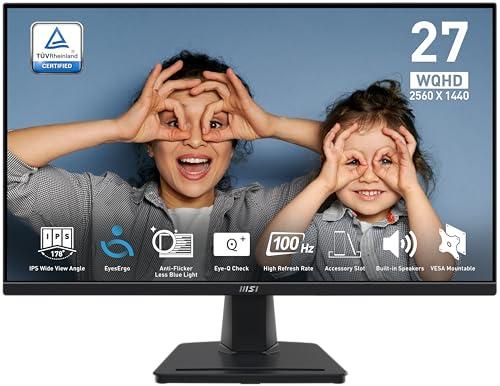
The verdict: the best 27-inch monitor for a small desk is the MSI PRO MP275Q— it is the cheapest panel here that is actually 1440p, it publishes a 100 × 100 mm VESA pattern, and its stand is tool-free, so the base can leave the desk the day an arm arrives. The budget pick is the Amazon Basics 27E40, which is also this page’s warning label: it is the cheapest honest 27-inch monitor we found and it is the coarsest screen on the page.
One piece of arithmetic organizes everything below, and you can check it before you shop. At 27 inches, resolution stops being optional.A 16:9 panel is 0.871 × its diagonal wide, so a 27-inch screen is about 23.5 inches of glass. Spread 2560 pixels across that and you get about 109 per inch. Spread 1920 across it and you get about 82. For comparison, a 24-inch 1080p panel — the office default for a decade — is about 92. So a 27-inch 1080p monitor is the one upgrade on this page that leaves you with a bigger but blurrier screen than the one it replaced, while being physically harder to seat. Four of our five picks are 1440p for exactly that reason, and the one 1080p pick is ranked last with the number attached.
The second finding is about furniture rather than pixels. On a small desk, a 27-inch monitor is an arm purchase, not a monitor purchase. Our monitor size and distance table puts a 27-inch panel at 25 to 30 inches of viewing distance and 26 to 28 inches of desk depth on its own stand. A small desk is 20 inches deep. The published stand depths below run from 7.28 to 8.46 inches, which is between a third and nearly half of that 20 inches gone before a keyboard goes down — and the screen is still too close. An arm returns essentially all of it and pushes the panel back over the edge of the desk, which is why the single most important line on a 27-inch listing is whether it states a VESA pattern. Two of our five publish 100 × 100 mm, one publishes “VESA compatible” with no size, and one publishes nothing at all.
This is the second size page on the site, after best 24-inch monitors, and it exists because the rest of the monitor coverage here is organized by price or footprint rather than by diagonal: best monitors under $200 is a ceiling that mixes 22, 24 and 27-inch panels, and best monitors for small desksranks on stand footprint with no ceiling. Two picks below (the MSI and the LG) are also ranked on that $200 band page, and this page says so rather than pretending to a fresh shortlist — what differs is the criterion: there we were asking what a budget buys, here we are asking what a diagonal costs you in depth and sharpness.
We do not run a lab. Every panel specification below is the manufacturer listing’s own published figure, every pixel-per-inch number is computed from the published diagonal and resolution, and where a listing publishes nothing — a weight, a stand depth, a VESA pattern — the table says “not published” instead of carrying an estimate. Prices move daily, so the live figure beside each pick comes from our price layer with the date it was read.
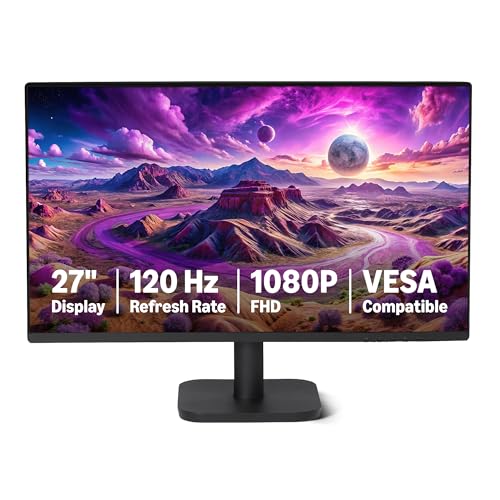
The best 27-inch monitor for a small desk: 1440p across the diagonal at about 109 pixels per inch, a published 100 x 100 mm VESA pattern and a tool-free stand, so the base comes off the day an arm arrives.
The pick for the longest published support and the most inputs: 1440p at 100 Hz, a stated 100 x 100 mm VESA pattern, two HDMI ports plus DisplayPort, and a three-year limited warranty — the longest term published on this page.
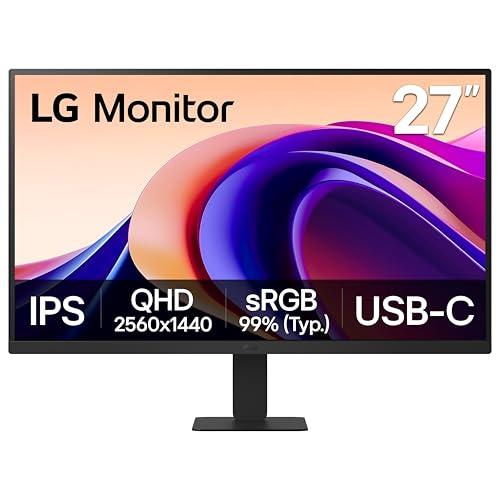
The one-cable pick: 27-inch 1440p IPS with USB-C carrying 15 W of power delivery, so a laptop arrives on a single lead instead of a charger plus a video cable plus an adapter.
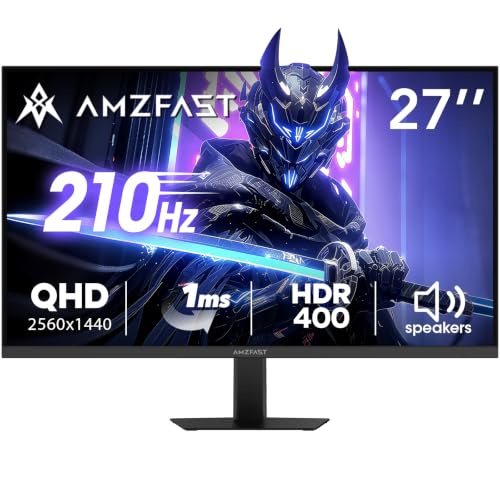
The shallowest published footprint on the page and the brightest published panel: 1440p fast IPS with 450 cd/m2, HDR400 and a 7.28-inch stand depth, which is nearly an inch and a half back from the LG.
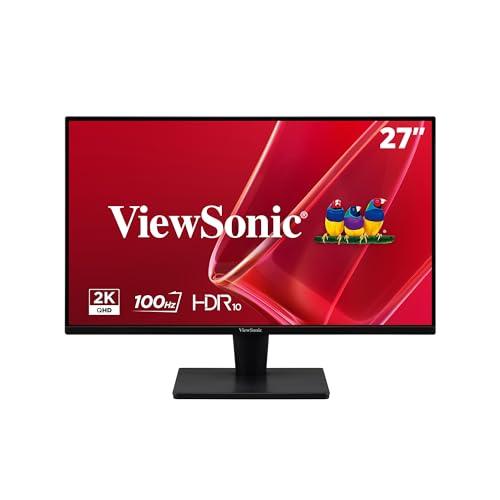
The budget pick, and the page's cautionary tale: the cheapest honest 27-inch panel here, with published VESA support and a 7.9-inch stand — but 1080p across 27 inches is about 82 pixels per inch, coarser than a 24-inch screen at the same resolution.
Budget pick — cheapest 27-inch with published VESA
#ad · Live prices from the Amazon Product API, as of November 27, 2026. Where we have no verified live price we show none — we would rather leave a gap than print a number that has rotted.
In detail
The picks, in full
01
Best overall 27-inch monitor
MSI PRO MP275Q 27in WQHD Office Monitor
Panel
IPS, 2560 × 1440, 100 Hz
Pixel density
~109 ppi (computed)
Color / brightness
100% sRGB, 300 nits, 1300:1
Mounting
VESA 100 × 100 mm
Stand
Tilt only, 8.16 in deep
8.7/10
The best 27-inch monitor for a small desk: 1440p across the diagonal at about 109 pixels per inch, a published 100 x 100 mm VESA pattern and a tool-free stand, so the base comes off the day an arm arrives.
Pixel density
9
Mountability
9.6
Stand footprint
6.6
Panel quality
8.6
Value
9.6
Pros
+1440p is the whole argument for buying 27 inches, and this is the cheapest panel here that has it — about 109 pixels per inch against about 82 on a 27-inch 1080p screen
+100 × 100 mm VESA is published rather than implied, which on a 20-inch-deep desk is the difference between a usable screen and a screen you sit too close to
+A tool-free stand means the base separates in moments, so the arm plan is a five-minute job rather than a teardown
+Published 100% sRGB with 10-bit color, 300 nits and 1300:1 contrast — most listings in this class publish none of those figures
+TUV Rheinland Eye Comfort certification for low blue light and anti-flicker is a third-party mark, not a marketing phrase
Cons
−Tilt-adjustable only. No height, no swivel, no pivot — you are buying the panel and not the stand
−8.16 inches of published stand depth is nearly half a 20-inch desk before you put a keyboard down
−The listing publishes an item weight of 3.95 lb, which cannot be right for a 27-inch panel with a base; use the maker's panel weight when you check an arm's load window, never this figure
−HDMI 2.0b and DP 1.2a only, so a laptop still needs its own charger
Skip this if…
…the screen has to live on a 20-inch-deep desk with no arm and no riser. The panel is the best value here and the geometry still will not work - a 24-inch monitor is the honest answer in that room.
The pick for the longest published support and the most inputs: 1440p at 100 Hz, a stated 100 x 100 mm VESA pattern, two HDMI ports plus DisplayPort, and a three-year limited warranty — the longest term published on this page.
Pixel density
9
Mountability
9.4
Stand footprint
6
Panel quality
8
Value
8.4
Pros
+A three-year limited warranty is published, where most monitors in this class publish no term at all — and a monitor is a five-year purchase
+Two HDMI inputs and a DisplayPort mean a laptop, a desktop and a console can stay plugged in together, which saves a switch box on a desk with no room for one
+Published 4,000:1 contrast is the deepest figure here by a wide margin, and contrast is what you actually notice in a document
+Three-sided frameless design is the right shape if a second panel ever joins it
+An HDMI cable is in the box, and two 2 W speakers remove a speaker pair from the surface
Cons
−The listing's own feature text describes a VA panel while the page copy reads like an IPS listing — VA means weaker off-axis color, which matters if the screen sits at an angle beside a laptop
−HONEST GAP: the published dimension fields are transposed (5.04 × 27.09 × 19.21 in, which cannot describe a 27-inch monitor as labeled), so we do not publish a stand depth for this pick
−No USB-C and no published height adjustment
−Dearer than the MSI for the same resolution and refresh rate
Skip this if…
…the monitor will sit off to one side of you rather than square on. A VA panel shifts color off-axis more than IPS, and two of the picks here publish IPS.
The one-cable pick: 27-inch 1440p IPS with USB-C carrying 15 W of power delivery, so a laptop arrives on a single lead instead of a charger plus a video cable plus an adapter.
Pixel density
9
Mountability
6.4
Stand footprint
6
Panel quality
8.8
Value
8.2
Pros
+USB-C with power delivery is the most useful port on a small desk, because it deletes a charger brick and a cable from the surface
+Published 99% sRGB, HDR10, Reader Mode and Flicker Safe — named features rather than vague eye-care language
+A published 9.7 lb weight sits comfortably inside the load window of every arm we rank, and it is a figure you can actually trust
+LG panel consistency is a step up from the unbranded end of this category
Cons
−15 W of power delivery trickle-charges a laptop; it will not keep a working machine topped up, and a 65 W dock still beats it
−HONEST GAP: the listing text states no VESA pattern. Confirm before you plan an arm — and on this page that is the most important line on the listing
−8.46 inches of published stand depth is the deepest figure here
−Tilt-only stand, like most of this class
Skip this if…
…you need the screen to power the laptop properly. For that the right purchase is a dock and the monitor can stay on HDMI.
The shallowest published footprint on the page and the brightest published panel: 1440p fast IPS with 450 cd/m2, HDR400 and a 7.28-inch stand depth, which is nearly an inch and a half back from the LG.
Pixel density
9
Mountability
8
Stand footprint
8.6
Panel quality
8.8
Value
8.6
Pros
+7.28 inches is the shallowest published stand depth here, and on a 20-inch desk every inch at the back is an inch in front of your keyboard
+450 cd/m2 is the highest published brightness on the page, which is what a desk in front of a bright window needs
+Published 132% sRGB and 96% DCI-P3 with 10-bit color, HDR400 and a stated 1000:1 static contrast
+Two HDMI 2.0 and two DisplayPort 1.4 inputs, plus a published 100 × 100 mm VESA pattern and a DP cable in the box
+210 Hz is far beyond what office work uses, but it is the pick that also games after hours without a second screen
Cons
−HONEST GAP: the listing publishes no item weight at all, so you cannot check it against an arm's load window without asking the seller
−The listing itself states that the rear panel is being changed mid-production and that the weight has been 'updated' — which is exactly why no weight figure is published
−No published warranty term, against a stated three years on the ViewSonic
−No USB-C, and the brand has no service record to speak of in this category
Skip this if…
…the panel is going straight onto an arm with a tight load window. With no published weight you would be guessing at the one number that decides whether the arm holds position.
Budget pick — cheapest 27-inch with published VESA
Amazon Basics 27E40 27in IPS Monitor
Panel
IPS, 1920 × 1080, 120 Hz
Pixel density
~82 ppi (computed)
Color / contrast
99% sRGB, 1500:1
Stand
7.9 in deep (listing)
Weight
8.6 lb (listing)
7.8/10
The budget pick, and the page's cautionary tale: the cheapest honest 27-inch panel here, with published VESA support and a 7.9-inch stand — but 1080p across 27 inches is about 82 pixels per inch, coarser than a 24-inch screen at the same resolution.
Pixel density
5
Mountability
8.4
Stand footprint
8
Panel quality
8
Value
9.4
Pros
+Cheapest pick here and nothing structural is missing: IPS, 120 Hz, VESA compatible, HDMI and DisplayPort, two 2 W speakers
+A published 8.6 lb weight and a published 7.9-inch stand depth — two figures this class routinely omits
+Published 99% sRGB and 1500:1 contrast, which is a stronger specification sheet than the price suggests
+120 Hz with Adaptive Sync is the highest refresh of the two 1080p-class panels we looked at in this size
+Four-sided narrow bezel, so a second panel can sit beside it without a trench down the middle
Cons
−About 82 pixels per inch. A 24-inch 1080p panel is about 92 and a 27-inch 1440p panel is about 109 — this is the coarsest screen on the page and the arithmetic is not close
−Text at 82 ppi is why people end up scaling their desktop, which gives back the workspace the bigger screen was bought for
−No USB-C and no published height adjustment
−'VESA compatible' is stated without a pattern size, so confirm 100 × 100 mm before ordering an arm plate
Skip this if…
…you are choosing between this and a 24-inch 1440p panel at a similar price. Buy the smaller sharper screen - on a small desk you cannot buy the viewing distance that makes a coarse 27 look fine.
#ad · Live prices from the Amazon Product API, as of November 27, 2026. Where we have no verified live price the button says so rather than showing a number that has rotted.
Density, stand depth and VESA, side by side
Pick
Resolution
Pixels per inch
Published stand depth
VESA published?
Published weight
MSI PRO MP275Q
2560 × 1440
~109
8.16 in
Yes, 100 × 100 mm
3.95 lb (implausible)
ViewSonic VS2725-2K
2560 × 1440
~109
Fields transposed, not usable
Yes, 100 × 100 mm
7.9 lb
LG 27U631A-B
2560 × 1440
~109
8.46 in
Not stated
9.7 lb
Amzfast AMZG27F5Q
2560 × 1440
~109
7.28 in
Yes, 100 × 100 mm
Not published
Amazon Basics 27E40
1920 × 1080
~82
7.9 in
“VESA compatible”, no size
8.6 lb
Three findings fall out of that table that no single listing page will tell you. One: the density column is flat across four picks and the prices are not, so inside 1440p you are buying ports, warranty and brightness rather than sharpness. Two:the stand-depth spread is only about 1.2 inches between the shallowest and deepest published figures, so no 27-inch factory stand solves a 20-inch desk — the arm does. Three:the weight column is the least reliable column on the page. One listing publishes 3.95 lb for a 27-inch monitor with a base, which is not possible; one publishes no weight at all. Weight decides whether an arm holds position, so where it is missing or absurd, use the manufacturer’s panel weight and read our monitor arm weight capacity guide before ordering.
The three checks, in order
1. Is it 1440p?
If the answer is no, the honest recommendation is a 24-inch screen instead. At 27 inches, 1080p is about 82 pixels per inch — coarser than the 92 of a 24-inch 1080p panel and a long way from 109. The usual defense is that you sit further back from a big screen, and that is exactly what a small desk cannot give you: the distance table wants 25 to 30 inches and a 20-inch desk supplies about 20. Resolution is also the only thing on this page you cannot add later. Height comes from an arm or a riser, ports come from a dock, speakers come from anything. Pixels are soldered in.
2. Does it state a VESA pattern — with a size?
“VESA compatible” without a number is a half-answer; arms ship 75 × 75 mm and 100 × 100 mm plates and the wrong one is a return. Two picks here publish 100 × 100 mm, one publishes the phrase and no size, and one publishes nothing, which on this site is recorded as a missing specification rather than assumed. The companion page is best monitor arms for 27-inch monitors — at this diagonal capacity rarely binds and published reach is what decides, because reach is how you buy back viewing distance. If a panel has no holes at all, how to mount a monitor without VESA covers the adapter route, and will a monitor arm fit my desk covers the clamp window before you order.
3. What is left in front of the screen?
Do the subtraction on paper. Desk depth, minus the published stand depth, minus a desk pad if you use one (12 to 17 inches in its own right), and see what is left for your hands and a keyboard. On a 20-inch desk with an 8-inch-deep base you have about 12 inches, and a full-size keyboard is about 5 of them, which leaves your wrists on the front edge. That is the real reason this diagonal pushes people toward an arm, a keyboard tray or a compact keyboard. Remember what else lives in that same back band: a lamp base. The ones we measured for desk lamps with wireless charging publish footprints of about 34 to 37 square inches, and a 27-inch panel’s stand is already taking the depth behind the keyboard.
Where 27 inches is the right answer — and where it is not
It is the right answer when the desk is at least 24 inches deep, or when the panel is going on an arm or a wall mount, or when the work is two documents side by side and 1440p gives you two readable columns where 1080p gives you one and a half. It is the wrong answer on a 20-inch-deep desk with no mounting plan, in a room where the desk faces a wall less than about two feet away, and — the case we see most often — when the budget forces 1080p. In that last case a 24-inch 1440p panel is sharper, shallower and cheaper to seat; best 24-inch monitors ranks those, and the 1440p pick on that page is about 122 pixels per inch, the sharpest screen on either page.
Two 27-inch panels on one desk
Two of these side by side are about 47 inches of glassbefore bezels — published widths here are 24.1 to 24.2 inches each — so a 40-inch desk cannot take the pair and a 48-inch desk only just can. Two factory stands at 7.3 to 8.5 inches deep also take the whole back band of the surface. Two monitors on a small desk runs the width arithmetic, best monitors for a dual monitor setup has the pairs that actually fit, and the trick worth knowing is that one 27-inch panel turned portrait beside a landscape one is narrower than two landscape 24s. If you go dual at this size, buy panels that publish a pattern and put them on a dual monitor arm, or consider whether one ultrawide is the better answer.
What we checked and did not rank
A 27-inch FHD panel with a USB docking stand that sits in our registry and is ranked on best monitors under $200. Left off here because it is the dearest 27-inch panel we hold and it is 1080p — on a density page that combination cannot be recommended, however good the ports are.
A 27-inch 1440p panel from a major brand whose listing publishes a refresh rate in the title that its own feature text contradicts. We recorded the same problem on 2026-11-18 and left it unranked for the same reason: if the listing cannot agree with itself on a headline number, we cannot publish that number.
An essential-tier 27-inch IPS panel that is the cheapest 27-inch monitor we found live. Its listing publishes a tilt-only stand and no VESA pattern anywhere, and on a page whose whole argument is that this diagonal belongs on an arm, that is disqualifying rather than a con.
27-inch 4K panels.A different purchase with a different argument — about 163 ppi and usually scaled back down in software, which costs the sharpness you paid for unless the work is photographic. None is ranked here and none is held in our registry.
Curved 27-inch panels. The curve is designed for a viewing distance a small desk does not provide, and a curved panel is deeper at the edges where a desk against a wall has the least room.
How we picked
We do not run a testing lab
We compiled the published manufacturer specifications, did the footprint and clearance math ourselves, and read aggregated owner reviews, then scored each product against a published rubric. The scores are judgments from documented research — they are not measurements we took, because we do not have a lab and we are not going to pretend we do. Every spec traces back to a listing or manual named in Sources.
Questions
Frequently asked
Is a 27-inch monitor too big for a small desk?+
It is too big for a 20-inch-deep desk on its factory stand, and fine on an arm. The published stand depths on this page are 7.28 to 8.46 inches, and a 27-inch panel wants 25 to 30 inches of viewing distance against the roughly 20 a small desk supplies. An arm returns the base depth and pushes the screen back over the desk edge, which is why we treat a published VESA pattern as the gate on this size.
Is 1080p fine on a 27-inch monitor?+
It is readable and it is the weakest buy on this page. A 27-inch screen is about 23.5 inches wide, so 1920 pixels across it is about 82 per inch - coarser than a 24-inch 1080p panel at about 92, and well short of 1440p at about 109. If the budget only reaches 1080p at 27 inches, a 24-inch screen is the sharper purchase for the same money.
27-inch or 24-inch for working from home?+
Take 27 inches if the desk is 24 inches deep or more, or if the panel is going on an arm, and take 1440p when you do. Take 24 inches if the desk is 20 inches deep and the monitor has to stand on it - you cannot buy viewing distance, and a sharper small screen gives you more readable workspace than a coarse big one at the distance a small desk permits.
Do 27-inch monitors come with VESA mounting?+
Most do and the listings are inconsistent about saying so. On this page two publish 100 x 100 mm, one says 'VESA compatible' without a size, and one states nothing at all. Check for the pattern size rather than the phrase, because arms ship 75 x 75 mm and 100 x 100 mm plates and the wrong plate is a return.
How much desk depth does a 27-inch monitor take?+
Between 7.28 and 8.46 inches of published stand depth across these picks, which is a surprisingly small spread - no factory stand in this size solves a shallow desk. On a 20-inch desk that leaves about 12 inches in front of the screen, and a full-size keyboard takes about 5 of them. An arm returns essentially all of the base depth; a riser returns none, because the base goes back down on the surface.
We do not run a testing lab, and we do not pretend to. Specifications come from the manufacturer or retailer listing; the footprint and clearance math is ours and reproducible. Where we could not verify a number, we say so on the page rather than quietly leaving it out. Read our full method.